


How to tie a double Davy
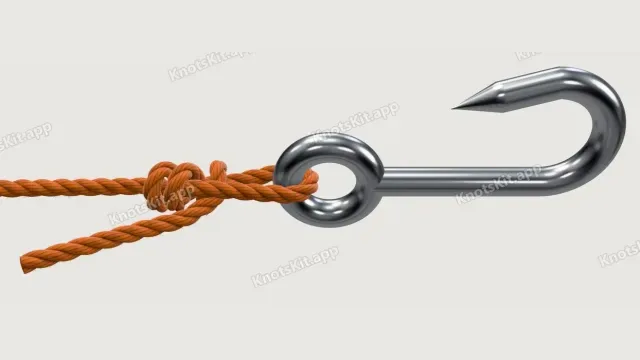
The double Davy is a Davy knot with one more turn, for extra grip on a fly or a small hook. The end goes through the eye, turns twice around the main line, tucks under itself and drops through the loop beside the eye. It stays small and quick to tie on mono and fluorocarbon, but with braid it can slip.
Step 1 of 5
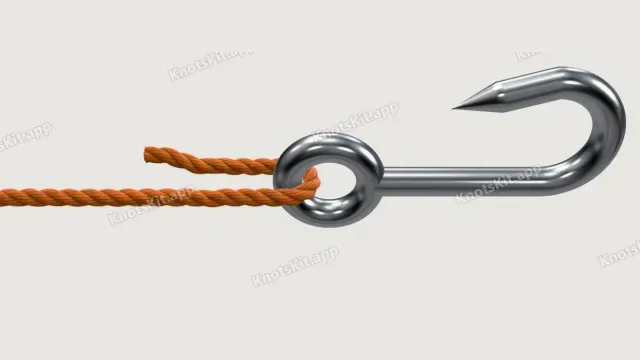
Pass the end through the hook’s eye and back along the line.
- Type
- Hitch
- Difficulty
- Medium
- Line types
- Monofilament, Fluorocarbon
Step by step
Step 2
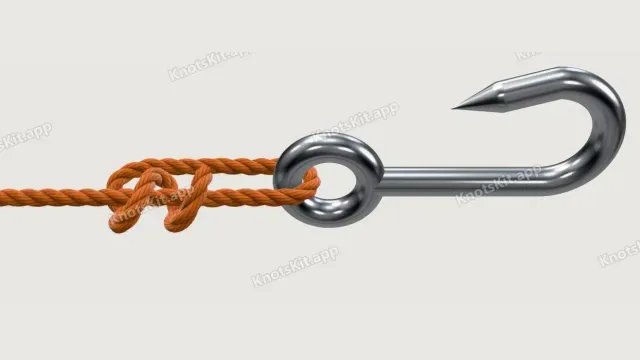
Take it under the main line and back over it, twice.
Step 3
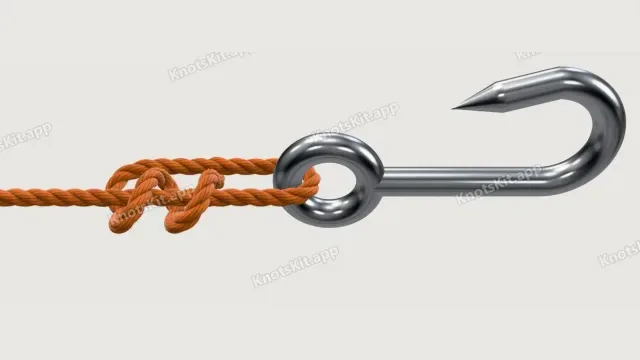
Tuck it under itself to make a loose double overhand knot.
What it’s for
Tie a fly or small hook to a leader with one more turn than the Davy knot, for extra grip.
When to avoid it
Avoid it with braid: the knot can slip. If the two turns cross as you tighten, undo it and tie it again.
Check your knot
Two turns lie together in a small knot close to the hook’s eye.
Tips
- Wet the knot before tightening to reduce friction.
- Trim the free end only after tightening and checking the knot. Follow the line maker’s guidance.
When the extra turn helps
- A plain Davy that has slipped. If your Davy knots sometimes pull out, this is the smallest change you can make: the same moves with one more turn.
- Fluorocarbon leaders. This line is usually stiffer and slicker than mono, and two turns give the knot more to hold on to.
- Good fish on a fine leader. When a fish runs, you want the knot to stay where it is, and the extra turn costs only a few seconds on the bank.
If speed matters more than grip, go back to the Davy knot. For bigger hooks and swivels, the improved clinch has more turns to hold with.
Common mistakes
- Stopping at one turn. Step 2 goes under the main line and back over it twice. With one pass you have tied the plain Davy, which is a fine knot, but not this one.
- Turns lying on top of each other. Lay the second turn beside the first at step 2. If it rides over the first, the two can cross as you tighten.
- Closing the knot at step 3. The double overhand stays loose here. Snug it too early and the loop beside the eye has no room for step 4.
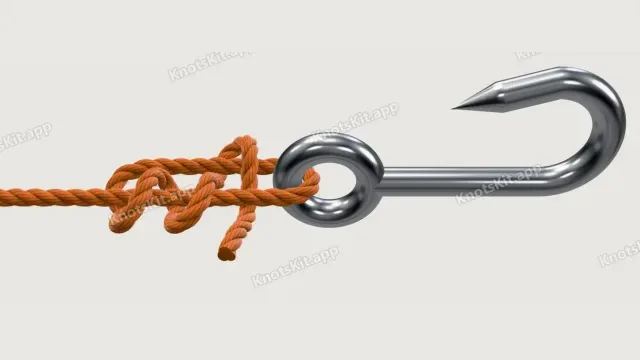
- Missing the loop at step 4. The end goes down through the loop between the knot and the eye. Through any other opening it is not trapped.
- Main line first at step 5. Pull the free end first, then the main line. Reverse it and the knot can stop short of the eye.
Keeping the two turns together
Two turns are what this knot adds, so they are what to watch. Wet the knot and pinch it lightly between finger and thumb as you draw the free end, so the turns close at the same pace. Then pull the main line slowly until the knot settles close to the eye. Look at it carefully, because it is small: two turns lying together, nothing crossed and no open loop. If the turns cross, do not try to tease them apart under tension. Undo the knot if you can, or cut it off and tie it again, which costs very little line.
Related knots
Questions people ask
Double Davy or Davy knot: which should I tie?
Tie the plain Davy when size and speed matter most, on small flies and fine leaders. Tie the double when you want more grip: a bigger fish, a slicker line or a plain Davy that has let you down. It costs one extra turn at step 2, ends up slightly bigger and uses a touch more line.
Why do the two turns cross when I tighten?
Usually they were not lying side by side when the pull started, or one side of the knot closed before the other. Wet the knot, draw the free end slowly and watch the two turns close together. If they still cross, undo it and tie it again: crossed turns pinch the line and do not grip evenly.
Does the double Davy work with braid?
No, avoid it. The extra turn helps with mono and fluorocarbon, but braid is slippery enough that the knot can still slip. Choose a knot made for braid, such as a Palomar, or add a length of mono or fluorocarbon leader and tie the fly to that. Follow the line maker’s guidance either way.
Can I use it on a lure or a big hook?
It is meant for flies and small hooks on a leader. With something heavier, on thicker line, the two turns become hard to close and the knot loses the small size that makes it useful. For bigger hooks, swivels or lures, an improved clinch or a uni knot usually makes more sense.