


How to tie two ropes together
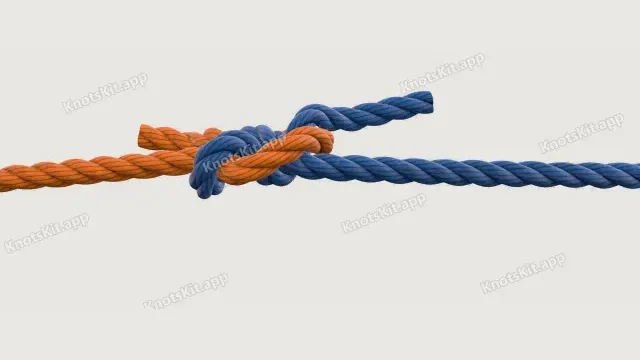
Join two ropes with a sheet bend. It is quick to tie, easy to undo, and works with ropes of different thickness: fold the thicker one and tie with the thinner. When the ropes will flap around unloaded, or the pull keeps stopping and starting, tie a double fisherman’s knot instead, and expect it to be hard to untie.
The best knot for this job
How to tie the Sheet Bend
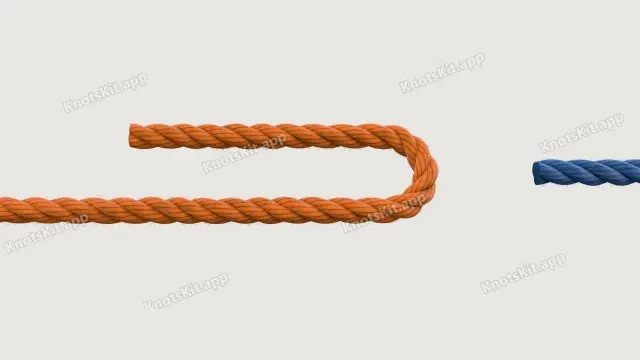
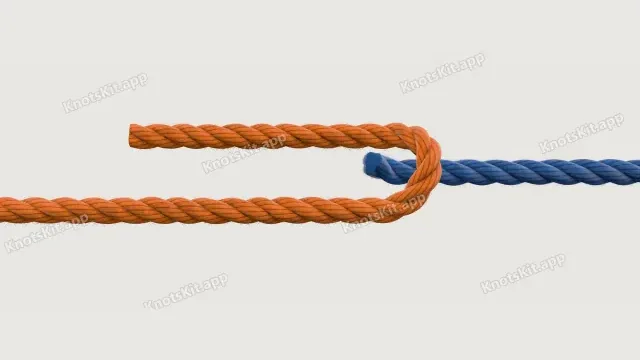
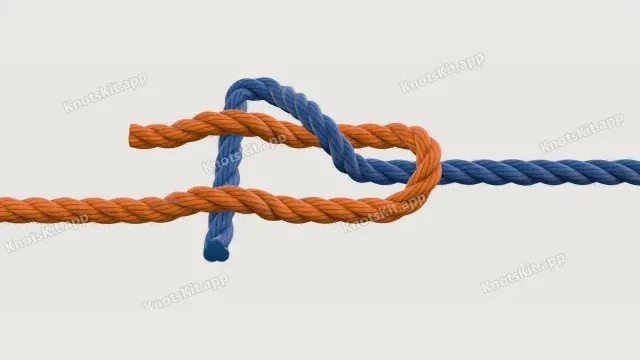
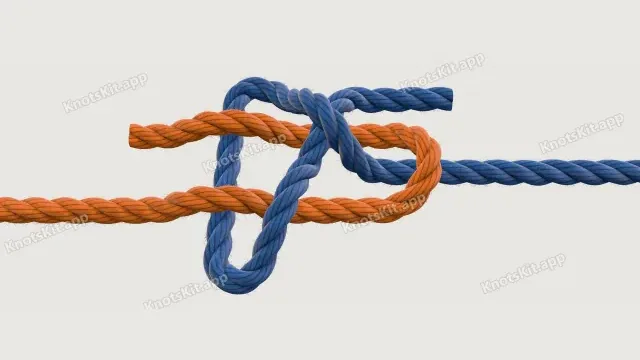
Your options
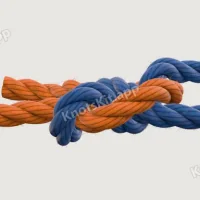 Sheet BendJoin two ropes of different thicknessesThe go-to join for two ropes, especially when one is thicker. Fold the thicker rope into a U, tie with the thinner one, and check that both free ends finish on the same side.
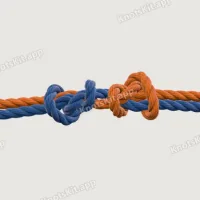 Double Fisherman's KnotJoin two ropes or make a cord loopPick it when the join may move around while slack, or to close a length of cord into a loop. Its wraps can pull very tight, so use it where you won’t need to untie it soon.
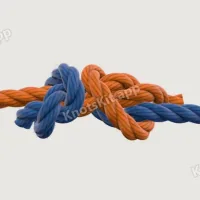 Fisherman's KnotJoin two cords with two overhand knotsA quick join for two thin ropes or cords of similar size: an overhand knot on each, tied around the other rope, slid together. Skip it with slippery or stiff rope, or where the join must be secure, and tie the double fisherman’s instead.
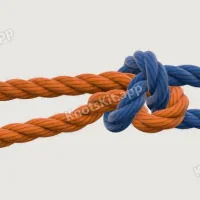 Lapp KnotJoin two ropes, quick to undoPick it for a light job when you want a join that is quick to tie and easy to undo. Avoid it where the join takes a heavy or changing load, or where a failure could hurt someone.
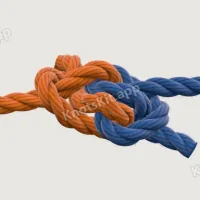 Zeppelin BendJoin two ropes, rarely jams after a pullPick it for two ropes of similar thickness when you want a join that usually stays easy to untie, even after a heavy pull. Check which way the loops face before you tuck: one turned the wrong way gives a different knot that can slip.
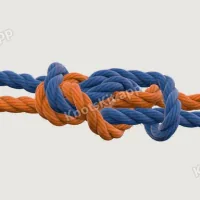 Figure Eight BendJoin two ropes with a doubled figure eightA join for two ropes of similar thickness that is easy to check at a glance. Also called the Flemish bend. It can jam after a heavy pull, and each free end must leave beside the other rope’s long section: with both ends on the same side, it can roll open under load.
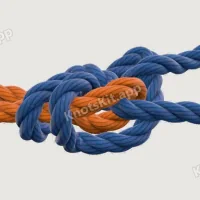 Double Sheet BendA sheet bend with an extra turnA sheet bend with a second turn, for when the sheet bend may not be enough, such as in slippery rope. If the ropes differ in thickness, fold the thicker one. It can loosen if the ropes move around slack, so skip it where a failure could hurt someone.
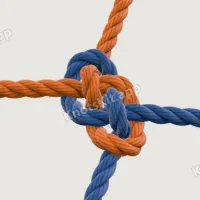 Carrick BendJoin two thick ropes with a woven knotThe join for two thick ropes, such as mooring or towing lines, and it usually stays easy to undo after a heavy pull. It is bulky, so skip it if the knot must run through a fairlead or a pulley, and check that every crossing goes over and under in turn.
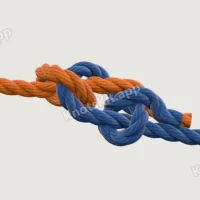 Ashley's BendJoin two ropes with two linked loopsA compact join for two ropes of similar thickness, usually easy to untie afterwards. Skip it if the ropes differ a lot in thickness or are too stiff to pull snug, because it can slip.
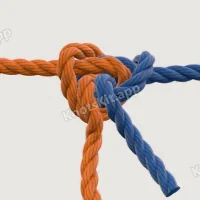 Alpine Butterfly BendThe butterfly knot for joining two ropesIf you already know the alpine butterfly, this is the same knot with its loop cut, for two ropes of similar thickness. Check the shape before use, because a wrong tuck gives a knot that can slip.
Getting a secure join
Start with clean, sound ends. A frayed end is hard to shape and can leave a weak spot right where the knot sits, so trim it back to sound rope or tie further along.
For the sheet bend, decide which rope is thicker before you start: that one gets folded into a U, and the thinner rope wraps around it. When both ropes are the same, either can be folded. In the finished knot both free ends come out on the same side. If they end up on opposite sides, untie it and go back to steps 3 and 4.
For the fisherman’s knot and the double fisherman’s, tie each knot around the other rope, never around its own end, then pull the long sections so the two knots slide together and touch.
Before you rely on it
Pull each long section firmly, then look at the knot again. Leave enough free end on each rope that it can’t work back through; how much depends on the rope and the job. If the join will be shaken about while slack, check it again after it has been loose, or switch to the double fisherman’s knot. Keep the Lapp knot and the fisherman’s knot for light jobs where a slip would not hurt anyone.
Questions people ask
How do you join two ropes of different thickness?
Use the sheet bend. Fold the end of the thicker rope into a U, then tie with the thinner rope, which wraps around the U and locks under itself. The thinner rope does the wrapping because it beds down more easily around the thicker one. If the difference is large or the rope is slippery, give the knot a firm test pull and watch it before you rely on it.
Can I join two ropes with a reef knot or a surgeon’s knot?
Not for a join that takes a load. Both are binding knots, made to close one cord tightly around something, such as a bundle, a sack or a post. A reef knot joining two loaded ropes can capsize and pull apart, and the surgeon’s knot is not made for that job either. The sheet bend is: one rope is folded into a U, and the other wraps around it and locks under itself.
Which knot joins ropes for climbing?
The double fisherman’s knot is a familiar one in climbing, for example to close a length of cord into a loop. For anything that holds a person, the knot and the whole setup should be learned with a qualified instructor. Follow their guidance and check the knot before every use.
How do I untie a knot that has jammed?
Take all the load off and work on the knot itself, not the long sections. Push the turns towards each other to open them, and roll the knot between your fingers. A sheet bend usually opens when you bend back the U of the thicker rope. A double fisherman’s that has held a hard pull can stay jammed, which is why it suits joins you leave tied.