


How to tie a fisherman’s knot
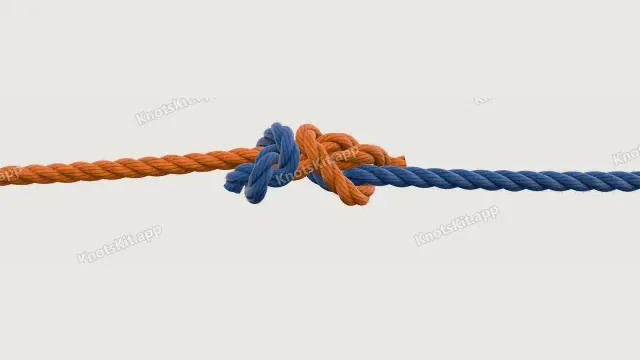
The fisherman’s knot, also called the English knot or angler’s knot, joins two thin ropes or cords of similar size. Each end ties an overhand knot around the other rope, then you pull the long sections and the two knots slide together until they touch. It is quick, small and easy to learn. Where the join must be secure, tie the double version.
Step 1 of 5
Lay the two ends side by side, pointing in opposite directions.
- Type
- Bend
- Difficulty
- Easy
- Also called
- Waterman's Knot, Angler's Knot, Englishman's Knot, English Knot, Halibut Knot
Step by step
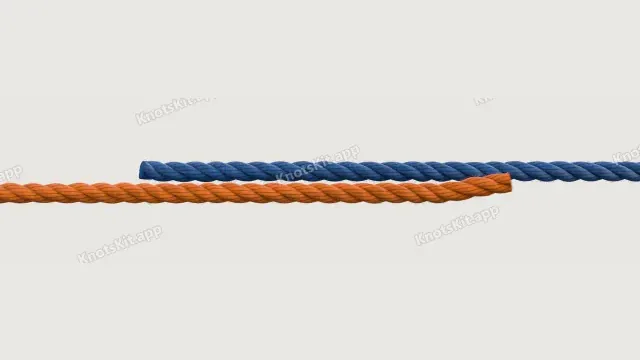
Step 1
Lay the two ends side by side, pointing in opposite directions.
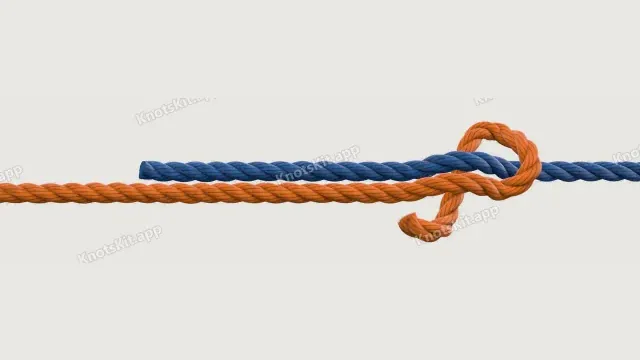
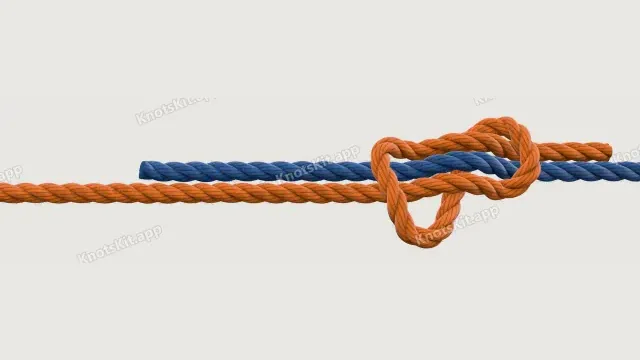
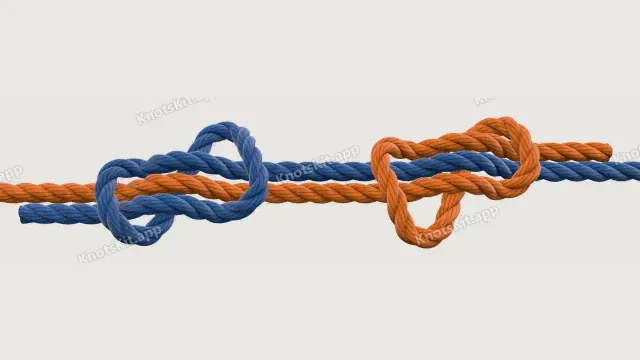
Step 4
Tie the same knot with the other end, around the first rope.
What it’s for
Join two thin ropes or cords of similar size, quickly.
When to avoid it
Avoid it with slippery or stiff rope, or where the join must be secure: tie the double fisherman’s knot instead.
Check your knot
Two overhand knots sit snug against each other, the free ends leaving in opposite directions.
Tips
- Leave enough rope beyond the knot. The length depends on the rope and how you use it.
- Tie each knot around the other rope, never around its own end.
Where it works best
- String and thin cord. Two lengths of string for a parcel, two pieces of cord for a washing line, a snapped bootlace tied back together. The knot stays small and tidy.
- First knots and scouting. If you can tie an overhand knot, you can tie this one, which makes it a good first bend to teach. Each half is a knot people already know.
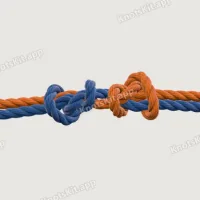
- Adjustable bracelets and necklaces. Tie it with the two ends of one cord and stop before step 5. The two knots stay apart and each one slides along the other cord, so you can make the loop bigger or smaller.
Common mistakes
- Ends pointing the same way. Step 1 lays them side by side in opposite directions. Start with both pointing the same way and the knots never meet in the middle.
- Tying around your own end. In steps 2 and 3 the overhand knot has to close around the other rope. Tie it around its own end only and it is just a stopper, with the other rope free to slide past.
- Two knots that don’t match. Step 4 is the same knot again, tied with the other end around the first rope. If the second one goes the other way round, the two won’t sit snugly together in step 5. Untie it and tie it again.
- Knots that don’t touch. In step 5 the long sections draw the two knots together until they touch, as the finish check asks. If they stop apart, check that each knot really sits around the other rope.
- Ends too short. A short end can creep back out of its knot. How much to leave depends on the rope and the job, so leave plenty.
When to tie something else
The single overhand on each side is the knot’s weak point. In smooth synthetic cord, in stiff rope, or wherever the join really matters, it can work loose, and the double fisherman’s knot is the fix: the same idea, with two wraps a side instead of one. If the ropes differ in thickness, a sheet bend copes better, because the thicker rope is folded and the thinner one wraps around it. For fishing line, see the blood knot and the uni-to-uni knot.
Related knots
Questions people ask
Fisherman’s knot or double fisherman’s knot?
The difference is the number of turns. In the fisherman’s knot each end wraps once around both ropes before it tucks back through; in the double, each end wraps twice. The single is quicker to tie and easier to untie. The double is bulkier but grips better, so tie it with slippery or stiff rope, or wherever the join must not come apart.
Is the fisherman’s knot used for fishing line?
Despite the name, it is not the usual join for modern fishing line. Anglers tend to tie a blood knot for two mono or fluorocarbon lines of similar size, and a uni-to-uni knot for braid to a leader. If you were after a knot to tie line to a hook, look at the improved clinch or the Palomar.
Can you untie a fisherman’s knot?
Usually, yes. Slide the two knots apart along the ropes, then work each overhand knot open on its own. After a hard pull, or once the cord is wet, they can be tight, and thin cord is the fiddliest. If you need to separate the ropes often, a sheet bend comes apart with less effort.
Is the fisherman’s knot safe for climbing?
Not for anything that holds a person. It is a quick join for cord and light rope, and it can work loose in slippery or stiff rope. Climbing knots should be learned from a qualified instructor, not from a web page.