


How to tie a double fisherman’s knot
The double fisherman’s knot, also called the grapevine, joins two rope ends with two knots that slide together and lock against each other. Climbers and rescuers use it to close a length of cord into a loop and to join ropes. It holds well and stays put, but after a heavy load it can be very hard to untie.
Step 1 of 6
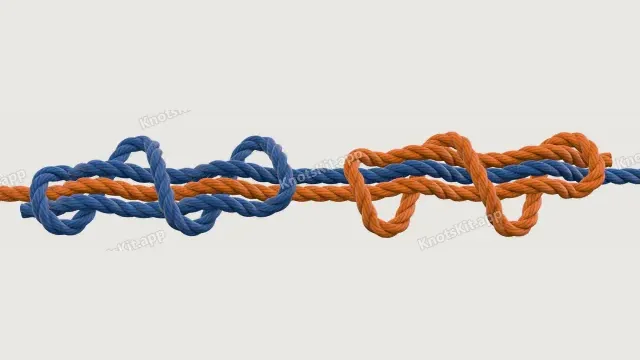
Lay the two ends side by side, pointing in opposite directions.
- Type
- Bend
- Difficulty
- Medium
- Also called
- Grapevine Knot, Double Englishman's Knot, Double English Knot, Tilley Hat Knot, Necklace Knot
Step by step
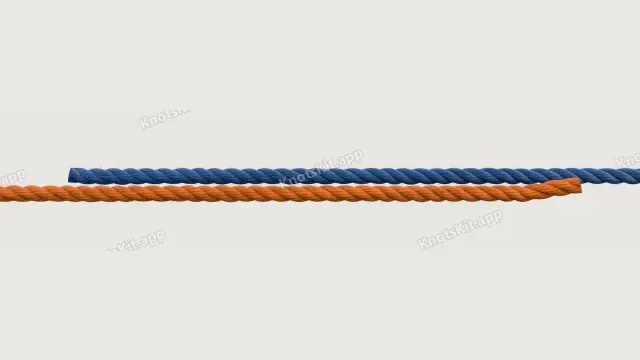
Step 1
Lay the two ends side by side, pointing in opposite directions.
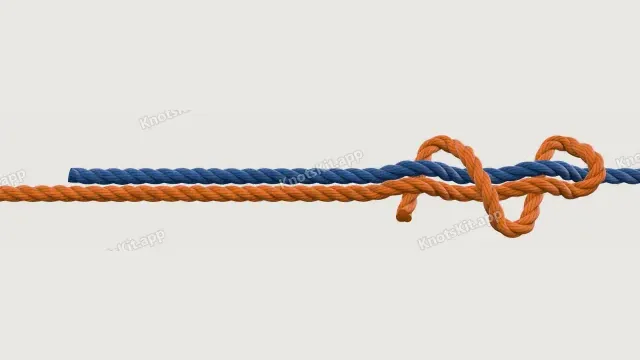
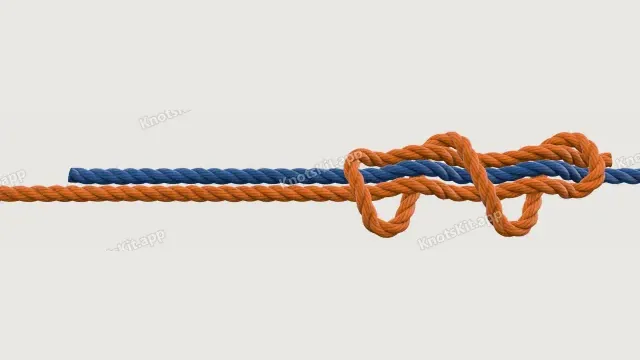
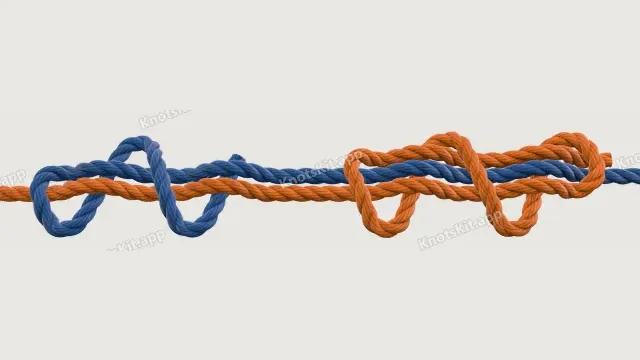
What it’s for
Join two rope ends, or close a cord into a loop.
When to avoid it
Avoid it if you need to untie the ropes easily after use. The knots can become very tight.
Check your knot
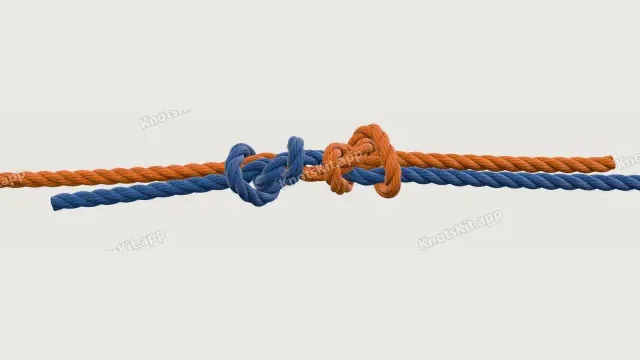
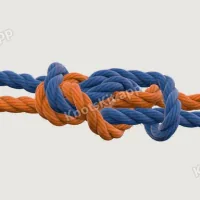
The two tightened knots touch. Each has an X on one side and two parallel turns on the other.
Tips
- Leave enough rope beyond the knot. The length depends on the rope and how you use it.
- Check both knots separately before pulling them together.
Climbing and rescue: learn this knot with a qualified instructor and check it before every use. This page does not replace hands-on training.
Where the double fisherman’s is useful
- Closing a cord loop. A length of cord tied into a closed loop becomes a sling for climbing, rescue or camp use. Once tightened and checked, the loop usually stays tied for as long as you keep the cord.
- Joining two ropes that must not come apart. It keeps two ends together while the rope is slack, wet or dragged over rock, at the cost of a knot you may never undo. In climbing and rescue, which join to use for which job is a question for your instructor.
- Permanent joins around camp. Two short pieces of cord turned into one long washing line, or a broken guy line repaired. If you want them apart again later, a sheet bend is kinder.
Common mistakes
- The end goes through only one turn. In steps 3 and 5 each end tucks back through both of its own turns. Through just one, the knot is incomplete and can pull apart.
- The second turn doesn’t cross the first. In steps 2 and 4 the second turn of each end crosses over the first, which is what makes the X. A knot with no X has a turn going the wrong way.
- The two knots don’t nest. Step 4 wraps the other end the same way as the first. If one side was tied the other way round, the knots won’t sit snugly against each other when you pull the long sections. Untie that side and tie it again.
- Ends too short. A short end can work back through its turns. How much to leave depends on the rope and the job, so err on the long side.
- Pulling it together too early. Tighten each knot on its own first, check it, and only then pull the long sections so the knots slide together, as in step 6.
Checking it before every use
Turn the finished knot over in your hand. On one side the two Xs sit next to each other, on the other you see four parallel turns in a neat row. Both knots are tight and touching, with an end coming out of each. If anything looks different, untie it now, while it still unties, and start again. In climbing and rescue, learn the knot with a qualified instructor and check it every time before you load it.
Related knots
Questions people ask
Is the double fisherman’s knot safe for climbing?
It is widely used in climbing and rescue, mostly to close cord loops. Which join suits a particular job, such as joining two ropes for an abseil, is something to learn with a qualified instructor. Tie it neatly, check both knots and both ends before every use, and never treat a web page as a substitute for training.
Can you untie a double fisherman’s knot?
Sometimes, with patience. After a light load you can usually separate the two knots and then work each one open. After a heavy load it can jam so hard that it won’t come apart at all. That is why people use it for cord loops that stay tied, and avoid it when the ropes need separating afterwards.
Is the grapevine knot the same as the double fisherman’s?
Yes. Grapevine knot and double English knot are other names for the same knot: each end ties a double overhand knot around the other rope, and the two knots meet in the middle. The triple fisherman’s adds one more turn on each side, and some makers of slippery cords call for it. Follow the cord maker’s guidance.
Double fisherman’s or sheet bend?
Pick the sheet bend for a quick join that unties easily, or when the ropes differ in thickness. Pick the double fisherman’s when the join must stay put even while the rope is slack and dragged around, and you can accept that it may never come undone. A sheet bend can loosen when the ropes move around unloaded.