


How to tie a sheet bend
The sheet bend joins two ropes end to end, and it copes well when one is thicker or stiffer than the other: you fold the thicker rope into a U and tie around it with the thinner one. Sailors use it to join a light line to a heavier one, campers to lengthen a tarp line. It ties in seconds and unties easily afterwards.
- Type
- Bend
- Difficulty
- Medium
- Also called
- Weaver's Knot, Becket Bend
Step by step
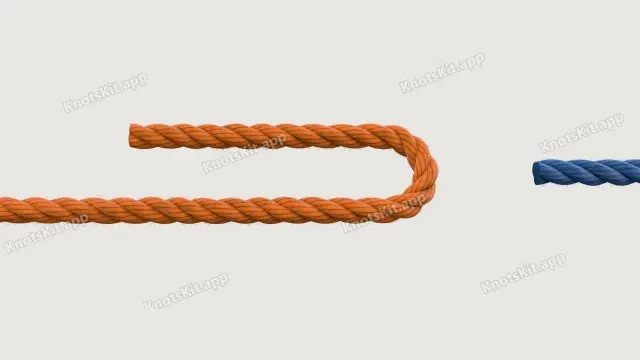
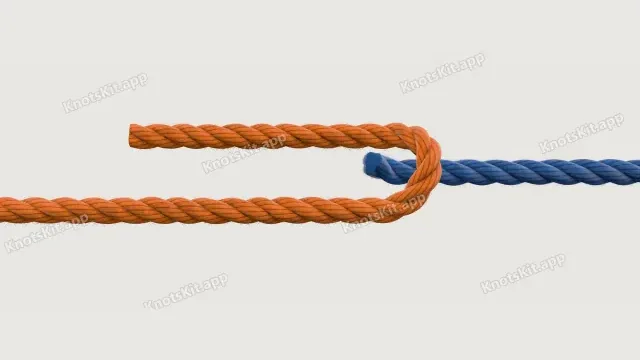
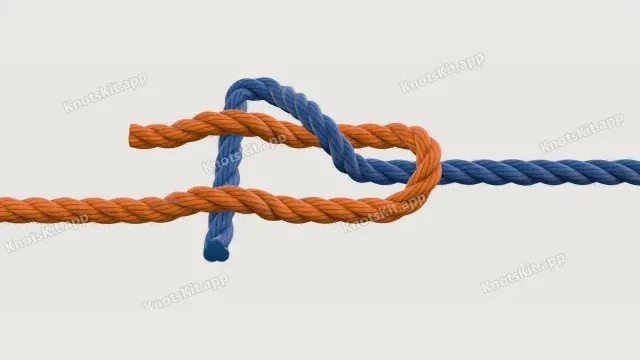
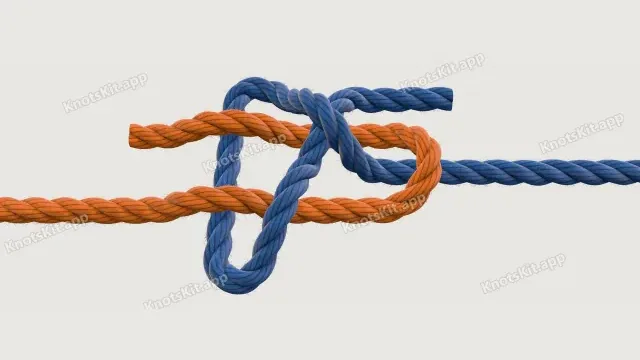
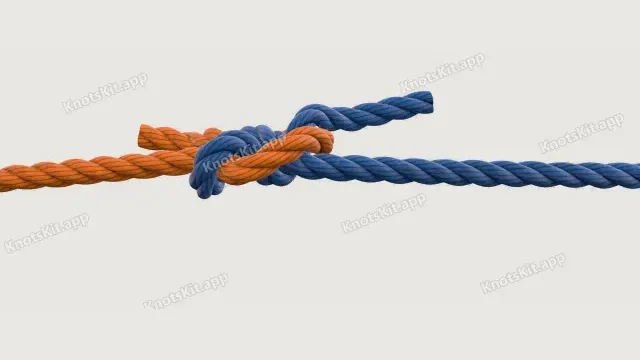
What it’s for
Join two ropes. If they differ in thickness, fold the thicker one and tie with the thinner one.
When to avoid it
Avoid it if the ropes will move around while loose, or the pull repeatedly stops and starts. The knot can loosen.
Check your knot
Both free ends come out on the same side of the knot.
Tips
- Leave enough rope beyond the knot. The length depends on the rope and how you use it.
- Keep the folded rope steady while you wrap the other rope around it.
Climbing and rescue: learn this knot with a qualified instructor and check it before every use. This page does not replace hands-on training.
Where the sheet bend is useful
- Two ropes that do not match. A thin cord to a thick rope, a stiff line to a soft one, an old rope to a new one. Fold the thicker one at step 1 and wrap with the thinner.
- Lengthening a line in camp. A tarp or tent line that comes up short of the stake: add a length of cord with a sheet bend and untie it when you pack up.
- On board. A light throwing line tied to a heavier mooring line, so someone on the dock can catch the light line and pull the mooring line across.
- Nets. The same knot ties the meshes of many nets.
Common mistakes
- Folding the thinner rope. The thicker rope makes the U and the thinner one wraps around it. Swapped, the knot grips less well.
- Free ends on opposite sides. At step 3 the end went around the U the other way. Undo it and wrap it in the opposite direction.
- Tucking under the U. At step 4 the end tucks under itself, across the U: under its own rope, not under the sides of the U.
- Loading it loose. Pull both long sections at step 5 before you put any weight on it. A knot that has only been shaped can pull apart.
When it can work loose
The sheet bend holds well under a steady pull. It is less happy when the ropes flap around unloaded or the pull keeps stopping and starting: the wrap can loosen and the folded rope can slide out of it. Stiff, slippery or very different ropes make this more likely, and the double sheet bend helps there. For a join that has to stay put while the ropes move around, a double fisherman’s knot is more secure, though bulkier and hard to untie after a load. For anything that holds a person, follow a qualified instructor.
Related knots
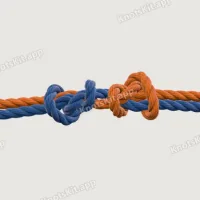
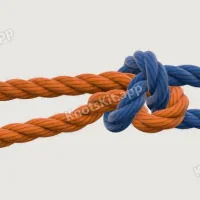
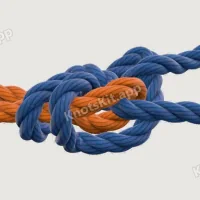
Questions people ask
Why must both free ends be on the same side?
That is how a correct sheet bend looks, and it is the finish check for this knot. If the free ends come out on opposite sides, you have tied a variant that is generally considered less secure. Undo it back to step 2 and, at step 3, take the end around the U the other way.
Is the sheet bend the same as the weaver’s knot?
Yes, the finished knot is the same. Weavers form it with a different movement of the fingers, suited to joining threads, while the steps here build it around a U. Either way you end up with the U locked by the wrap and both free ends on the same side, so the same checks apply.
What is a double sheet bend?
A sheet bend with one more wrap. After step 4, take the end around behind both sides of the U again and tuck it under itself once more, so the two wraps lie side by side. It grips better when the ropes are slippery or very different in thickness, at the cost of a bulkier knot.
Can I tie a sheet bend to a loop that is already there?
Yes. If one rope already ends in a fixed loop, like an eye splice or the loop at the corner of a tarp, use that loop as the U from step 1 and tie the rest of the knot around it with the other rope. Tied this way it is often called a becket bend.