


How to tie a Carrick bend
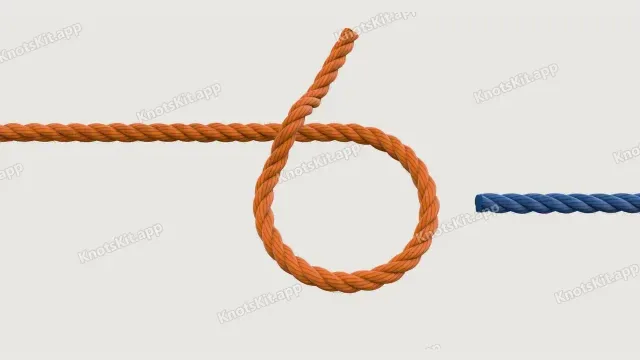
The Carrick bend, sometimes called the pretzel knot, joins two thick ropes such as mooring or towing lines. One rope makes a loop and the other weaves through it, over and under in turn, so even stiff rope only has to follow wide curves. It usually stays easy to undo after a heavy pull. The price is bulk: it does not suit a fairlead or a pulley.
Step 1 of 5
Cross the free end of one rope over its long section to make a loop.
- Type
- Bend
- Difficulty
- Medium
- Also called
- Pretzel Knot
Step by step
Step 2
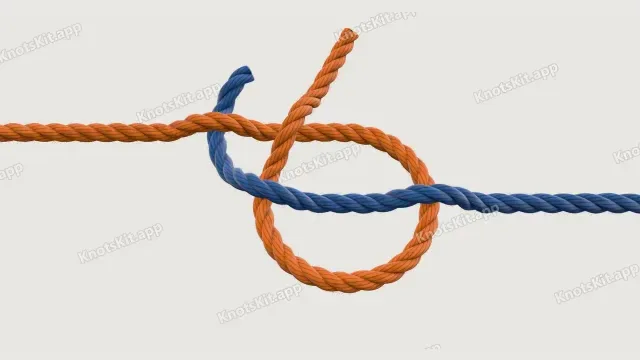
Lay the other rope’s end over the loop, then under the first rope’s long section.
What's a loop?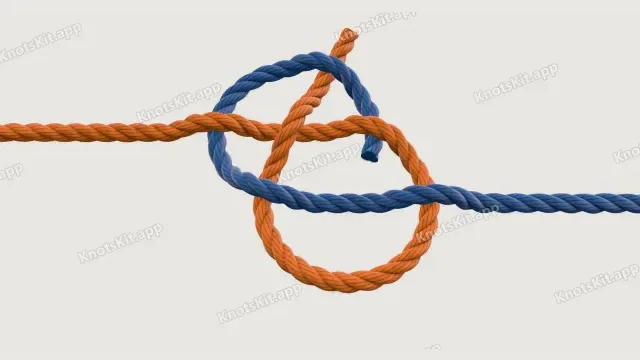
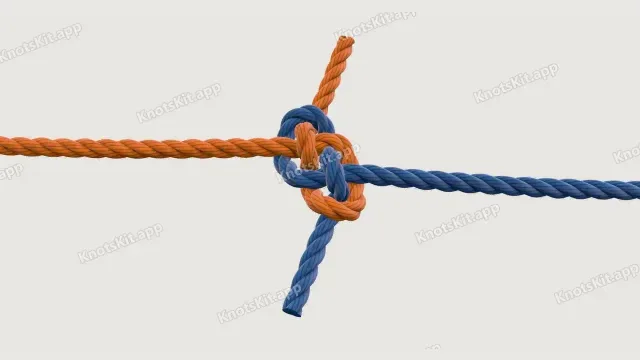
What it’s for
Join two thick ropes, such as mooring or towing lines. It usually stays easy to undo after a heavy pull.
When to avoid it
Avoid it if the knot must run through a fairlead or pulley: it is bulky. Check every crossing, because one that breaks the over and under order gives a different knot that can slip.
Check your knot
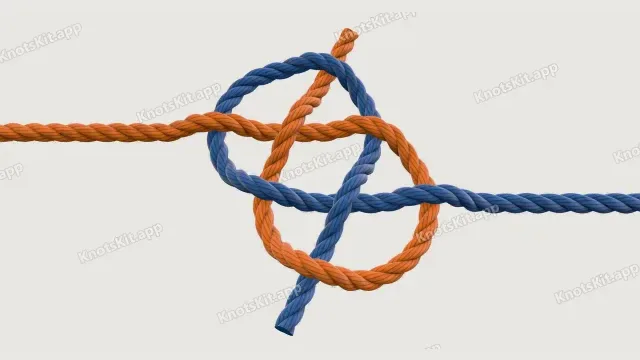
The ropes cross over and under each other in a compact block. The free ends leave on opposite sides.
Tips
- Leave enough rope beyond the knot. The length depends on the rope and how you use it.
- Lay the knot flat and check each crossing before you pull.
- As you pull, the flat weave can roll into a more compact shape. That is normal.
Where the Carrick bend is useful
- Mooring lines. Two heavy lines joined to reach a distant ring or bollard, then taken apart again without a fight.
- Towing. A second rope added to a towing line.
- Rope too stiff for a tight U. Thick rope that refuses sharp turns can still make the wide curves of the weave. If the two ropes differ in thickness, a sheet bend may suit better.
- Where it does not belong. If the join has to pass through a fairlead or a pulley, this knot is too bulky. Join the ropes somewhere else.
Common mistakes
- Breaking the rhythm. From step 2 to step 4 the end makes six crossings: over, under, over, under, over, under. Say it aloud as you weave. Two overs in a row give a different knot, and that one can slip.
- Mixing up the first rope’s two parts. Step 2 goes under the first rope’s long section, step 3 goes over its end. They lie close together, so follow each one back to where it comes from before you cross it.
- Free ends on the same side. The ends should leave on opposite sides. If they do not, go back to step 2 and retrace the other rope’s path.
- Pulling before you check. Step 5 is the last chance to read the knot. Once it rolls you can no longer count crossings, so lay it flat and check first.
- Ends too short. The weave draws rope in as it tightens at step 5. How much to keep depends on the rope and the job, so err on the long side.
Flat or rolled?
A Carrick bend has two forms and neither is wrong. Laid out, it is a flat, open weave. Under load it draws in and can roll into a compact block, which is how it works as a join. On very heavy lines the free ends are sometimes bound to their long sections with thin cord, so they cannot work back through the weave. The same alternating pattern starts the diamond knot, and for rope of ordinary size a Zeppelin bend gives a smaller join.
Related knots
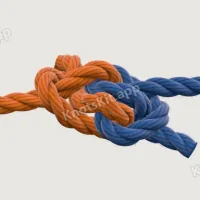
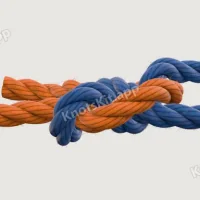
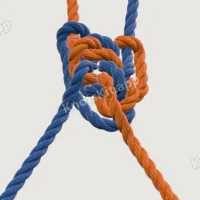
Questions people ask
Why does the Carrick bend change shape when I pull it?
That is normal. The flat weave you lay out has a lot of open space, and as the ropes draw together it can roll into a more compact block. Check the crossings before you pull, while the knot is still flat, because once it has rolled the over and under pattern is much harder to read.
Carrick bend or sheet bend for thick ropes?
For heavy lines that will take a hard pull, the Carrick is usually the better fit: thick rope follows its wide curves and the knot tends to stay easy to undo. The sheet bend is quicker and copes with ropes of different thickness, but it can loosen when the ropes move around unloaded.
Can I use a Carrick bend on a towing line?
Yes, joining towing and mooring lines is what it is for. Make sure both ropes are sound and suited to the job, check every crossing, and keep the knot away from fairleads and pulleys. Stay clear of any line under heavy load: if a rope or a fitting gives way, it can whip back.
How do you untie a Carrick bend?
Take the load off completely, then push the long sections back towards the knot to open the crossings. The rope has not been forced into tight turns, so the block usually loosens without tools, even after a heavy pull. Once it has some slack, draw each free end back along its path and the ropes separate.