


How to tie a diamond knot
The diamond knot, also called the lanyard knot or knife lanyard knot, is a small woven bead for a lanyard, a whistle cord or a knife cord. Two ends weave through a loop, go around the outside and come up through the middle, and then the slack comes out a little at a time. It is a decorative knot, so it should never take a real load.
Step 1 of 5
Cross the free end of one rope over its long section to make a loop.
- Type
- Bend
- Difficulty
- Hard
- Also called
- Lanyard Knot, Knife Lanyard Knot, Two-strand Diamond Knot, Bosun's Whistle Knot
Step by step
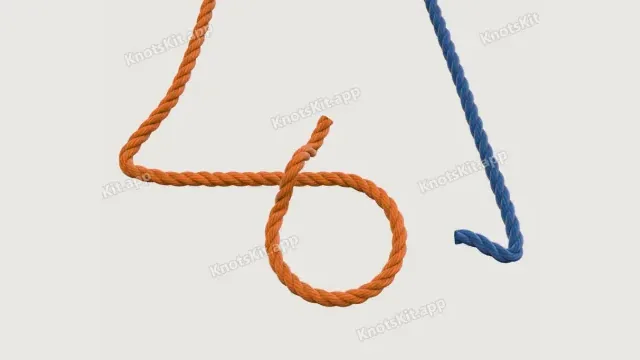
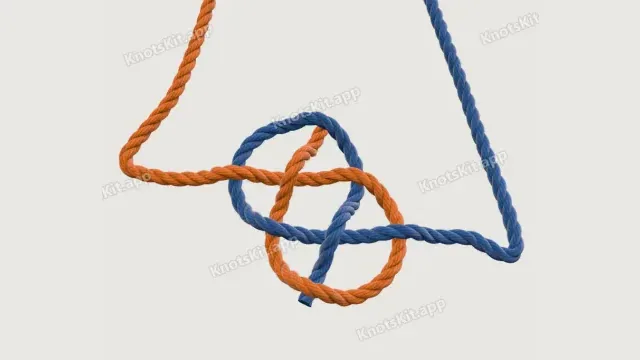
Step 2
Weave the other rope’s end through the loop, going over and under in turn.
Every crossing should alternate, as in the Carrick bend.
What's a loop?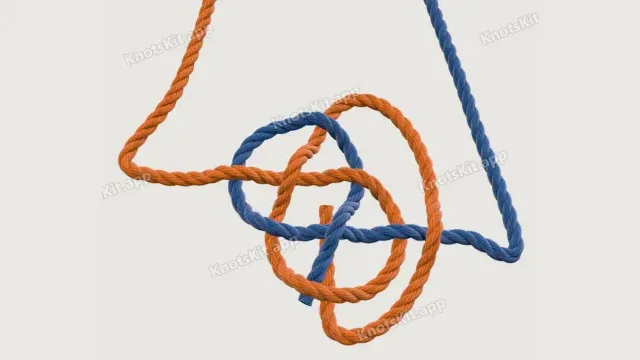
Step 3
Take the first rope’s end around the outside, over the other rope and up through the middle.
It passes under the whole weave before it comes up.
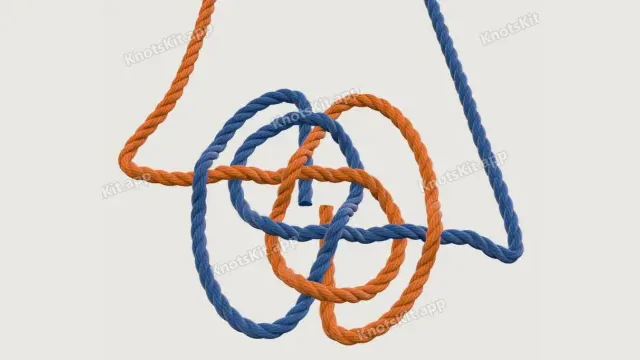
Step 4
Take the other rope’s end around the other side and up beside the first.
Step 5
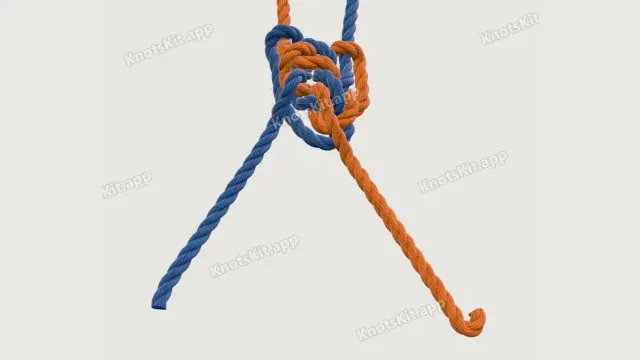
Work out the slack little by little, then pull both ends to set the knot.
What it’s for
Tie a decorative knot in a lanyard, a whistle cord or a knife cord.
When to avoid it
Avoid it for anything that takes a real load or could hurt someone if it fails: it is a decorative knot. Once set, it can be hard to undo.
Check your knot
A flat woven bead sits where the ropes meet. The long sections leave one side of it and the free ends the other.
Tips
- Start with plenty of cord: this knot uses more than it looks.
- Take the slack out a little at a time, following each rope through the knot.
- With a single cord, fold it in two and use its two ends.
Where the diamond knot works
- Knife lanyards. The bead sits on the cord and gives your fingers something to find, and with one folded cord you get the loop for free.
- Whistle cords. A neat finish on a cord that hangs from a pack strap.
- Zip pulls and key cords. The same knot in thinner cord makes a small, tidy grip.
- Teaching weaving. A good scout project: everyone goes home with something to keep. The weave at the start follows the same over and under rule as the Carrick bend, so one knot prepares you for the other.
Common mistakes
- Breaking the weave at step 2. Every crossing alternates, over then under. Miss one and the bead will not form, and you see it later as a lump.
- A short cut at step 3. The first end goes around the outside, over the other rope, and under the whole weave before it comes up through the middle. Take a shorter route and it stays outside the knot.
- Ends coming up apart. At step 4 the other end goes around the other side and comes up beside the first. In different gaps, they cannot leave together.
- Pulling the ends first. Step 5 starts with the slack and only ends with the pull. Reverse the order and the knot closes out of shape.
- Running out of cord. The knot uses more than it looks, and coming up short at step 4 means starting again.
Working it into a neat bead
Think of step 5 as the real work. Start at one long section and follow that rope through the knot, easing a little slack out of each turn and passing it along towards the free end. Do the same with the other rope, then go around again. When the knot is small and even, pull both ends to set it. Cord matters too: soft, round cord shapes easily, while stiff cord fights you. Your first one is easier in thick cord, because the crossings are simple to see. To close a cord into a loop that stays closed, tie a double fisherman’s knot instead.
Related knots
Questions people ask
Is the diamond knot the same as the lanyard knot?
Yes, in this two-strand form. Lanyard knot, knife lanyard knot, two-strand diamond knot and bosun’s whistle knot all name the same woven bead, and which one people use often depends on what hangs from it. The name changes, the steps do not: two ends, one weave, both ends up through the middle.
How do I tie a diamond knot with one cord?
Fold the cord in two and use its two ends as the two ropes in the steps. The fold stays as a loop where the long sections leave the knot, which makes this version handy on a lanyard: the loop goes to a clip or a ring, and the free ends finish on the other side of the bead.
Can a diamond knot hold weight?
Treat it as decoration. It suits the light work of keeping a whistle or a pocket knife close to hand, but it should not take a real load, and it should not go anywhere it could hurt someone if it fails. For a working join, choose a knot made for the job you have.
Can you undo a diamond knot?
While it is still loose, yes: ease each end back along its path. Once it is set it can be hard to undo, above all in thin or stiff cord. A blunt needle can help open the first crossing. If it will not move, cutting the cord and starting again is often quicker.