


How to tie a Zeppelin bend
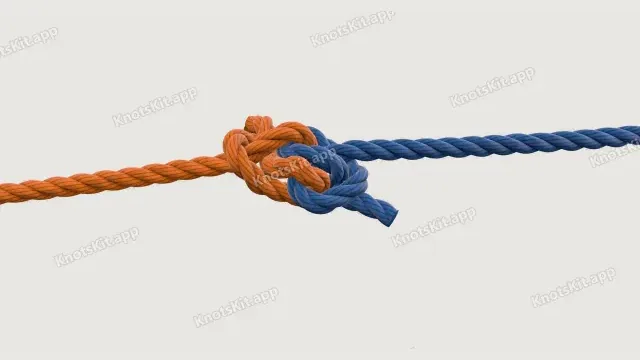
The Zeppelin bend, also called the Rosendahl bend, joins two ropes of similar thickness. Each rope makes a loop, one loop sits under the other, and the two free ends pass through both, one from below and one from above. It usually stays easy to untie, even after a heavy pull. The trap is at the start: one loop turned the wrong way gives a different knot that can slip.
Step 1 of 5
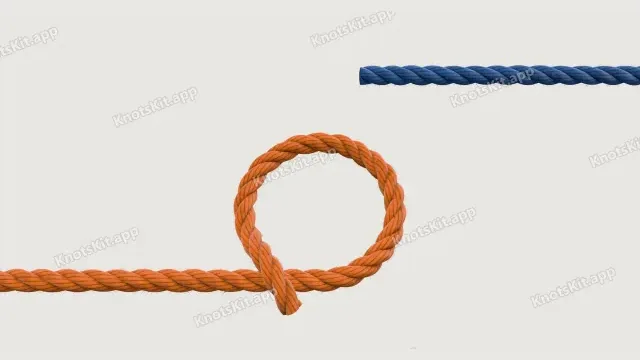
Cross the free end of one rope over its long section to make a loop.
- Type
- Bend
- Difficulty
- Medium
- Also called
- Rosendahl Bend
Step by step
Step 2
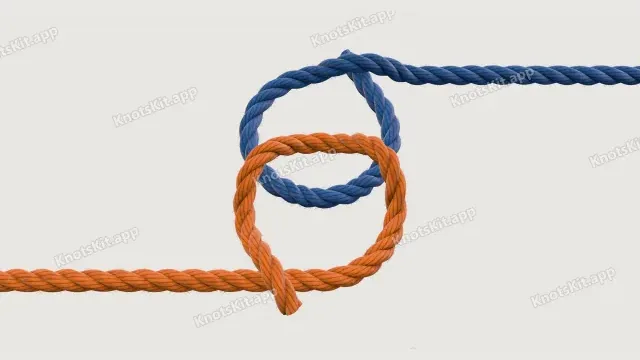
Cross the other rope’s end under its long section to make a second loop, beneath the first.
What's a loop?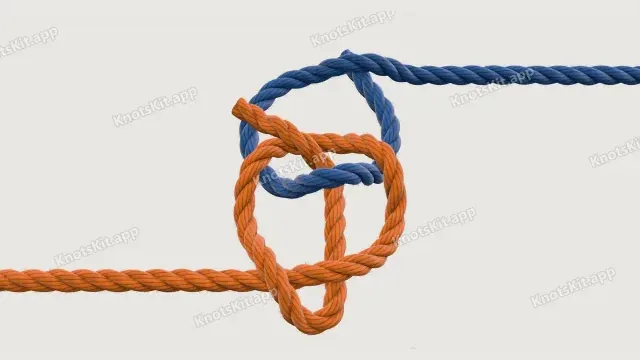
Step 3
Pass the first rope’s end up through both loops, from underneath.
Keep the two loops lined up, so the end goes through both at once.
What's a loop?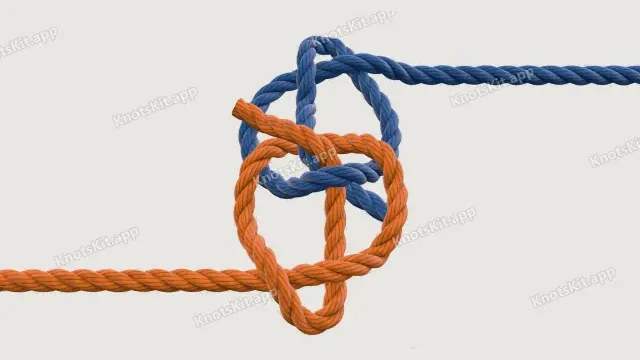
What it’s for
Join two ropes of similar thickness with a knot that usually stays easy to untie, even after a heavy pull.
When to avoid it
Check which way the loops face before you tuck: one loop turned the wrong way gives a different knot that can slip. For climbing, learn it with an instructor.
Check your knot
The free ends stand out on opposite sides of the knot, across the line of the long sections.
Tips
- Leave enough rope beyond the knot. The length depends on the rope and how you use it.
- Check that each end passes through both loops, not just one.
Climbing and rescue: learn this knot with a qualified instructor and check it before every use. This page does not replace hands-on training.
Where the Zeppelin bend is useful
- Ropes you want apart again. Two mooring lines joined for a long reach, or two camp lines joined for one job. After a heavy pull it usually still comes undone by hand.
- Ropes of similar thickness. If they differ, fold the thicker one and tie a sheet bend.
- Climbing. Learn it with a qualified instructor and check it before every use. This page shows how the knot is formed and does not replace instruction.
Common mistakes
- Second loop turned the wrong way. At step 1 the free end crosses over its long section, at step 2 the other rope’s end crosses under. Make both loops the same way and you get a different knot that can slip.
- Loops not stacked. Step 2 puts the second loop beneath the first. Line them up so you can look through both at once, or the ends will miss one at the next step.
- One loop missed. At steps 3 and 4 each end goes through both loops. Through one alone, the knot is not finished.
- Both ends going the same way. The first end comes up from underneath at step 3, the second goes down from above at step 4. They pass through the loops in opposite directions, side by side.
- Trusting it before it is tight. Step 5 pulls both long sections. Do that firmly by hand and check the shape before any real load goes on.
Stop and check after step 2
The whole knot depends on one moment: two loops stacked, before either end goes through. Make a habit of stopping there. Look at how each free end crosses, one over its long section and the other under. If both look the same, turn one loop over now: it costs a second, and after the tucks it means starting again. After step 5, read the finish. The free ends stand out on opposite sides of the knot, across the line of the long sections. That also tells it apart from Ashley’s bend and the alpine butterfly bend, where the ends leave together. If you see anything else, undo it.
Related knots
Questions people ask
Does the Zeppelin bend jam?
It rarely does, and that is the main reason people choose it. After a heavy pull you can usually open it by hand, where a figure eight bend or a double fisherman’s knot can lock up. Usually is the word, though: wet or heavily loaded rope can make any knot stubborn.
Why did my Zeppelin bend slip?
Most likely one loop was turned the wrong way, and you tied a different knot that only looks close. At step 1 the free end crosses over its long section, at step 2 the other end crosses under. Check too that each end went through both loops. If the ends do not stand out on opposite sides, tie it again.
Zeppelin bend or figure eight bend: which should I tie?
Pick the Zeppelin bend when you need the ropes apart again afterwards, since it usually unties even after a heavy pull. Pick the figure eight bend when reading the knot at a glance matters most and you can accept that it may jam. For climbing and rescue, that choice belongs to your instructor.
Is the Zeppelin bend safe for climbing?
How safe a join is depends on tying it correctly, on the rope and on the system around it, and this knot has a trap: a loop turned the wrong way gives a knot that can slip. Learn it with a qualified instructor, not from a web page, and check it before every use.