


How to tension a line
Tie a trucker’s hitch. A loop in the rope works like a pulley, so you can pull much harder than with the rope alone, then you lock the tension with two half hitches. It suits a load on a trailer or a roof rack. For a tent or tarp line you will want to adjust, tie an adjustable grip hitch, which slides when pushed and grips under tension.
The best knot for this job
How to tie the Trucker's Hitch
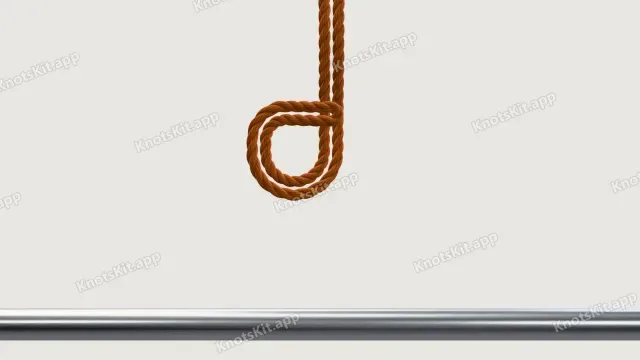
Step 1
Fold the rope into a long U, then lay the folded end over the doubled rope to make a loop.
Leave a long free end: it still has to reach the rail and come back.
What is the folded end?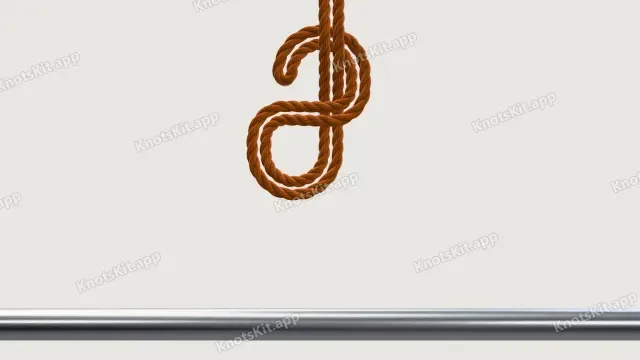
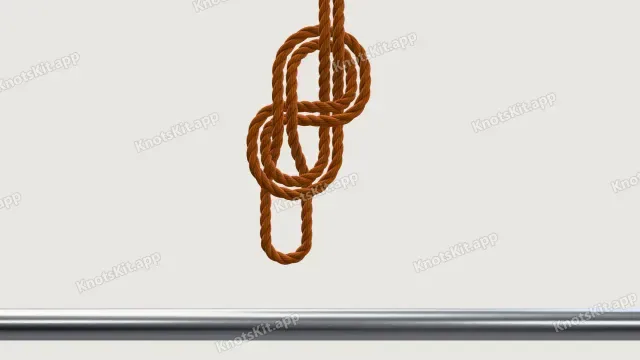




Step 7
Wrap the end around both sections above the rail and under itself, for the first half hitch.
Keep the rope tight with your other hand while you tie.
What are wraps?
Step 8
Tie a second half hitch just below it, then pull the end to tighten.
Your options
 Trucker's HitchPull a rope tight over a loadThe first choice to pull a rope tight over a load and keep it tight, on a trailer, a roof rack or a tarp line. The pull is stronger than it feels, so skip it on worn or thin rope and on a weak anchor point, and never use it to lift anything or anyone.
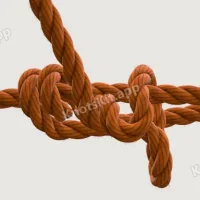 Adjustable Grip HitchAdjust the tension of a tent ropePick it for a tent or tarp line you will want to adjust: it slides when you push it and grips when the rope pulls. Skip it on very slippery or stiff rope, and wherever a slipping knot could put someone at risk.
Before you pull
Look at the rope first. The loop multiplies your pull, so worn or thin rope that seems fine in your hands can break, and so can a weak anchor point, such as a thin rail or a flimsy hook.
Then think about where the loop goes. Steps 1 to 4 make it, somewhere along the rope, and step 5 takes the free end down around the rail and back up through it. Put the loop far enough from the rail that it has room to travel as the rope tightens: if it reaches the rail too soon, you run out of pull before the rope is tight. Leave a long free end too, because it still has to reach the rail and come back.
The adjustable grip hitch needs room as well. Tie it well away from the post, so it can slide in both directions once the line is up. If you are stringing a line between two trees, tie the first end with a bowline or a Siberian hitch, then use one of these two at the second tree, where the tension goes on.
Keeping it tight
At step 6, pull the free end steadily rather than with a jerk, and watch the rope closest to the rail. When it is tight enough, hold it there with your other hand while you tie the two half hitches at steps 7 and 8. If you let go to tie them, some of the tension goes.
Look at the load again once it has settled or shifted, because that is when a tight rope goes slack. Rope also rubs on itself inside the loop, so check it for wear if you use this knot often.
The adjustable grip hitch asks for less effort and more visits: after wind or rain, go around your lines and reset them.
Neither knot is for lifting. Where a slipping knot or a breaking rope could hurt someone, use gear made for the job.
Questions people ask
Can I use a trucker’s hitch to tie down a load on a car or trailer?
Yes, that is what it is for, as long as the rope is sound and the anchor point can take the pull, which is stronger than it feels. Check the tension again once the load has settled or shifted. Never use it to lift anything or anyone. If a load coming loose could hurt someone, use straps made for the job.
Trucker’s hitch or adjustable grip hitch: which should I tie?
Tie the trucker’s hitch when you want strong tension, set once, over a load or on a tarp line: the loop works like a pulley. Tie the adjustable grip hitch on a tent or tarp line you keep adjusting: it slides when you push it and grips when the rope pulls, with nothing to undo. The tension is only what your hands can give it, though.
How do you untie a trucker’s hitch?
Undo the two half hitches first, keeping hold of the rope so the tension comes off slowly. The rope can then run back out of the loop and off the rail. The knot that holds the loop is the stubborn part, because it can be hard to untie after a heavy pull. Take all the load off and push its turns towards each other.
How do I keep a tent line tight in wind and rain?
Tie an adjustable grip hitch, then slide it away from the post or peg to tighten the line and towards it to slacken. Check it again after wind or rain, when the rope can go slack. On very slippery or stiff rope the knot can slide under load, so change the rope or switch to a trucker’s hitch.