


How to tie a trucker’s hitch
The trucker’s hitch, also called the power cinch or lorry driver’s hitch, pulls a rope tight over a load and keeps it tight. A loop tied in the rope works like a pulley: the free end goes around a rail and back through it, so you can pull much harder than with the rope alone. It tensions loads and tarp lines. It is not for lifting anything or anyone.
Step 1 of 8
Fold the rope into a long U, then lay the folded end over the doubled rope to make a loop.
Leave a long free end: it still has to reach the rail and come back.
- Type
- Hitch
- Difficulty
- Medium
- Also called
- Lorry Driver's Hitch, Harvester's Hitch, Hay Knot, Wagoner's Hitch, Power Cinch, Purchase Loop
Step by step
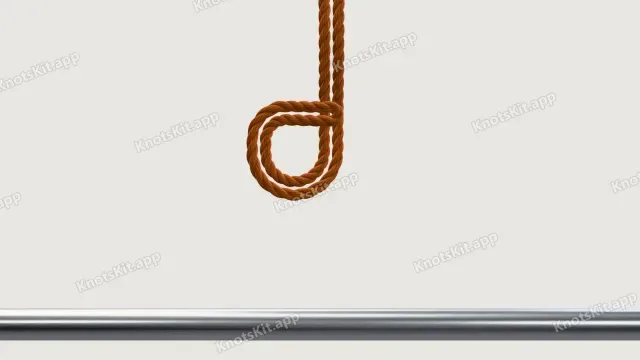
Step 1
Fold the rope into a long U, then lay the folded end over the doubled rope to make a loop.
Leave a long free end: it still has to reach the rail and come back.
What is the folded end?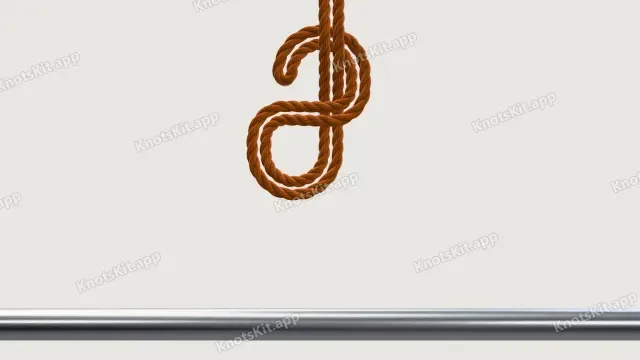
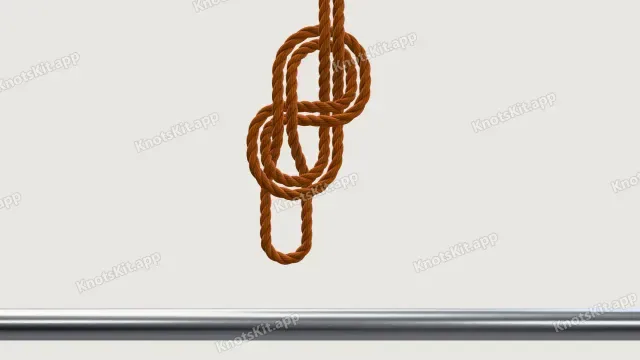




Step 7
Wrap the end around both sections above the rail and under itself, for the first half hitch.
Keep the rope tight with your other hand while you tie.
What are wraps?
Step 8
Tie a second half hitch just below it, then pull the end to tighten.
What it’s for
Pull a rope tight over a load and keep it tight. The loop works like a pulley, so you can pull much harder than with the rope alone.
When to avoid it
Avoid it on worn or thin rope, or on a weak anchor point: the pull is stronger than it feels and can break them. Do not use it to lift anything or anyone.
Check your knot
The rope goes under the rail, up through the loop and back down to two half hitches, just above the rail. The sections stay tight.
Tips
- Tie the far end of the rope to something solid before you start.
- The rope rubs on itself inside the loop. Check it for wear if you use this knot often.
- The knot that holds the loop can be hard to untie after a heavy pull.
- Check the tension again once the load has settled or shifted.
Before you tie it
The steps begin at the loop, so the other end of the rope must already be tied off: to the far side of the load, to a tree or to a ring, with a knot such as two half hitches. You choose where the loop goes at step 1. As you pull at step 6 it travels towards the rail, so tie it well above, or it will reach the rail before the rope is tight.
Where the trucker’s hitch is useful
- Loads on a roof rack or a trailer. Rope over the load, tied off on one side and tensioned on the other. Check it again after a short drive, because loads settle.
- A tarp line between two trees. Tie off at the first tree and tension at the second. For a rope you keep adjusting, the adjustable grip hitch is simpler.
- Any line that should not sag. A clothes line, a rope fence.
Common mistakes
- Free end too short. At step 1 leave plenty: it still has to reach the rail at step 5 and come back.
- Skipping the turn at step 2. The folded end goes behind the doubled rope before it tucks through at step 3. Without that turn the loop can pull out or collapse when you load it at step 6.
- Losing the tension. Between steps 6 and 7 the rope wants to run back. Pinch the free end against the loop with your other hand until the first half hitch is on.
- Stopping at one half hitch. Step 8 adds the second. One alone can work loose.
The pull is stronger than it feels
That extra force is the point of the knot, and also its risk. Pulling as hard as you can at step 6 can break worn rope, thin rope or a weak anchor point, and a rope that lets go under tension can whip back. So pull until the rope feels firm, not until you run out of strength, and keep your face out of its line. The rope also rubs on itself inside the loop, so check that spot for wear if you use the knot often. A figure eight loop can replace the loop in steps 1 to 4, though it too can be stubborn to untie after a heavy pull. Never use this knot to lift anything or anyone.
Related knots

Questions people ask
How does a trucker’s hitch work?
The loop you tie in the rope works like a pulley. The free end goes around the rail, up through the loop and back down, so every pull reaches the rope with extra force. Some of that is lost to friction, because rope rubs on rope inside the loop, but you still pull much harder than with a plain rope.
Is a trucker’s hitch safe for a roof rack or a trailer?
It is widely used to tie loads down, but how well it holds depends on the rope, the anchor points and the load. The pull is stronger than it feels, so worn or thin rope or a weak anchor point can break. Follow your rack’s limits and the rules on securing loads, and check the tension again once the load has settled.
How do you untie a trucker’s hitch?
Undo the two half hitches first, holding the rope so the tension comes off gently. The free end then pulls back out of the loop and off the rail. The knot that holds the loop is the slow part: after a heavy pull it can be hard to untie, so bend it back and forth until it gives.
Trucker’s hitch or adjustable grip hitch: which should I tie?
Use the trucker’s hitch when you need real tension, over a load or on a tarp line that must stay taut. Use the adjustable grip hitch on a tent rope you expect to change often, because you only have to slide the knot. The trucker’s hitch pulls much harder, but it takes longer to tie and to undo.