


How to tie two half hitches
Two half hitches tie a rope to a ring, a post or a tree in a few seconds: the end goes around the object, then makes two matching hitches around the long section of rope. It holds well while the pull stays steady and comes undone easily afterwards. Boaters, campers and scouts reach for it all the time.
- Type
- Hitch
- Difficulty
- Easy
- Also called
- Clove Hitch Over Itself
Step by step
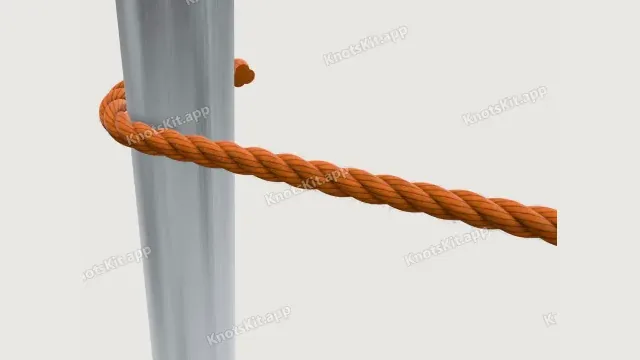
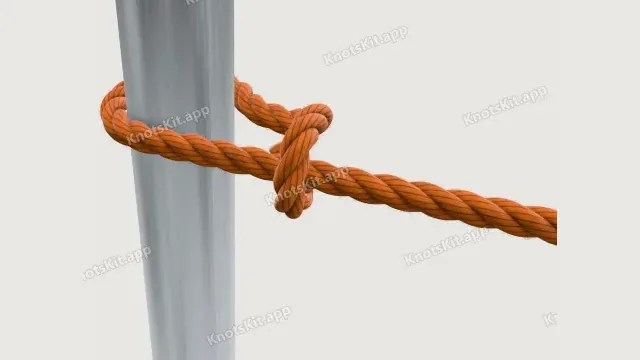
Step 2
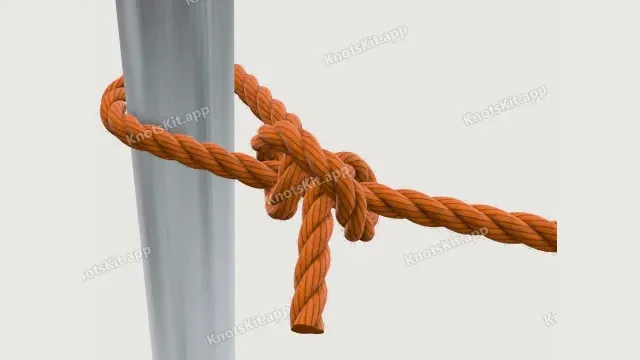
Wrap the end around the long section and through, for the first half hitch.
Which is the long section?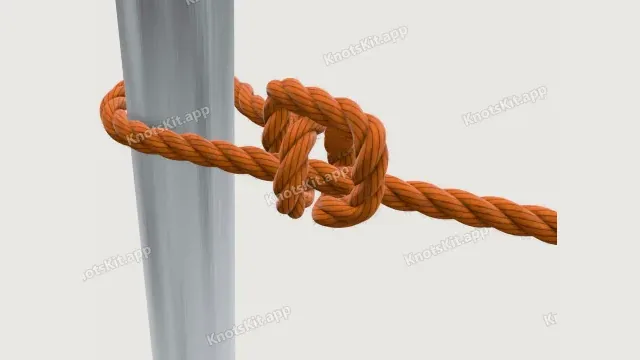
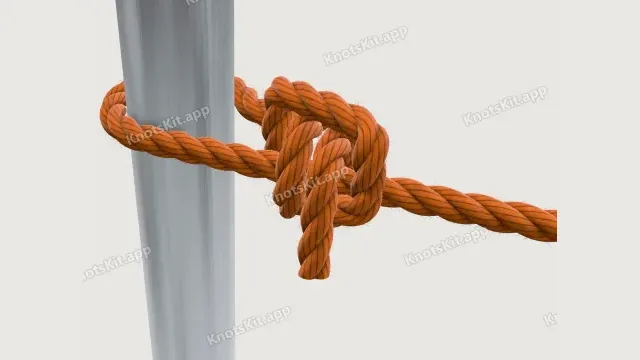
Step 4
Tuck the end under the crossing to finish the second half hitch.
What it’s for
Attach a rope to a ring, post or tree when the pull stays steady.
When to avoid it
Avoid it if the rope will jerk or pull in different directions. It can loosen. Do not use it where a slipping knot could put someone at risk.
Check your knot
Two matching knots sit beside each other around the long section of rope.
Tips
- Leave enough rope beyond the knot. The length depends on the rope and how you use it.
- Check that both turns go around the rope in the same direction.
Where two half hitches are useful
- A tender at a ring on the quay. For a short stop in calm water, pass the end through the ring and tie the hitches. If wash or waves start snatching at the line, the knot can loosen, so keep an eye on it or retie with something better suited.
- A line to a tree. A tarp line or a washing line at camp: take the end around the trunk, tie the hitches and pull them snug. On the last morning they come off in seconds.
- Anything with a ring or a handle. A bucket by its handle, a bag to an eye bolt, a line to a rail. Wherever the pull is steady and nobody depends on it.
Common mistakes
- Hitches going opposite ways. In step 3 wrap the long section in the same direction as in step 2. If you reverse it, the hitches don’t match and the knot can creep along the rope.
- Hitches left far from the post or ring. Step 5 is not optional. Slide both hitches up until they sit against the post or ring, then pull the long section. Left loose further along the rope, they shift and open.
- Too little end. A short end can pull back through the last hitch. How much to leave depends on the rope and the job, so leave more than you think.
- Hitches tied around the post. Both hitches go around the long section of your rope, not around the post or the ring. Tied around the post, it becomes a different knot.
Taking it off again
This is where the knot earns its place. Take the load off, push each hitch back along the long section away from the ring and it opens up. Pull the end back out and you are done, even after a firm pull. If something is still pulling on the rope, it pays to have tied a round turn, one extra pass around the ring: the turn holds most of the load while you open the hitches, then you ease the rope off by hand.
Related knots
Questions people ask
What is the difference between two half hitches and a clove hitch?
Once tightened, the two hitches around the long section have the same shape as a clove hitch, only tied on your own rope instead of on the post. A clove hitch goes straight onto a post or rail and is quick to adjust, but it can slip if the post turns or the pull changes direction. With two half hitches the rope first passes around the object.
Are two half hitches secure?
Under a steady pull in one direction they hold well. If the rope jerks, flaps around or gets pulled from different sides, the hitches can work loose. Do not use them where a slipping knot could put someone at risk, and check them again whenever the load has been coming and going.
What is a round turn and two half hitches?
The same knot with one extra pass: before the hitches, take the end around the ring or post a second time, so the rope wraps it completely. That turn takes most of the strain while you tie, which helps when a boat or a load is already pulling, and it spreads the wear on the rope.
Why do my two half hitches slip?
Most often the second hitch went around the long section in the opposite direction to the first. The two hitches then don’t match and the knot can slide along the rope. Wrap both the same way, as step 3 says, and slide them snug against the post or ring before you load the rope.