


How to tie a buntline hitch
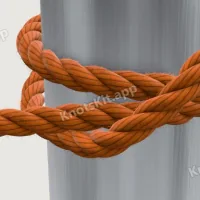
The buntline hitch ties a rope to a ring or a shackle that will shake or flap, as on a sail. It is a clove hitch tied around your own long section with the second turn on the inside, next to the ring, which is why it is also called the inside clove hitch. Movement tends to tighten it. The downside is that it can jam hard.
- Type
- Hitch
- Difficulty
- Medium
- Also called
- Inside Clove Hitch, Studding Sail Tack Bend
Step by step
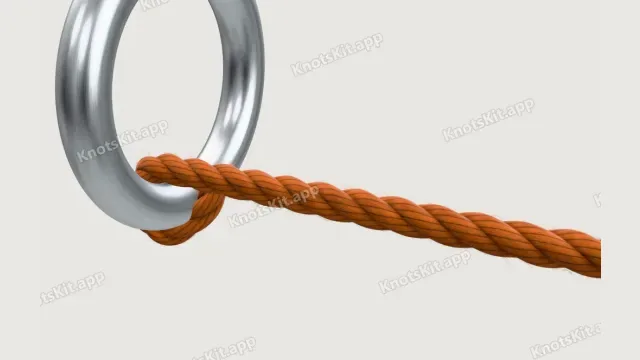
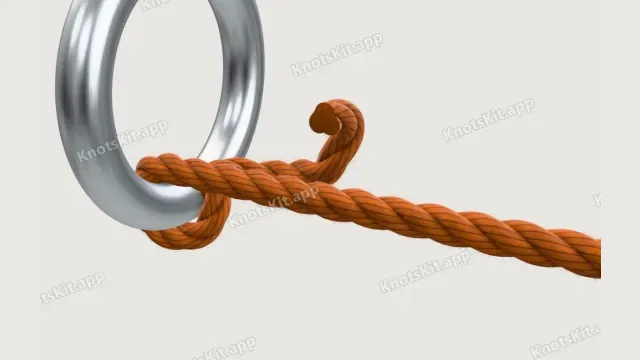
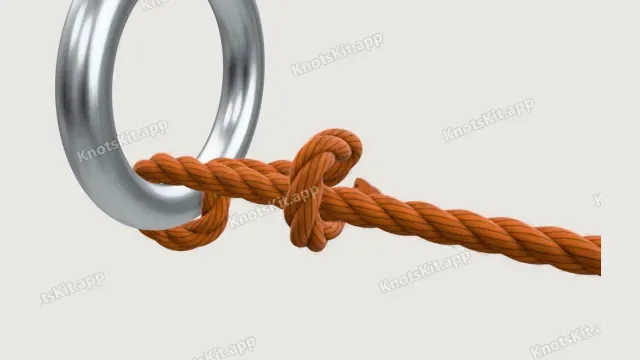
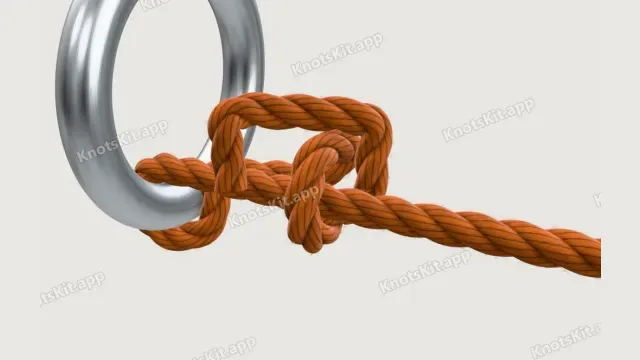
Step 4
Bring it back towards the ring, over the turn and down in front of the long section.
Which is the long section?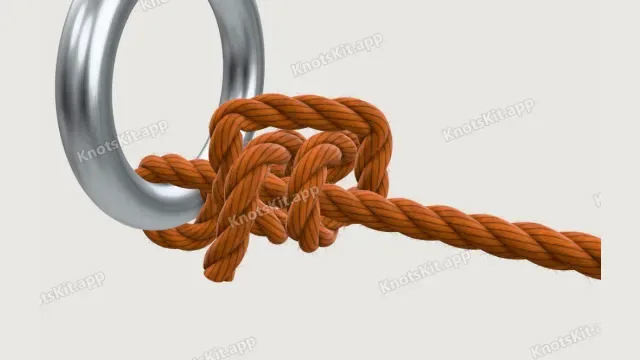
Step 5
Wrap the long section again and tuck the end under the crossing.
This turn goes between the first turn and the ring. Tied the other way, you get two half hitches.
Which is the long section?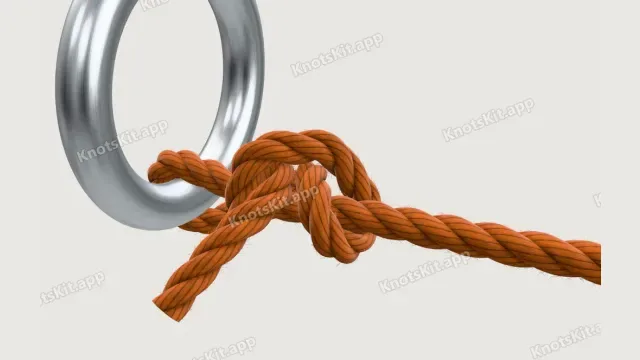
Step 6
Tighten the knot, then pull the long section to slide it towards the ring.
Which is the long section?
What it’s for
Tie a rope to a ring or shackle when it will shake or flap, as on a sail. Movement tends to tighten the knot, not loosen it.
When to avoid it
Avoid it if you will need to untie it soon or while it is under load: it tightens on itself and can jam hard.
Check your knot
Two turns sit around the long section, close to the ring, with a crossing over them. The free end comes out from under it.
Tips
- Leave enough rope beyond the knot. The length depends on the rope and how you use it.
- To undo it, first try sliding the knot back along the long section.
Where the buntline hitch works best
- Sails and flag lines. A rope on the ring of a small sail, or a flag line that snaps about in the wind all day. Knots that depend on a steady pull tend to shake loose here.
- Shackles and snap hooks. A line tied to a shackle that stays on for the season, where the knot should sit small and close.
- Tarps in a blow. A line through a tarp’s ring that rattles all night. Keep it for camps where you are not packing up in a hurry.
Why shaking tightens it
The end leaves the knot from under the crossing, pinned between the crossing and the turns. Each time the rope jerks, the long section drags the turns against that crossing and squeezes the end a little harder. With two half hitches the end comes out on the outside of the knot and can ease back as the rope flaps. That is the whole difference between them.
The same squeeze is why it jams. If you expect to undo the rope within the hour, or while it is under load, tie something easier: a clove hitch on a post, for example. If waves are pulling the rope more than wind is shaking it, compare the anchor hitch.
Common mistakes
- Second turn on the outside. At step 5 the turn goes between the first turn and the ring. Tied the other way it still looks like a knot, but it is a different one, so compare it with the finish check before you load it.
- Wrapping towards the ring. At step 3 the first turn moves away from the ring, which is what leaves room for the second. Wrap the other way and the second turn has nowhere to go.
- Losing the crossing. At step 4 the end goes over the turn and down in front of the long section. Bring it back underneath and there is no crossing to tuck under at step 5.
- Sliding before tightening. Step 6 has an order: tighten the knot first, then pull the long section to slide it to the ring. The other way round, the turns can bunch up before they have closed.
Related knots
Questions people ask
What is the difference between a buntline hitch and two half hitches?
Both are two turns around your own long section. In two half hitches the second turn goes on the far side of the first, away from the ring. In the buntline hitch it goes between the first turn and the ring, so the end finishes trapped inside the knot. That small change makes it grip harder, and untie harder too.
Is the buntline hitch the same as a necktie knot?
Yes, the shape is the same. The four-in-hand, the simple knot most people use for a tie, has the same turns and the same crossing, with the collar in place of the ring and the narrow end of the tie as the long section. It slides up to the collar the way this hitch slides up to the ring at step 6.
Is the buntline hitch secure?
It usually stays put on a rope that shakes, because each jerk tends to pull the knot tighter. It can still fail if the second turn went on the wrong side, if the end is too short or if the rope is very slippery. Tighten it firmly at step 6, and look at it again after a long spell of flapping.
How do you untie a buntline hitch that has jammed?
Take the load off first: it will not open while it is pulling. Slide the knot away from the ring, then push the end back under the crossing and work some slack into the turns. A blunt spike helps. After a long, heavy load it may not give at all, and cutting the rope can be the only way out.