


How to tie an anchor hitch
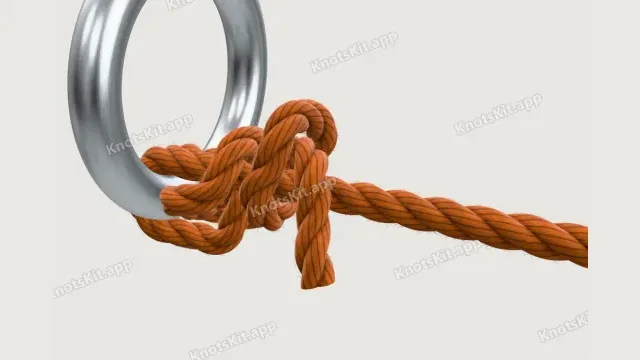
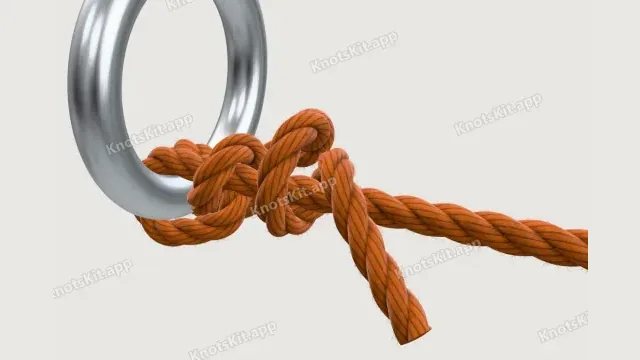
The anchor hitch, also called the anchor bend or fisherman’s bend, ties a rope to an anchor, a mooring ring or a buoy. Two turns go through the ring, the end tucks under both, and a half hitch holds it there. It is made for a rope that waves keep pulling and slackening. The price: after a heavy pull it can jam, especially when wet.
- Type
- Hitch
- Difficulty
- Medium
- Also called
- Anchor Bend, Fisherman's Hitch, Fisherman's Bend
Step by step
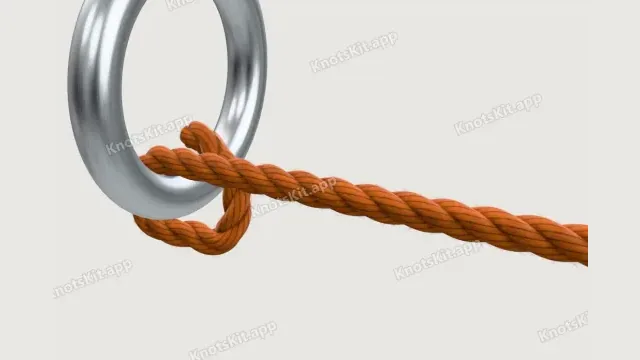
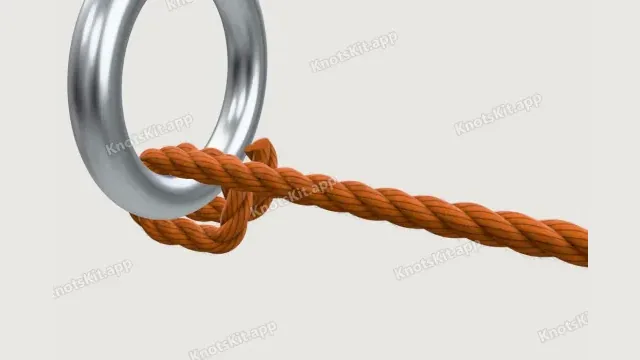
Step 2
Pass it through the ring again, beside the first turn.
Keep both turns a little loose: the end has to go under them.
What are wraps?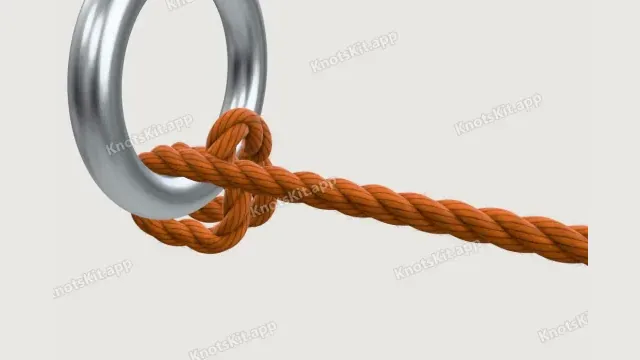
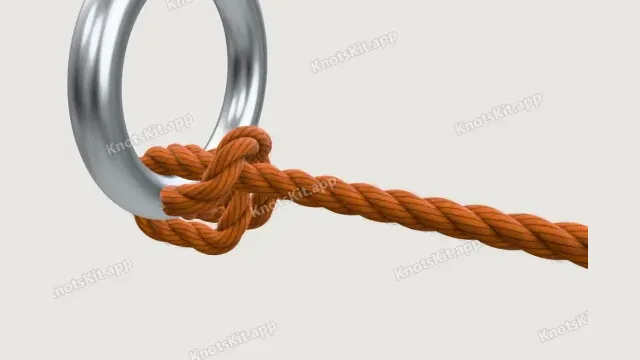
What it’s for
Tie a rope to an anchor, mooring ring or buoy. It is made to hold when the waves keep pulling and slackening the rope.
When to avoid it
Avoid it if you need to untie it quickly: after a heavy pull it can jam, especially when wet. In slippery rope the half hitch can work loose, so check it again if you leave it for a long time.
Check your knot
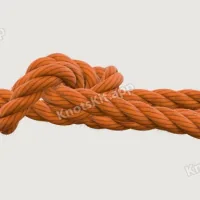
Two turns lie on the ring, with the end passing under them. A half hitch around the long section holds the end.
Tips
- Leave enough rope beyond the knot. The length depends on the rope and how you use it.
- Check the rope where it rubs on the ring: that is where it usually wears first.
- If it stays in place for a long time, tie the end to the long section with thin cord.
Where the anchor hitch works best
- The line on a small anchor. Swell tightens and slackens the rope for hours, and the knot sits under water where nobody can look at it. This is the job it was made for.
- Mooring rings and buoys. A line tied once for the season, or a buoy rope that never stops moving. The two turns share the rub on the ring, so the rope is not sawing at a single point.
- Dive lines. A line from a marker buoy down to a weight or a ring. For anything divers depend on, follow your dive training.
- Not for short stops. For a quick halt at a quay, two half hitches or a bowline come off far sooner.
Common mistakes
- Turns pulled tight too early. They look neater snug against the ring, but the end still has to go under them at step 4. Tight turns make you force it, and it is easy to end up under only one.
- Skipping the crossing. At step 3 the end goes over the long section before it tucks. Go straight to the turns and the long section no longer pins the end, so the knot loses much of its grip.
- Treating the half hitch as optional. Step 5 is part of the knot. Without it, rope that keeps moving can walk the end back out from under the turns.
- Pulling only the long section. At step 6 pull the end as well, until the turns bed down on the ring. A half hitch that stays loose can shake open.
Why it copes with a rope that keeps moving
When the rope comes under load, the two turns squeeze the ring and clamp the end beneath them. When the rope goes slack, the clamp relaxes and the half hitch stops the end from backing out. So the load can come and go all day without the knot working open, which is where simpler hitches tend to loosen.
That same clamp is why it can jam, so tie it where you will not be in a hurry to take it off. If the rope shakes and flaps more than it pulls, as it does on a sail, the buntline hitch is closer to what you need.
Related knots
Questions people ask
Anchor hitch or anchor bend: which name is correct?
Both, and fisherman’s bend is a third name for the same knot. Today a bend usually means a knot that joins two ropes, so hitch fits better for something that ties a rope to a ring. The older name comes from the way sailors use the verb to bend, meaning to fasten a line to something.
Anchor hitch or round turn and two half hitches: which should I tie?
It depends how long the rope stays. For a line that sits on a ring for days, worked by the water, the anchor hitch: the end is trapped under the turns as well as held by the half hitch. For an hour at a quay, the round turn and two half hitches is quicker and easier to take off.
Is the anchor hitch good enough for a boat’s anchor?
It is a common way to tie a rope to the ring or shackle of an anchor, especially on small boats. How well it holds depends on the rope, on wear and on how it was tied. Pull it tight, look it over before you drop the anchor, and replace the rope if the section at the ring looks tired.
How do you untie an anchor hitch?
Take the load off and start with the half hitch: push it back along the long section and pull the end out. Then work the end back out from under the two turns. If the rope is wet or has taken a heavy pull it can be stubborn, so let it dry or ease the turns open with a blunt spike.