


How to tie a figure eight loop
The figure eight loop, also called a figure eight on the bight, makes a fixed loop from a folded section of rope. It does not loosen when the rope goes slack and its shape is easy to check by eye, which is why climbers and rescuers rely on it to clip a rope to a carabiner. The trade-off: after a heavy pull it can be stubborn to untie.
Step 1 of 5
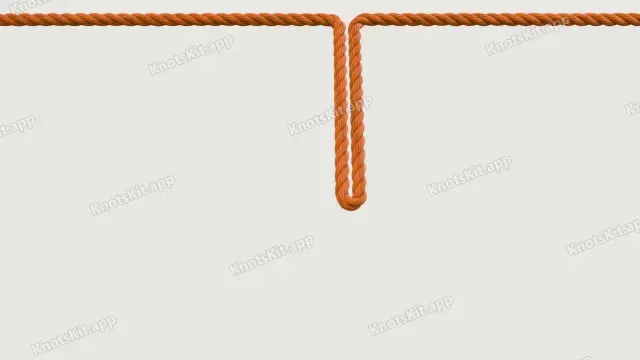
Fold the end back alongside the long section to make a long U.
- Type
- Loop
- Difficulty
- Medium
- Also called
- Flemish Loop, Figure Eight on the Bight, Blood Bight
Step by step
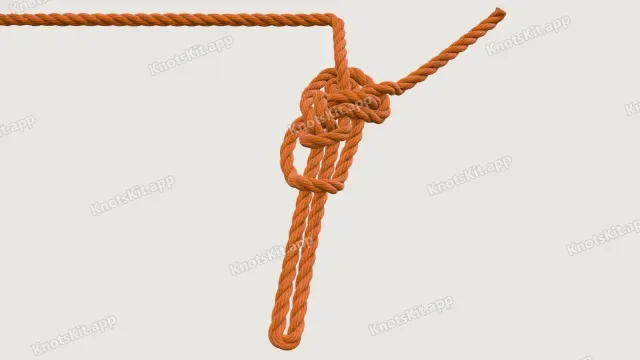
What it’s for
Make a fixed loop using a folded section of rope.
When to avoid it
It can be hard to untie after a heavy pull. This folded-rope version is not the follow-through knot used to tie into a harness.
Check your knot
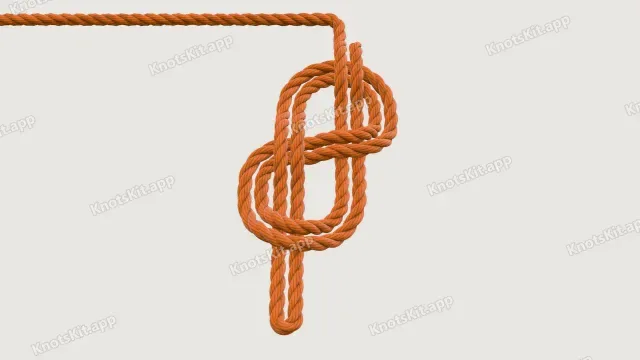
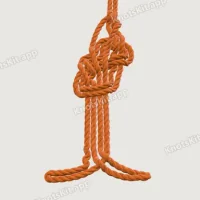
Two sections of rope follow the same figure-eight path. They lie side by side without crossing over each other.
Tips
- Keep the paired sections together as you tighten, so neither twists over the other.
Climbing and rescue: learn this knot with a qualified instructor and check it before every use. This page does not replace hands-on training.
Where the figure eight loop is useful
- Clipping a rope to a carabiner. A loop at the end of the rope to haul a bag, fix a line or clip to an anchor point. For climbing and rescue, learn the system from a qualified instructor and check the knot before every use.
- Lines that will go slack. A rope that is loaded and unloaded, flaps in the wind or drags along the ground. Where a bowline might work loose, this loop keeps its shape.
- A loop you can trust at a glance. The finished knot shows two sections running side by side through a clean eight, so it is quick to check, for you and for anyone checking it with you.
Common mistakes
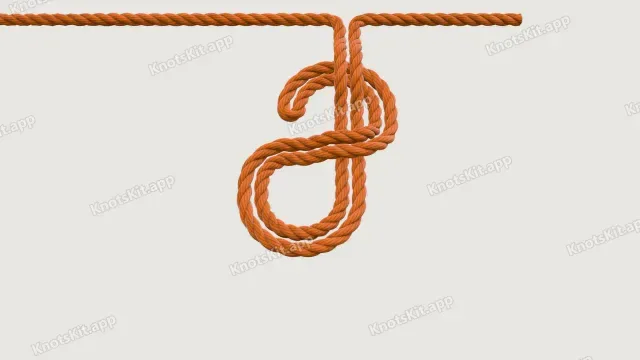
- Crossed sections. After step 4 the two sections of rope should run side by side through the whole eight. If one crosses over the other, loosen the knot and lay them parallel before you tighten.
- Pulling only the loop. At step 5 you hold the new loop and pull both sections of rope on the other side of the knot, the long section and the end. Pulling the loop alone leaves the knot loose and harder to read.
- Loop the wrong size. Adjust it before you pull the knot tight at step 5. Once it has been loaded, changing it means untying it.
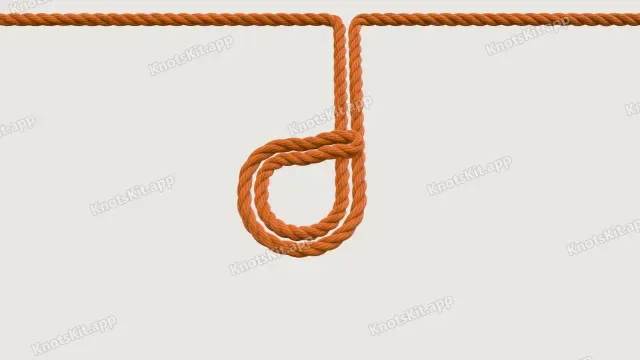
- Skipping the turn at step 3. If the folded end goes straight through the first loop without going around behind the doubled rope, you get an overhand loop, a different and smaller knot.
Loop or follow-through?
The figure eight comes in two common forms, and mixing them up is an easy mistake. The loop on this page is tied in folded rope, so the finished loop is closed: you can clip it to a carabiner, but you cannot pass it through something closed like a harness or a fixed ring. The follow-through starts from a single figure eight with the end free; the end goes through the harness or the ring and then retraces the knot. The two end up looking alike, but they are tied differently and used differently. For anything that holds a person, learn which one to use from a qualified instructor.
Related knots
Questions people ask
Can I tie into my harness with a figure eight loop?
This folded-rope version is not the tie-in knot. Climbers tie in with the figure eight follow-through, where a single end passes through the harness and then retraces a figure eight. How you attach to a harness, and with which knot, is something to learn from a qualified instructor, and the knot must be checked before every climb.
Figure eight loop or bowline?
Both make a fixed loop. The figure eight loop stays put when the rope is slack or moving around, and it is easier to check. The bowline is quicker to tie around a post or through a ring, and easier to untie after a load. In climbing, the figure eight loop is the usual choice.
How do you untie a figure eight loop after a hard pull?
Take the load off first. Then bend the knot back and forth, folding it against itself, to loosen the turn that wraps around the doubled rope. Once that turn gives, push the folded end back through the knot and it comes apart. On rope that has held a heavy load this can take some patience.
Is the figure eight loop safe?
It is widely used in climbing and rescue because it keeps its shape and is easy to inspect. How safe it is in practice depends on tying it correctly, on the rope and on the whole system around it. For those uses, learn it from a qualified instructor and check it before every use.