


How to tie the Ashley stopper knot
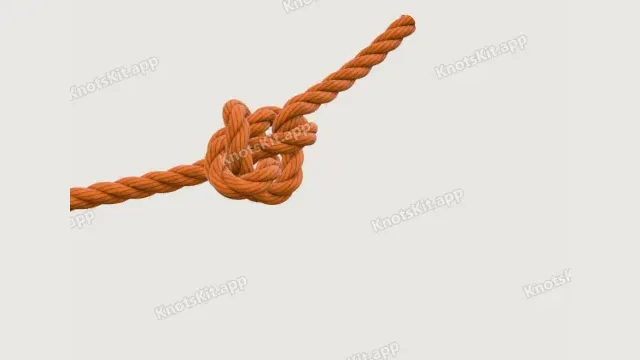
The Ashley stopper knot, also called the oysterman’s stopper, is a large, round stopper for the end of a rope. You tie the end around both sides of a long loop, pass it through the loop and pull the long section so the loop closes on it. It holds in a hole or a block a little bigger than the rope, where a figure eight might slip through.
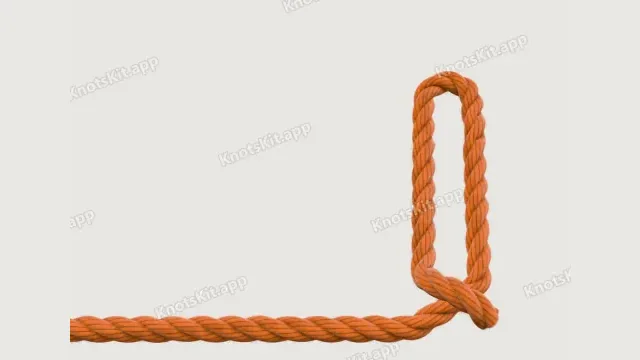
Step 1 of 5
Make a long loop, with the free end crossing over the long section.
- Type
- Stopper knot
- Difficulty
- Medium
- Also called
- Oysterman's Stopper
Step by step
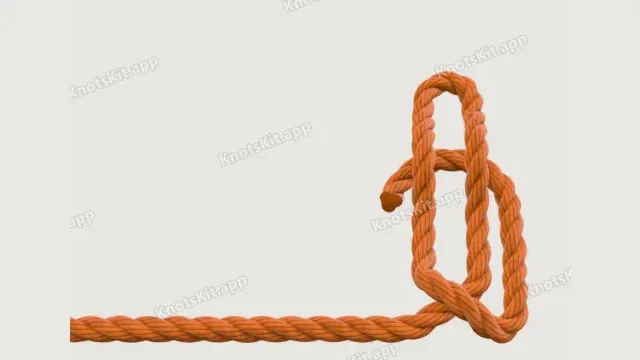
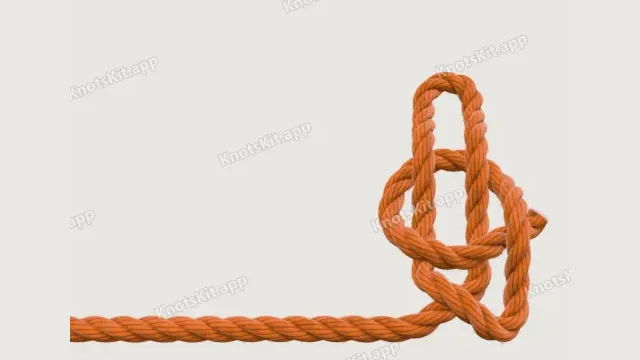
Step 3
Bring it back over both sides and tuck it under itself.
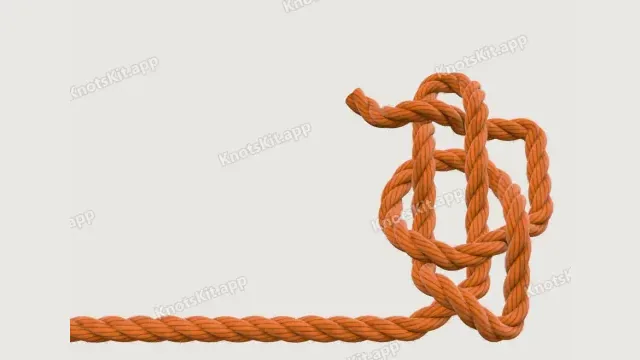
What it’s for
Make a large, round stopper that holds in a hole or pulley a little bigger than the rope.
When to avoid it
Avoid it when a quick stopper is enough: it takes longer to tie. It can be hard to untie after a heavy pull.
Check your knot
A compact, round knot, with the free end coming out of the middle.
Tips
- Leave enough rope beyond the knot. The length depends on the rope and how you use it.
- Close the loop slowly, so it grips the end before the knot sets.
Where the Ashley stopper earns its place
- Holes only a little bigger than the rope. A hole in a wooden box, a roomy fairlead: places where a figure eight slips through and you need something fatter.
- Blocks with a little play. On a boat, the end of a line that runs through a block slightly wider than the rope.
- Loose grommets. Cord through the eyelet of a tarp, an awning or a sail cover, when a smaller stopper slips through.
- Pull cords and knobs. The round shape is easy to grab: a light-switch pull cord, a bell rope, a zip pull on thick cord.
Common mistakes
- A short loop at step 1. Step 1 asks for a long loop for a reason: steps 2 and 3 use part of it, and a short loop leaves no room to pass the end through at step 4.
- Wrapping only one side. In steps 2 and 3 the end goes around both sides of the loop together. Catch only one and the loop will not close on the end as it should.
- Missing the tuck at step 3. The end has to go under itself. Without the tuck, the turn just lies there and slides off as soon as you pull.
- The end outside the loop at step 4. Check the end really sits inside the loop before you pull. If it does not, the loop closes on nothing and the knot pulls out.
- Picking it for speed. It takes longer than a figure eight or a stevedore’s knot. When either of those holds in your hole, tie that and save the Ashley for when it is needed.
How to check it
Look at the knot from the end. A good Ashley stopper is compact and round, with three rounded lobes around the middle and the free end coming straight out of the centre. The long section leaves from the other side. If the end pokes out of one side, or one lobe sits loose, open the loop, work the end back to the middle and pull again. Then test it where it counts: against the real hole or block, with a firm pull on the long section. A stopper that looks right but slips through is no stopper at all.
Related knots
Questions people ask
Ashley stopper or figure eight: which should I tie?
Tie the figure eight when it is big enough: it is quicker and easier to untie. Switch to the Ashley stopper when the figure eight pulls through, for example in a hole or a block only a little wider than the rope. Whichever you choose, test it on the real opening before you rely on it.
Ashley stopper or stevedore’s knot?
Both are bigger than a figure eight. The Ashley is rounder and fuller, so it usually holds in a slightly wider hole. The stevedore is quicker to tie and unties more easily after a heavy pull. If you will be untying it often, try the stevedore first and move to the Ashley only if it pulls through.
Why does my Ashley stopper close lopsided?
Usually it was pulled too fast. At step 5, hold the end and draw the long section slowly, so the loop grips the end before the rest of the knot sets. Pull hard straight away and the knot can set crooked, with the end off centre. Loosen it, work the loop back up around the end and pull again.
Is the Ashley stopper hard to untie?
After a light pull it comes apart without much trouble: open the loop around the end and draw the end back out. After a heavy load it can set hard, and a fid or a marlinspike helps to loosen it. If you need a stopper you can always undo by hand, the stevedore’s knot is the easier choice.