


How to tie a Pitzen knot
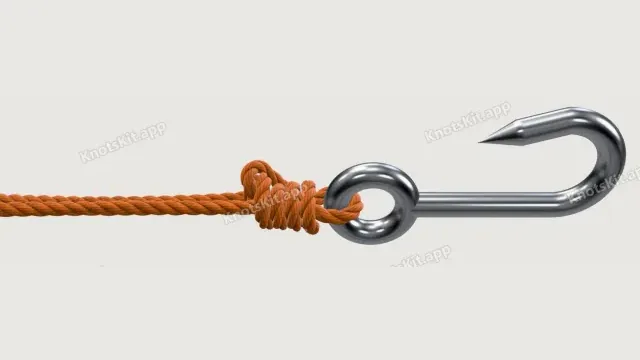
The Pitzen knot, also called the 16-20 knot or Eugene bend, ties monofilament or fluorocarbon line to a hook or lure with a small, compact knot. The end doubles back, wraps both lines four times and drops through a small loop, then the turns slide down to the eye. It struggles with thick, stiff line, and on braid it can slip.
Step 1 of 5
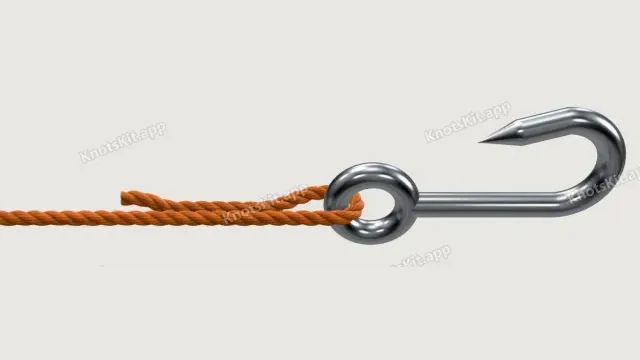
Pass the end through the hook’s eye and back along the line.
- Type
- Hitch
- Difficulty
- Medium
- Also called
- Eugene Bend, 16-20 Knot, Sixteen-Twenty Knot
- Line types
- Monofilament, Fluorocarbon
Step by step
What it’s for
Tie monofilament or fluorocarbon line to a hook or lure with a small, compact knot.
When to avoid it
Avoid it with thick, stiff line: the turns resist closing and sliding down to the eye. With braid, the knot can slip.
Check your knot
The turns sit close together against the hook’s eye, and the small loop has closed on the side away from it.
Tips
- Wet the knot before tightening to reduce friction.
- Close the turns fully before you slide them. Loose turns can cross on the way to the eye.
- Trim the free end only after tightening and checking the knot. Follow the line maker’s guidance.
Where the Pitzen knot works best
- Small hooks on thin line. The finished knot is small and sits tight against the eye, so it suits thin mono and fluorocarbon.
- Lures tied straight to the line. One strand goes through the eye and nothing has to pass over the trebles, so a small plug or spinner goes on as easily as a hook.
- Clear water and shy fish. There is very little knot to see beside a small hook or a light bait.
It has close neighbours. The uni knot also slides down to the eye and is easier to learn, for a slightly bigger knot. The Trilene knot passes the line through the eye twice, if the eye has room.
Common mistakes
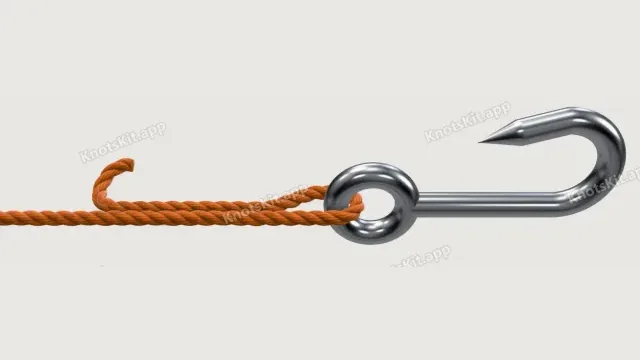
- Losing the small loop. Step 2 starts a small loop that the end needs again at step 4. Pinch it between finger and thumb while you wrap, or it closes up.
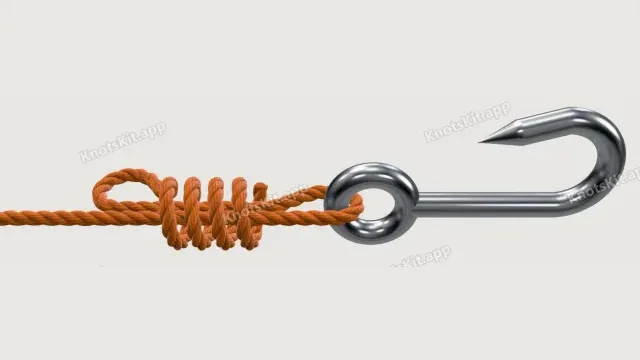
- Wrapping the wrong way. At step 3 the turns run towards the hook, around both lines. Wrap away from it and the end finishes nowhere near the small loop.
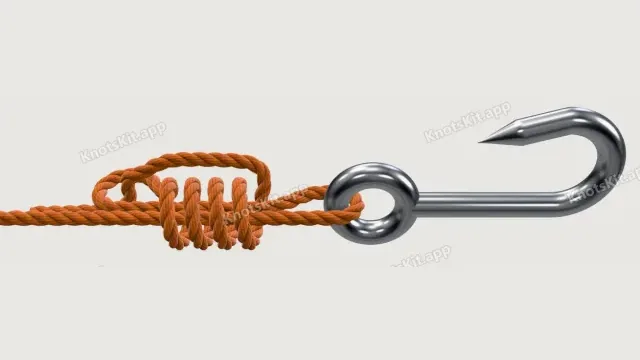
- Missing the loop at step 4. The end comes back over the turns and goes down through the small loop. If it passes beside the loop, the turns unwind as soon as you pull.
- Sliding before closing. Step 5 is two pulls in order: the end closes the turns, then the main line slides them down. Do it the other way and they can cross.
Seating it
Wet the knot first. Hold the hook by the bend and pull the free end until the turns close into a tidy barrel, still some way from the eye. Then pull the main line slowly. The barrel slides down and stops against the eye, and the small loop closes on the side away from it. Take your time over this second pull: it is where dry or rushed line rubs hardest. Look for close turns against the eye and no open loop, then give it a firm test pull and trim the free end as the line maker suggests. If anything has crossed, cut it and tie it again.
Related knots
Questions people ask
Is the Pitzen knot the same as the 16-20 knot?
Yes, they are two names for one knot, and you may also see it written as the sixteen-twenty knot or the Eugene bend. Bend is a little misleading, because the word normally means a knot that joins two ropes, and this one ties line to a hook. Whatever the name, the moves and the finished knot stay the same.
Pitzen or improved clinch: which should I tie?
Both put a single strand through the eye and both are meant for mono and fluorocarbon. The Pitzen finishes smaller, with its turns tight against the eye, which suits small hooks and thin line. The improved clinch is easier to manage with cold fingers. Try both and keep the one you can tie well every time.
Why do the turns cross as they slide down?
They were still open when they started to move. Step 5 is two pulls: first the end, until the turns close, then the main line, to slide them down. Loose turns can cross on the way to the eye. Wet the knot before you slide it, and if the turns cross anyway, cut it and tie it again.
Does the Pitzen knot work with braid or thick line?
It is not a good match for either. With braid the knot can slip. With thick, stiff line the turns resist closing and sliding down to the eye, so the knot never really settles. For braid, a Palomar or a uni knot tied as the line maker suggests is usually the better choice.