


How to tie a Trilene knot
The Trilene knot ties monofilament or fluorocarbon line to a hook, a lure or a swivel. The line goes through the eye twice, then the end wraps the main line and comes back through the small double loop. Those two passes give it more grip than a single strand, but the eye needs room for both, and on braid the knot can slip.
Step 1 of 4
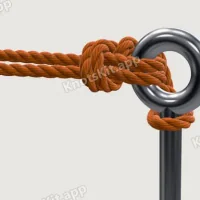
Pass the end through the hook’s eye twice, leaving a small double loop.
Keep the double loop open with a finger: the end comes back through it.
- Type
- Hitch
- Difficulty
- Medium
- Line types
- Monofilament, Fluorocarbon
Step by step
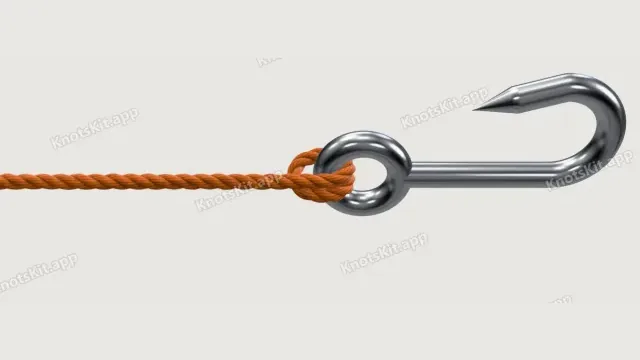
Step 1
Pass the end through the hook’s eye twice, leaving a small double loop.
Keep the double loop open with a finger: the end comes back through it.
What is the eye?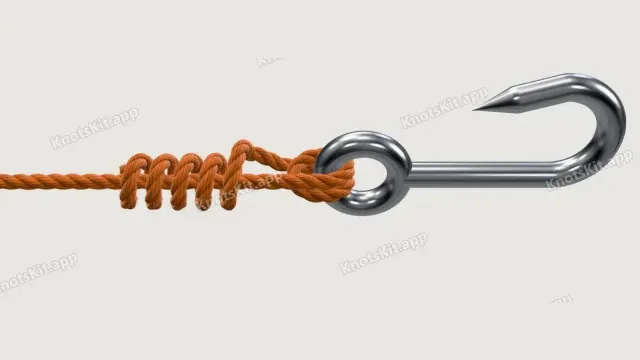
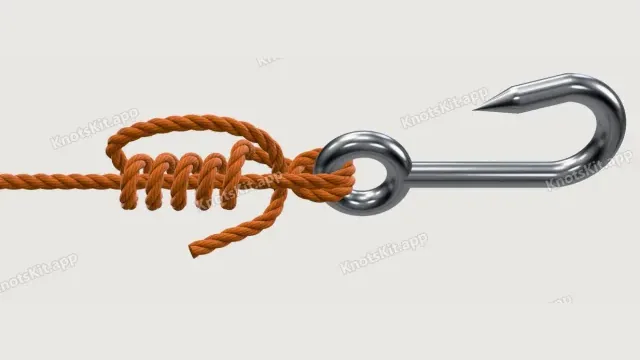
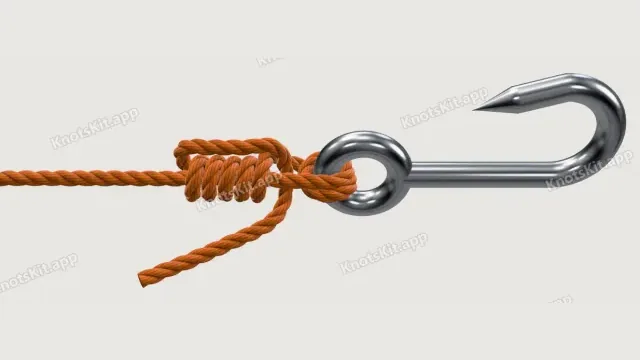
Step 4
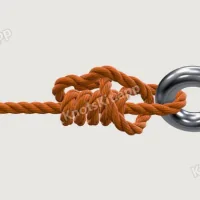
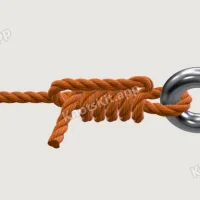
Hold the free end and pull the main line to slide the turns towards the eye.
Keep pulling until the turns sit against the eye.
What is the eye?
What it’s for
Tie monofilament or fluorocarbon line to a hook, lure or swivel, with two passes through the eye for extra grip.
When to avoid it
Avoid it if the eye is too small for the line to pass twice, or with braid: the knot can slip.
Check your knot
Two sections of line pass through the hook’s eye, and the turns sit in a row on the main line without overlapping.
Tips
- Wet the knot before tightening to reduce friction.
- Trim the free end only after tightening and checking the knot. Follow the line maker’s guidance.
Where the Trilene knot works best
- Hooks and swivels with a roomy eye. Two strands have to pass comfortably. The pictures show a hook, and the same steps work on a swivel.
- Lures tied straight to the line. Nothing has to pass over the lure, so a bulky bait with treble hooks is no harder to tie on than a single hook. That is where the Palomar gets awkward.
- Fluorocarbon leaders. This line is usually stiffer and slicker than mono, and the double loop gives the knot more to hold on to.
If the line will not go through twice, switch to the improved clinch or the uni knot, which need only one strand in the eye.
Common mistakes
- A double loop that collapses. Step 1 leaves a small double loop beside the eye. Pull it flat against the metal and the end has nowhere to go at step 3, so keep it open with a finger.
- Catching only one strand. At step 3 the end goes through the whole double loop, not between its two strands. Go between them and it is not properly trapped.
- Letting go of the free end. Step 4 holds it while the main line pulls. Let go and it can ease back out of the double loop.
- Stopping halfway. The knot is finished only when the turns sit against the eye. If they stop short at step 4, the double loop stays open and the knot can slip.
Closing it fully
The last pull does most of the work. Wet the knot, hold the hook and the free end together, and draw the main line slowly and steadily. The turns travel along the main line, the double loop shrinks around the eye and the whole knot gets smaller as it goes. Keep pulling until the turns are against the eye and nothing moves. Now look at it: two sections of line through the eye, the turns in a row on the main line, no overlaps. If it fails that check, cut it and tie it again. If it passes, give the line a firm test pull, then trim the free end as the line maker suggests.
Related knots
Questions people ask
Trilene knot or improved clinch: which should I tie?
They are close relatives, both built on turns around the main line. The Trilene goes through the eye twice, so two strands share the pull there, and it has one step fewer. The improved clinch goes through once, so it fits small eyes, and it ends with an extra tuck. If the eye has room, try the Trilene. If not, tie the clinch.
Why does the line go through the eye twice?
The two passes make a small double loop around the metal of the eye, so the pull is shared by two strands instead of resting on one. That double loop also gives the end a place to lock at step 3. It is why the knot needs a roomy eye: if two strands do not fit easily, pick another knot.
Does the Trilene knot work with braid?
It is a poor choice, because braid is slippery and this knot can slip on it. With braid, anglers usually turn to a Palomar, which also puts two strands through the eye, or to a uni knot tied as the line maker recommends. With mono and fluorocarbon, the version in the steps is the one to use.
Why do the turns stop short of the eye?
Usually the pull ended too soon, or the knot was dry. At step 4 hold the free end and keep drawing the main line until the turns sit against the eye. Wet line slides much more easily. If the turns pile up, or refuse to travel on stiff line, cut it and tie it again.