


How to tie a Siberian hitch
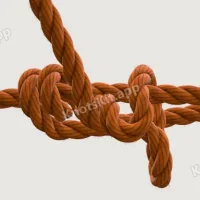
The Siberian hitch, also called the Evenk knot, ties the rope of a tarp to a tree or post, and one pull on the free end undoes the whole knot. That quick release is why campers like it, above all with cold hands or wet rope. It is also its limit: if the free end catches on something, the knot comes undone.
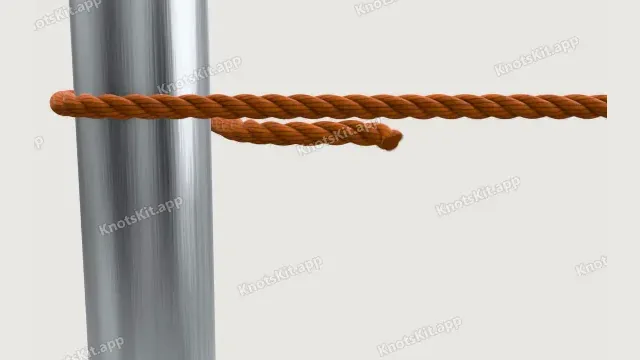
Step 1 of 7
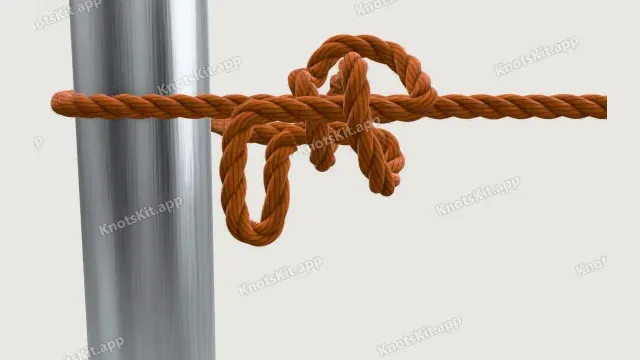
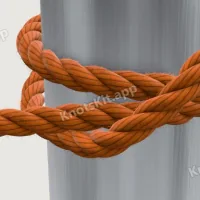
Take the free end around the post and back beside the long section.
- Type
- Hitch
- Difficulty
- Medium
- Also called
- Evenk Knot
Step by step
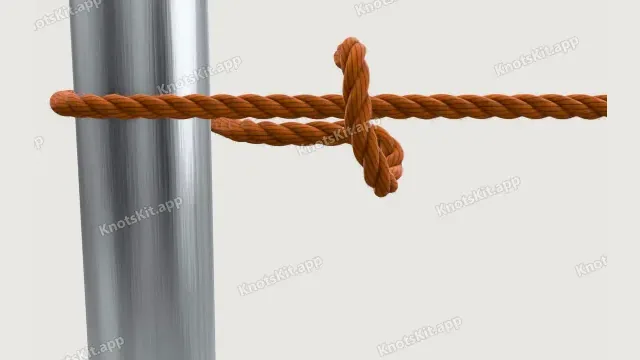
Step 2
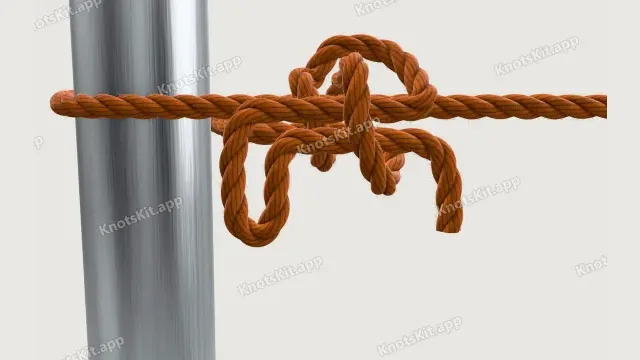
Bring the end up across the front of both sections of rope, in a loose wrap.
Keep this wrap loose: the end has to pass under it twice.
What are wraps?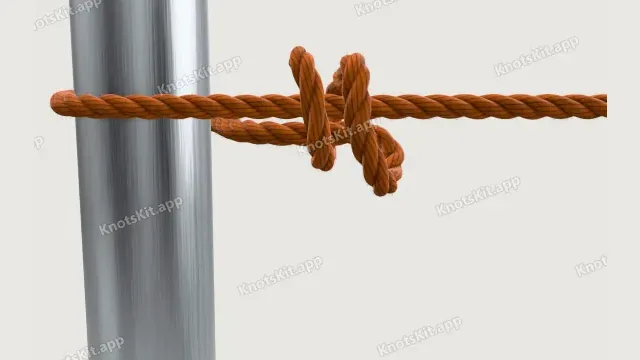
Step 3
Take it down behind both sections and up the front again, closer to the post.
What it’s for
Tie the rope of a tarp to a tree or post. One pull on the free end undoes the whole knot.
When to avoid it
Avoid it if the free end can catch on something or be pulled by accident: the knot comes undone. Do not use it where a failing knot could put someone at risk.
Check your knot
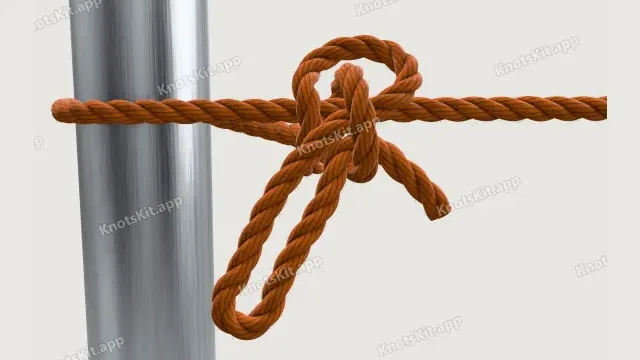
A long loop and the free end hang from the knot, on either side of the wrap. The turns sit around both sections of rope.
Tips
- Leave enough rope beyond the knot. The length depends on the rope and how you use it.
- Use it on the first tree, then tension the other end with a trucker’s hitch.
Where the Siberian hitch works best
- The first end of a tarp line. Tie it on the first tree, walk the rope to the second and tension it there with a trucker’s hitch. Packing up then starts with one pull.
- Cold or wet hands. There is no stiff knot to pick at in the rain. One pull on the free end does the work.
- Trees of any size. The knot forms around the two sections of rope, not on the tree, so a thin post and a thick trunk are tied the same way.
- Lines you put up and take down often. A drying line in camp, a rope you move every day.
Common mistakes
- Wrap too tight at step 2. The end has to pass under this wrap twice, at steps 5 and 6. Keep it loose until the knot is built.
- Catching one section at step 3. The end goes behind both sections of rope, then up the front, closer to the post. Catch only one and the knot has nothing to clamp.
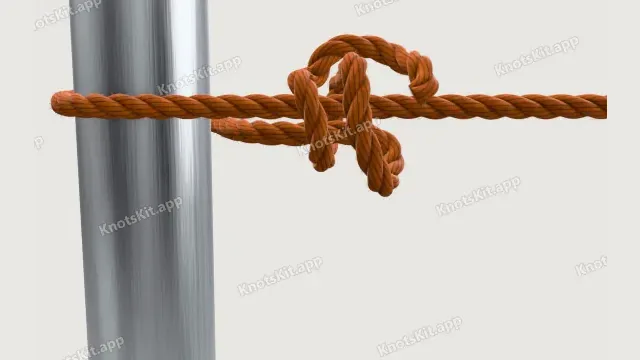
- No fold at step 5. The end goes under the loose wrap and folds down into a loop. Pull it straight through and the quick release is gone.
- Pulling the wrong part at step 7. The loop closes the knot, the free end opens it. Pull the loop first, then the long section.
Keep the free end out of trouble
The release is the reason to tie this knot, and its weak point too. Anything that pulls the free end undoes the whole knot: a foot, a branch, a bag swung past in the dark. So let it hang where nothing can reach it, on the side of the tree away from the path, and take a look at it after a windy night.
If you cannot keep the end out of the way, pick another knot: a clove hitch with a half hitch or two, or an adjustable grip hitch if you want to change the tension later. And keep this one for camp jobs. Do not use it where a failing knot could put someone at risk.
Related knots
Questions people ask
Is the Siberian hitch the same as the Evenk knot?
Yes, they are two names for one knot, and you will meet both among campers. The steps, the finish check and the limits do not change. What sets it apart from other knots around a tree is the release: the free end is folded through the knot, so one pull takes the whole thing apart.
How do you undo a Siberian hitch?
Pull the free end, not the long loop. That draws the folded rope back out from under the loose wrap, and the turns fall away from both sections of rope. It usually works even with wet rope or after days under tension, which is the main reason to tie it. If nothing happens, check that you have the free end.
Can I hang a hammock with a Siberian hitch?
No. A hammock holds a person, and this knot comes undone if the free end catches or gets pulled by accident. Do not use it where a failing knot could put someone at risk. Keep it for tarps and drying lines. For anything that holds a person, follow the maker’s instructions or a qualified instructor.
Siberian hitch or clove hitch on a tree?
Tie the Siberian hitch if you want to take the rope down with one pull, even when it is wet. Tie the clove hitch if you want to slide rope through the knot to change the length, or if nothing should be able to open it by accident. A clove hitch can slip when the pull swings about, so back it up.