


How to tie a snell knot
The snell knot, also called the snood knot, binds the line to the shank of a hook instead of tying it at the eye. The pull then runs straight along the shank, which is why it is common on bait hooks and circle hooks. The turns grip the shank itself, so it only works on a hook, never on a lure or swivel.
Step 1 of 5
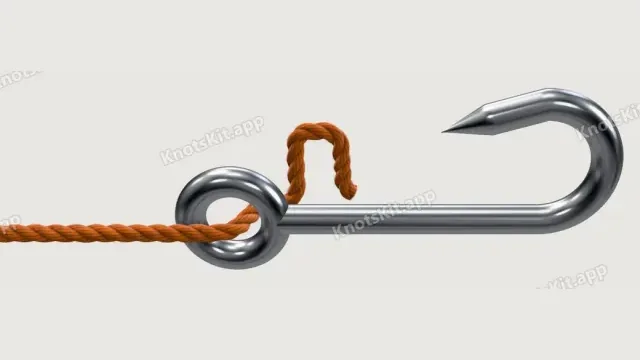
Pass the end through the hook’s eye, leaving a small loop above the shank.
- Type
- Hitch
- Difficulty
- Hard
- Also called
- Snood Knot
- Line types
- Monofilament, Fluorocarbon, Braid
Step by step
Step 2
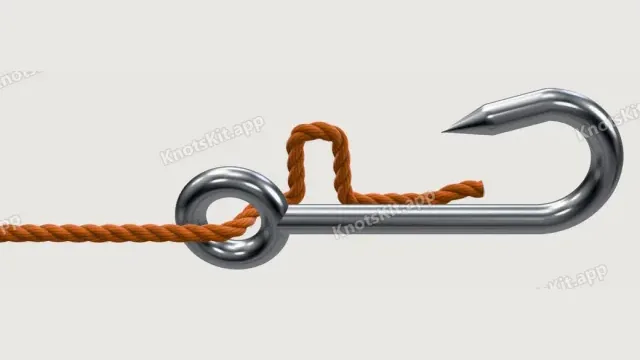
Lay the end along the shank, towards the bend of the hook.
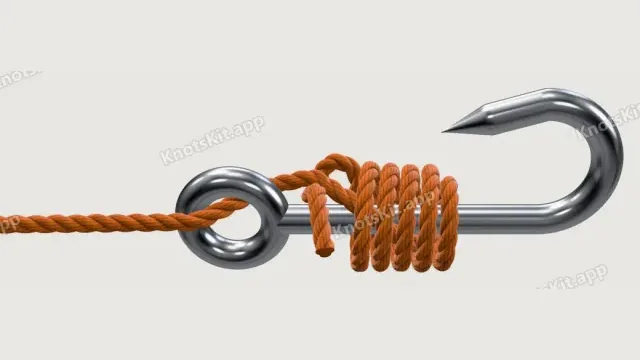
What it’s for
Bind the line to a hook’s shank, so the pull runs straight along it. It is common on bait hooks and circle hooks.
When to avoid it
Avoid it on lures and swivels: it needs a hook’s shank to grip. If the turns stay loose, they can slide along the shank.
Check your knot
Neat turns sit side by side around the shank, and the main line leaves through the eye.
Tips
- Wet the knot before tightening to reduce friction.
- Pinch the turns against the shank as you wrap, or they can spring open.
- Trim the free end only after tightening and checking the knot. Follow the line maker’s guidance.
Where the snell knot works best
- Circle hooks. The pull runs along the shank, which helps the hook turn and catch as the line tightens.
- Bait hooks on a snood. A snood is the short length of line that carries a hook on a sea rig, and this knot is a neat way to tie one.
- Rigs made in advance. Tie a few hooks on lengths of line at home, wind them on a card and swap a whole hook length on the water, with no fiddly knot to tie in cold hands.
If you are tying to a lure, a swivel or anything without a shank, use the Palomar or the uni knot instead.
Common mistakes
- Losing the small loop. Step 1 leaves a small loop above the shank, and you need it again at step 4. If it shrinks while you wrap, there is nowhere for the end to go.
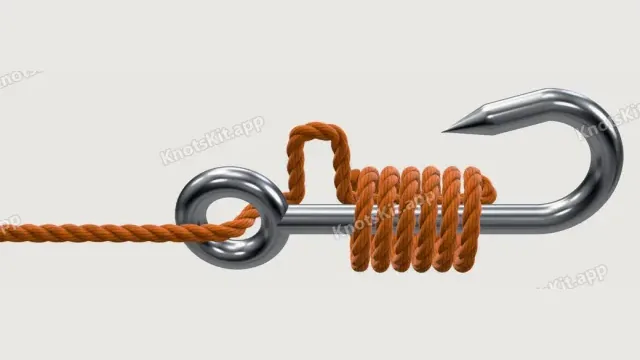
- Wrapping the wrong way. At step 3 the turns start near the bend and move towards the eye, around both the shank and the line. Go the other way and the end cannot reach the small loop.
- Turns springing open. Pinch them against the shank as you go. Let go during step 3 and they loosen at once.
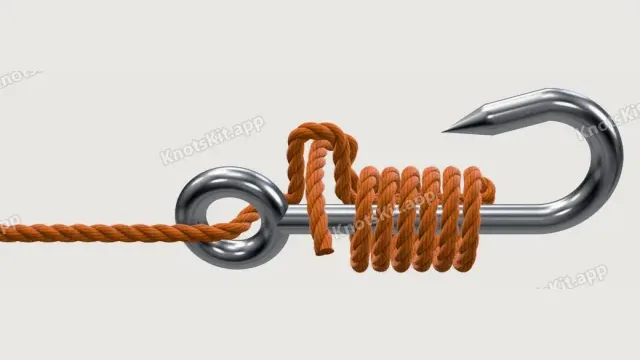
- Missing the small loop. At step 4 the end has to pass through it. If it does not, nothing holds the turns and they unwind as soon as you pull.
- Letting go at step 5. Hold the turns while the main line pulls. Without that hold they bunch up, cross and leave gaps.
Getting the turns to sit
Wet the knot before step 5. Hold the turns against the shank with finger and thumb and pull the main line slowly. The small loop shrinks and disappears under the turns, which settle side by side. Once they look neat, pull harder until they bite on the shank and stop moving. Mind the point while you do it: holding the hook by the bend with pliers is kinder to your fingers. Then check: turns side by side, no crossings, the main line leaving through the eye. Give it a firm test pull and trim the free end only after that, following the line maker’s guidance.
Related knots
Questions people ask
Why snell a hook instead of tying to the eye?
A knot tied at the eye lets the hook pivot, so the pull can arrive from any angle. A snell grips the shank, and the line leaves in line with it, so the pull runs straight along the hook. Bait anglers like that direct connection, and many use it on circle hooks for the same reason.
Is the snell knot good for circle hooks?
Yes, it is common on them. The straight pull along the shank helps the hook turn as the line comes tight, and that turning is how a circle hook sets. Let the fish load the rod instead of striking hard. Keep the turns neat and make sure the main line leaves cleanly through the eye.
Can I tie a snell knot with braid?
Yes, it works with braid as well as mono and fluorocarbon, but braid is slippery and needs more care. Keep the turns tight against the shank, pull slowly and test it firmly before you fish. If the turns slide along the shank, they were loose. Follow the line maker’s guidance for the braid you use.
Why do the turns slide along the shank?
They were never tight. Either they sprang open while you wrapped, or the final pull was too gentle to close them on the metal. Pinch each turn against the shank as you wrap, hold them all at step 5 and pull the main line firmly. If the turns still move under your fingers, cut it and tie it again.