


How to tie an alpine butterfly
The alpine butterfly makes a fixed loop in the middle of a rope, without using either end. You pull up a U, twist it twice, fold it down and tuck it through. The finished loop sits between the two ends and holds whether you pull on the loop or on the rope either side, which is why climbers, riggers and campers use it for mid-line loops.
- Type
- Loop
- Difficulty
- Medium
- Also called
- Lineman's Loop, Butterfly Loop, Lineman's Rider, Harness Loop
Step by step
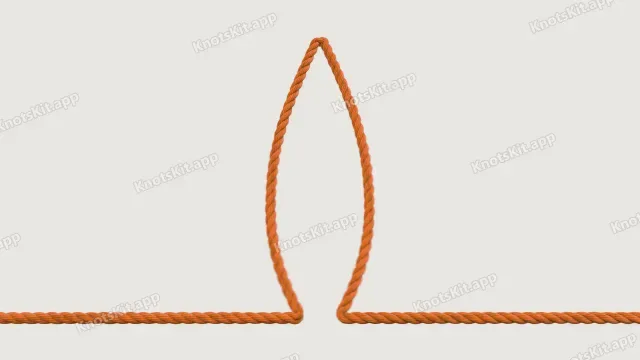
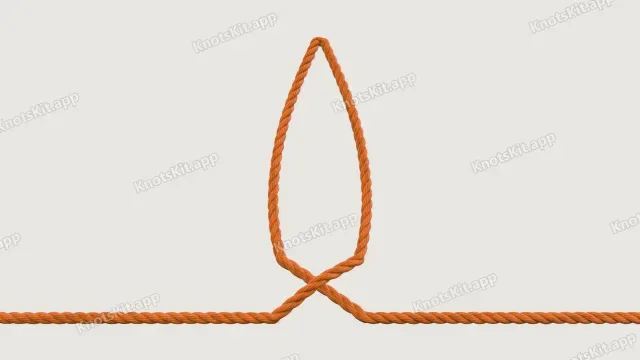
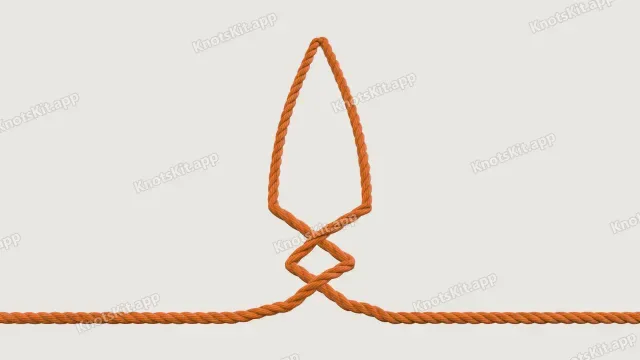
Step 3
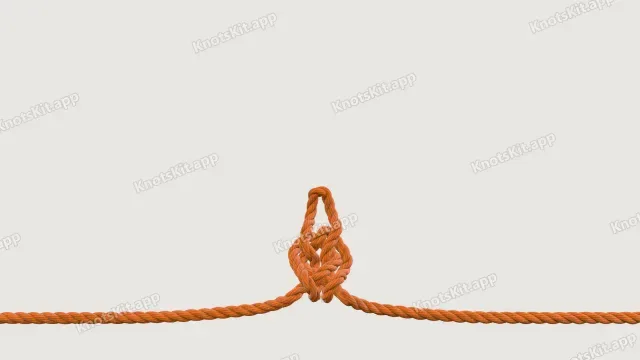
Twist it once more in the same direction.
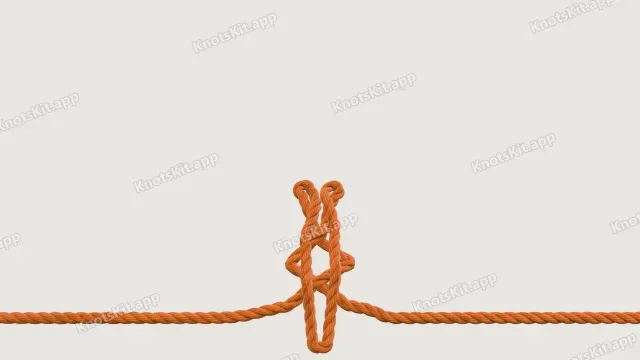
Step 5
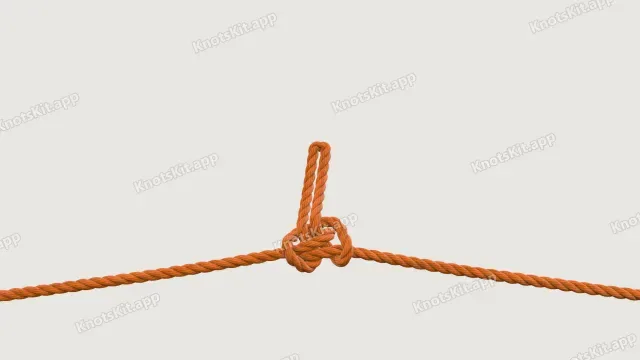
Tuck it under the nearest twist and up through the middle.
What it’s for
Make a fixed loop in the middle of a rope that can be pulled in any direction.
When to avoid it
Check the shape before use: a wrong tuck gives a loop that slips. For climbing or rescue, learn it with an instructor.
Check your knot
The loop leaves the knot between the two ends, which come out on opposite sides in a straight line.
Tips
- Leave the loop big enough for whatever you will clip or hook into it.
Climbing and rescue: learn this knot with a qualified instructor and check it before every use. This page does not replace hands-on training.
Where the alpine butterfly is useful
- A loop in the middle of a rope. To clip a carabiner, hang a lantern or a bag from a line strung between two trees, or attach a second line, without reaching for either end.
- Tensioning a line. A butterfly partway along a guy line gives you a fixed loop to pull against: take the end around a stake or a tree, back through the loop, pull it tight and tie it off.
- Rope teams. In mountaineering, the climber in the middle of a rope team often clips into a butterfly. That is part of a system to learn with a qualified instructor, not from a web page.
- Isolating a worn section. Put a damaged stretch of rope inside the loop and it stays out of the pull. It is a stopgap: a damaged climbing or rescue rope should be inspected and, if in doubt, retired, following the maker’s guidance.
Common mistakes
- Second twist the wrong way. Step 3 twists the U once more in the same direction as step 2. Twist it back the other way and the two twists cancel out, leaving a plain U.
- Loop through the wrong gap. At step 5 the loop goes under the nearest twist and up through the middle. Any other route can give a loop that slips.
- Not enough rope in the U. The size of the loop comes from how much rope you pull up at step 1. Some of it goes into the knot, so pull up more than the loop itself needs.
- Pulling only the loop. Step 6 pulls the loop and both ends. Tighten all three a little at a time, so the knot closes evenly.
How to check it
Beyond the shape, there is a simple test. Pull the two ends hard away from each other: a correct butterfly stays put and the loop keeps its size. Then pull the loop away from the rope and look again. If the loop shrinks, or the knot rolls or changes shape, untie it and tie it again from the start. For climbing and rescue, learn the knot and this check with a qualified instructor, and check it before every use.
Related knots
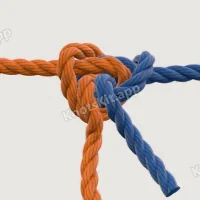
Questions people ask
What is the alpine butterfly used for?
Any time you need a loop in the middle of a rope: a point to clip into on a rope team, a loop to tension a guy line, a place to hang gear. Because it can be loaded on the loop or along the rope, it copes with pulls that change direction better than most loops. On a rope team, learn the system with an instructor.
Why does my butterfly knot come out wrong?
Nearly always for one of two reasons. The second twist went the other way, which undoes the first, or the loop went through the wrong gap at step 5. Twist the U twice in the same direction, then tuck the loop under the twist nearest to it and up through the middle.
Is the alpine butterfly easy to untie?
Usually, yes, even after a load. Take the tension off, push the loop back into the knot and work the two sides apart. It tends to be less stubborn than a figure eight loop that has taken a heavy pull, which is one more reason it is popular for mid-line loops.
Alpine butterfly or bowline on a bight?
Both make a loop in the middle of a rope. The alpine butterfly gives one loop and takes a pull along the rope as well as on the loop. The bowline on a bight gives two loops, handy when you need two attachment points or a doubled loop.
Is there another way to tie it?
Yes, many people tie it by wrapping the rope around their hand, and the finished knot is the same. The two-twist method shown here has one advantage: at every step you can see where you are, so a wrong twist is easy to spot before you tuck.