


How to tie a bowline on a bight
The bowline on a bight makes two fixed loops at once, from a section of rope folded in two. You never need a free end, so you can tie it in the middle of a rope as easily as near the end. The two loops share the load, and like the ordinary bowline it usually unties without a fight once the rope is slack.
- Type
- Loop
- Difficulty
- Hard
- Also called
- Bosun's Chair, Y-Hang, Bowline upon the Bight, Two Loop Bowline
Step by step
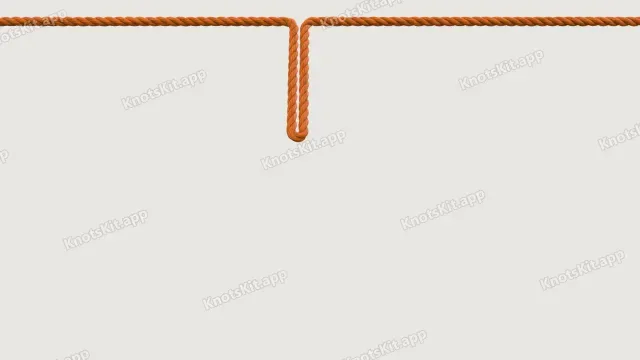
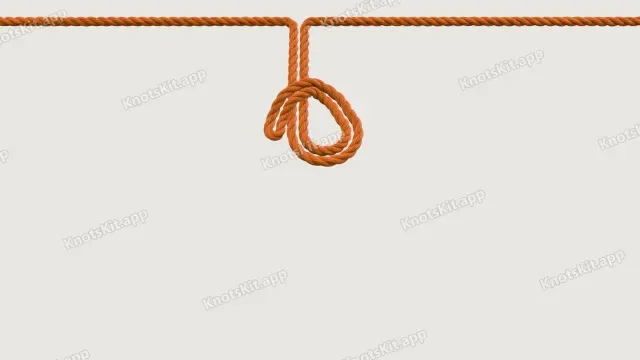
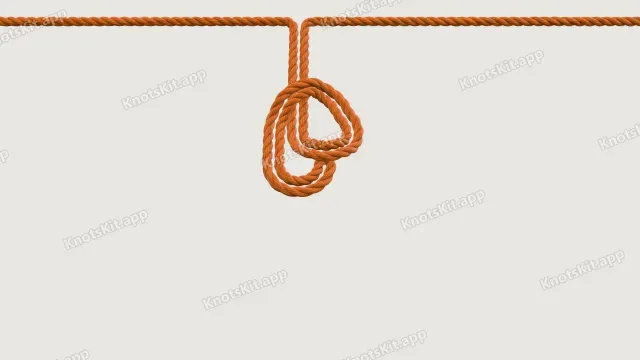
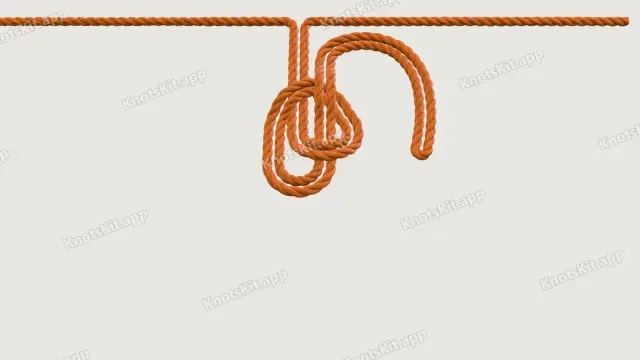
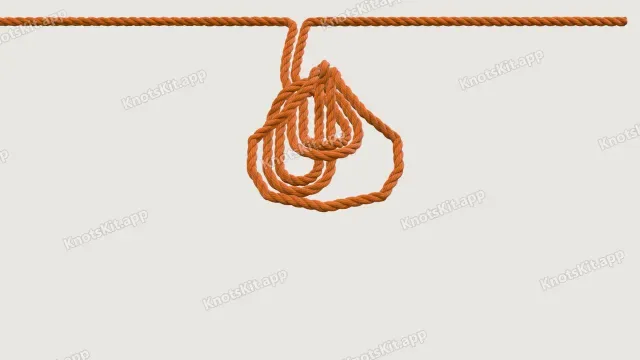
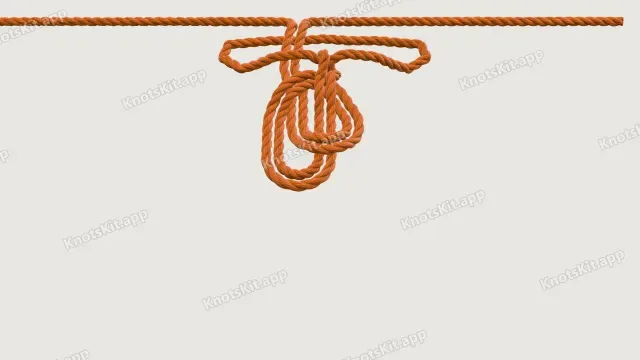
Step 6
Carry it on under the knot and up behind it.
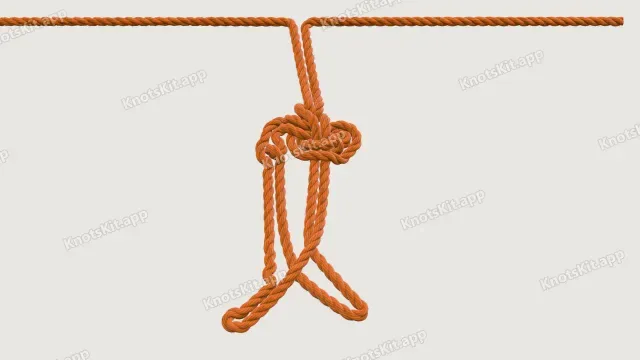
Step 7
Pull the two large loops so the folded end closes around the long sections.
What is the folded end?
What it’s for
Make two fixed loops at once, in the middle or at the end of a rope. The two loops share the load.
When to avoid it
Avoid it if one loop is enough: a bowline is quicker. For rescue use, train with a qualified instructor.
Check your knot
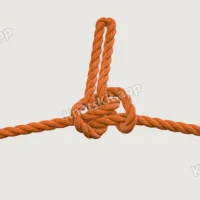
Two large loops of similar size hang below the knot, and the folded end closes around both long sections.
Tips
- Set both large loops to the size you need before the final pull.
Climbing and rescue: learn this knot with a qualified instructor and check it before every use. This page does not replace hands-on training.
Where the bowline on a bight is useful
- A loop in the middle of a rope. When both ends are tied off, or simply out of reach, you can still tie this one, because it needs no free end. The same goes for the alpine butterfly.
- A doubled loop that spreads the load. Two loops side by side sit wider around a post, a ring or a bundle, and the pull is shared between two strands of rope instead of one.
- Two attachment points. Hang each loop from a different point, for example a load from two hooks, or use one loop on each handle of a bag you need to lift.
Common mistakes
- Losing a strand. Step 1 folds the rope into a long U, and every move after that uses the doubled rope. If one strand slips out of the small loop at step 2, you end up with a different knot.
- Stopping after step 4. With the folded end pushed up through the small loop, the knot looks nearly finished, but nothing locks it yet and it will pull out under load. Steps 5 and 6 do the locking: open the folded end, take it down over both large loops, then under the knot and up behind it.
- The folded end catches only one loop. At step 5 the opened folded end goes over both large loops, not between them. If it goes around only one, the knot cannot close properly.
- Uneven loops by accident. Set the size of each loop before step 7. Pulling the loops to tighten fixes them where they are.
One loop or two?
If you only need one loop, tie a plain bowline: it is quicker and uses less rope. Reach for the bowline on a bight when the loop has to go in the middle of a rope, when you need two loops, or when you want a doubled loop that spreads the pull. For a single loop in the middle of a rope that may be pulled in different directions, the alpine butterfly is often the better choice. And for anything that holds a person, the knot is never the whole system: train with a qualified instructor and use equipment made for the job.
Related knots
Questions people ask
Is the bowline on a bight the same as a double bowline?
No, though the names get mixed up. The bowline on a bight is tied in folded rope and gives two loops. The double bowline is tied with the free end, gives one loop and has an extra turn that grips the end. Some people call the knot on this page a double loop bowline, which is clearer.
Can a bowline on a bight be used to lift a person?
It turns up in rescue training as an improvised loop, but it does not replace a harness or proper rescue equipment. Lifting or lowering a person is a job for people trained to do it, with the right gear. If rescue work is part of your role, learn this knot and its limits with a qualified instructor.
Can the two loops be different sizes?
Yes. Before the final pull, slide rope from one loop into the other until each is the size you need. Once the knot is tight, and especially once it has held a load, the sizes stay where they are. Changing them means loosening the knot first.
How do you untie a bowline on a bight?
Take the load off both loops. Loosen the part of the folded end that closes around the long sections and slide it back over the loops, then pull the folded end back down out of the small loop. The knot falls apart into a plain U of rope.