


How to tie a Bachmann knot
The Bachmann knot grips a rope with a closed loop of cord wrapped around the rope and a carabiner. The carabiner works as a handle, so you can slide the knot with one hand once the load is off. It is used to climb a rope or haul a load. The cord must be clearly thinner than the rope, and it can grip less than a Prusik.
Step 1 of 5
With the cord clipped in, take the folded end around the rope and the carabiner’s solid side, then through the carabiner.
Start with a closed loop of cord through the carabiner, and keep the side without the gate against the rope.
- Type
- Hitch
- Difficulty
- Medium
Step by step
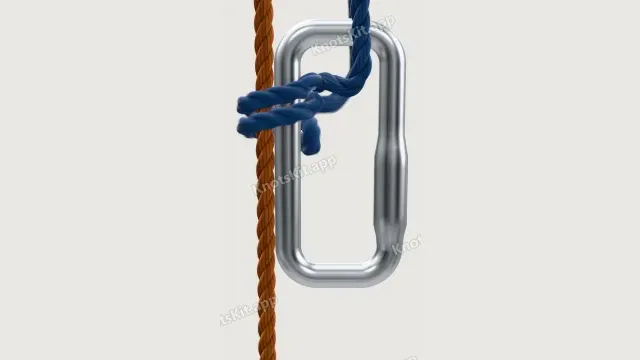
Step 1
With the cord clipped in, take the folded end around the rope and the carabiner’s solid side, then through the carabiner.
Start with a closed loop of cord through the carabiner, and keep the side without the gate against the rope.
What is the folded end?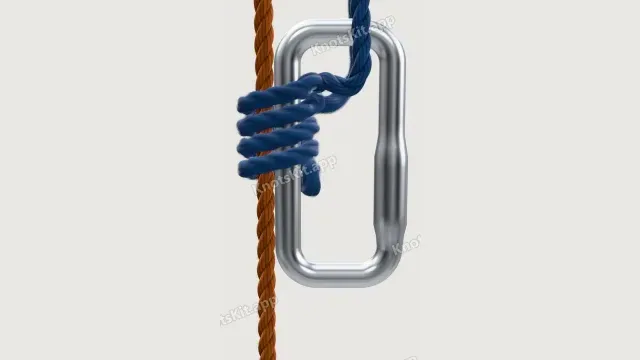
Step 2
Go around both again, just below the first turn, and back through the carabiner.
What are wraps?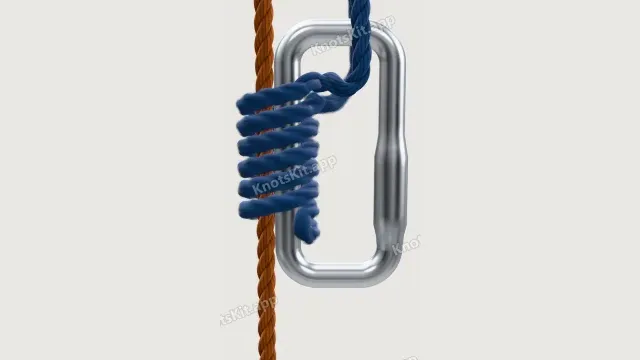
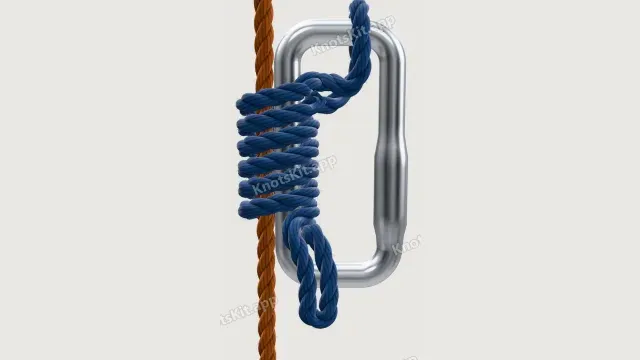
Step 4
Let the folded end hang below the turns.
The other end of the cord stays clipped in the carabiner.
What is the folded end?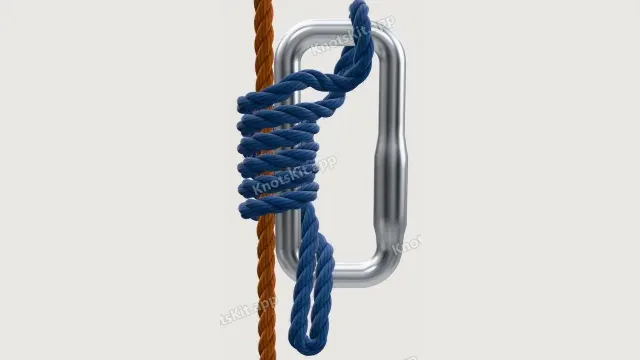
Step 5
Pull the folded end down until the turns grip the rope.
Load the cord, not the carabiner: holding the carabiner can let the knot slide.
What is the folded end?
What it’s for
Grip a rope with a closed loop of cord and a carabiner, to climb the rope or haul a load. The carabiner works as a handle to slide the knot with one hand.
When to avoid it
Avoid it if the cord is not clearly thinner than the rope, or if someone could grab the carabiner under load: the knot can slide. For climbing or rescue, learn it with a qualified instructor.
Check your knot
Three doubled turns wrap the rope and the carabiner’s solid side. The cord is clipped in the carabiner above them, and the folded end hangs below.
Tips
- The animation shows the cord as thick as the rope, to keep it clear. A real cord must be thinner.
- To move it, take the load off and slide the carabiner along the rope. Let go of it before you load the cord.
- It grips only when pulled from the folded end. A pull the other way can make it slide.
- Test it with a gentle pull before you rely on it. The smooth carabiner can make it grip less than a Prusik.
Climbing and rescue: learn this knot with a qualified instructor and check it before every use. This page does not replace hands-on training.
Where the Bachmann knot is used
- Climbing a rope. The carabiner makes the knot quick to move with one hand. How to climb a rope, and with what backup, is something a qualified instructor teaches in person.
- Hauling a load. It gives you a grip on the rope that you can move along with one hand. This page shows the knot, not how to build a hauling system.
- Not where someone could grab it. If a person might catch hold of the carabiner under load, by habit or in a scare, the knot can slide. Choose something else there.
Common mistakes
- The gate against the rope. At step 1 the carabiner’s solid side, the one without the gate, goes against the rope. If the gate is there, turn the carabiner round and start again.
- A turn that misses the carabiner. Steps 1, 2 and 3 each go around both the rope and the solid side, then through the carabiner. A turn around the rope alone changes how the knot behaves.
- Stopping at two turns. Step 3 adds the third, and the finish check counts three doubled turns.
- Losing the other end. At step 4 only the folded end hangs free. The other end of the cord stays clipped in the carabiner.
- A hand on the carabiner as you load it. At step 5 you load the cord, not the carabiner. Holding the carabiner can let the knot slide.
What makes it slide
The smooth carabiner takes away some of the friction that holds the knot, so it can grip less than a Prusik. It grips only when pulled from the folded end: a pull the other way can make it slide. Thick cord makes things worse. The animation draws the cord as thick as the rope to keep it clear, but a real cord must be clearly thinner.
Before you rely on it, set the turns side by side and test the knot with a gentle pull. If it slides, do not load it: check the cord, the turns and the direction of pull, then tie it again. For climbing or rescue, learn it with a qualified instructor, who will also show you what backup the job calls for. To back up a rappel, climbers more often use an autoblock.
Related knots
Questions people ask
Is the Bachmann knot safe for climbing a rope?
It is used in climbing and rescue, but it can slide, and how it behaves depends on the cord, the rope, the carabiner and the whole system. Climbing a rope is something to learn in person with a qualified instructor, along with its backups, never from a web page. Test the knot each time before you rely on it.
Bachmann or Prusik: which should I tie?
The Bachmann is easier to move, because the carabiner gives you a handle. But it grips only when pulled from the folded end, and the smooth carabiner can make it grip less. The Prusik is made to grip when pulled either way, though a heavy load can jam it. Your instructor can tell you which suits the job.
Why does my Bachmann knot slide?
Check three things. The cord may not be clearly thinner than the rope. Someone may be holding the carabiner, which can let the knot slide. Or the pull may be coming the wrong way, since it grips only when pulled from the folded end. If it still slides on a gentle test pull, do not rely on it.
How do you move a Bachmann knot along the rope?
Take the load off, hold the carabiner and slide it along the rope. Then let go of the carabiner before you load the cord again. That last part matters: with your hand still on it, the knot can keep sliding. Test it with a gentle pull in its new place before you rely on it.
What does the carabiner do in a Bachmann knot?
It is the handle. Sliding it along the rope moves the turns with little effort, which is the point of this knot. The load goes on the cord, not on the carabiner, and the smooth metal can mean less grip than cord on rope alone. Keep its solid side, the one without the gate, against the rope.