


How to tie a Prusik
The Prusik, or Prusik hitch, attaches a closed loop of cord to a rope. No free end is needed, so you can tie it in the middle of a rope. It is made to grip when pulled either way, and it slides by hand with the load off. Climbers and rescuers use it to climb a rope or haul a load. The cord must be clearly thinner than the rope.
Step 1 of 5
Fold a closed loop of cord in two and bring the folded end up beside the rope.
- Type
- Hitch
- Difficulty
- Medium
- Also called
- Prusik Hitch, Middle of the Rope Prusik
Step by step
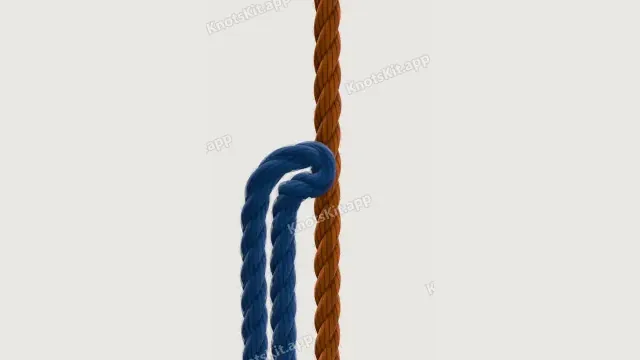
Step 1
Fold a closed loop of cord in two and bring the folded end up beside the rope.
What is the folded end?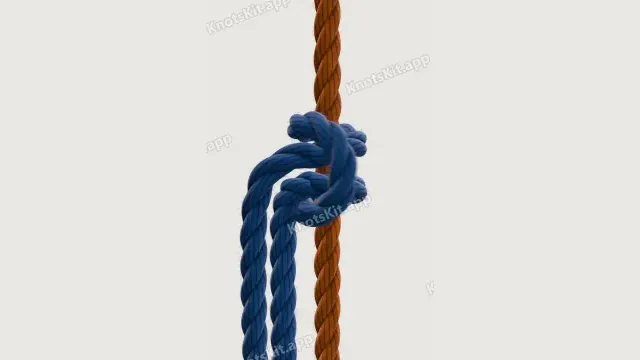
Step 2
Take the folded end around the rope, with one side above the hanging cord and the other below it.
What is the folded end?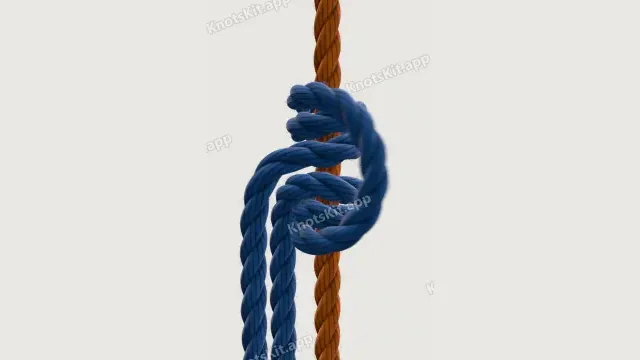
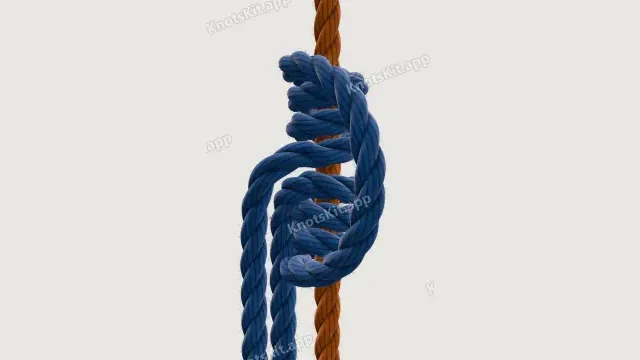
Step 4
Go around a third time, then lay the folded end across the hanging cord.
What is the folded end?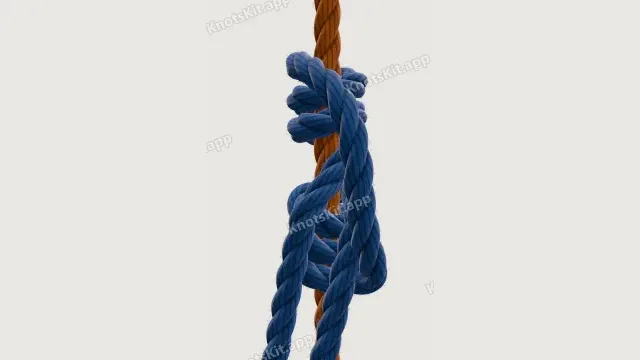
Step 5
Set the turns side by side, then pull the hanging cord down until they grip the rope.
What are wraps?
What it’s for
Attach a closed loop of cord to a rope, to climb the rope or haul a load. It is made to grip when pulled either way, and slides by hand with the load off.
When to avoid it
A cord that is not clearly thinner than the rope can slip, and a heavy load can jam the knot. For climbing or rescue, learn it with a qualified instructor.
Check your knot
Three turns sit above the hanging cord and three below it. The folded end lies across them, over the hanging cord.
Tips
- The animation shows the cord as thick as the rope, to keep it clear. A real cord must be thinner.
- To move it, take the load off and push the folded end along the rope.
- Test it with a gentle pull before you rely on it, and again if the rope gets wet or icy: it can slip.
- A fast slide can burn the cord. Check it afterwards and replace it if it looks damaged.
Climbing and rescue: learn this knot with a qualified instructor and check it before every use. This page does not replace hands-on training.
Where the Prusik is useful
- In the middle of a rope. The loop goes around the rope wherever you need it, with no free end, even if the rope is fixed at both ends.
- Climbing a rope. Climbers use Prusik loops to go up a fixed rope. That is a technique to learn in person with a qualified instructor, who will also show you the backups it calls for.
- Hauling a load. It gives you a grip on a rope to pull from. This page shows the knot, not how to build a hauling system.
- A camp line. A small loop on a tarp line gives you a sliding place to hang a lamp or a bag.
To move a knot with one hand, see the Bachmann knot; to back up a rappel, the autoblock.
Common mistakes
- Cord as thick as the rope. The animation draws the loop from step 1 as thick as the rope to keep it clear. A real cord must be clearly thinner, or it can slip.
- Both sides going the same way. At step 2 one side of the fold sits above the hanging cord and the other below it. If the finished count is not three and three, start again.
- A turn inside another. At step 3 each side goes outside the first turn, and the third round at step 4 goes the same way. A turn that lands inside or crosses over will not sit flat.
- Forgetting the folded end. At step 4, after the third turn, it lies across the hanging cord. Without that crossing you do not have a Prusik.
- Pulling before the turns are set. Step 5 comes in that order: turns side by side first, then the pull on the hanging cord. Pull first and any crossing stays locked in.
Before you rely on it
The knot on this page has three turns on each side. How many suit a particular rope and cord is something to settle with your instructor.
Test it with a gentle pull before you rely on it, and again if the rope gets wet or icy. The loop is often closed with a double fisherman’s knot: check that knot too. For climbing or rescue, learn all of this with a qualified instructor.
Related knots
Questions people ask
Is the Prusik safe for climbing a rope?
It is widely used in climbing and rescue, but it can slip, and the result depends on the cord, the rope, the conditions and the system around it. Climbing a rope is something to learn in person with a qualified instructor, along with its backups. A web page cannot replace that. Test the knot each time before you rely on it.
How much thinner than the rope should the cord be?
Clearly thinner, but no single figure fits every pair. It depends on the rope, on the cord and on how stiff or slippery each one is. Follow the makers’ guidance and your instructor, and test that cord on that rope with a gentle pull. A cord that is not clearly thinner can slip.
Why does my Prusik slip?
Often the cord is not clearly thinner than the rope, or the turns are crossed instead of side by side. A wet or icy rope can make it slip too, so test it again if the rope changes. If it ever slides fast, friction can burn the cord: check it and replace it if it looks damaged.
How do you free a jammed Prusik?
Take the load off first. Then push the folded end along the rope, which eases the turns so they can slide. A heavy load can jam the knot, so it may take some patience to work the turns open. Once it is free, look the cord over and replace it if it looks damaged.
Prusik or autoblock: which should I tie?
The Prusik is made to grip when pulled either way and is used to climb a rope or haul a load, though a heavy load can jam it. The autoblock is a common backup on a rappel, because it slides while you guide it by hand. Do not choose from a page alone: ask your instructor.