


How to tie an autoblock
The autoblock, also called the French Prusik, is a closed loop of cord wrapped around a rope to back up a rappel. It slides while you guide it by hand and should grip when you let go. The cord must be clearly thinner than the rope, and the knot is never your only link to it. Learn it with a qualified instructor.
Step 1 of 5
Fold a closed loop of cord in two and bring the folded end up beside the rope.
- Type
- Hitch
- Difficulty
- Medium
- Also called
- French Prusik
Step by step
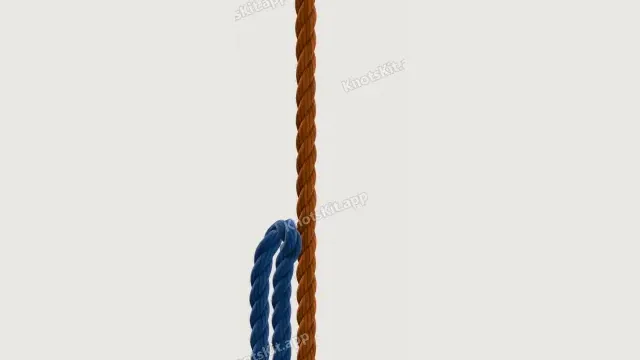
Step 1
Fold a closed loop of cord in two and bring the folded end up beside the rope.
What is the folded end?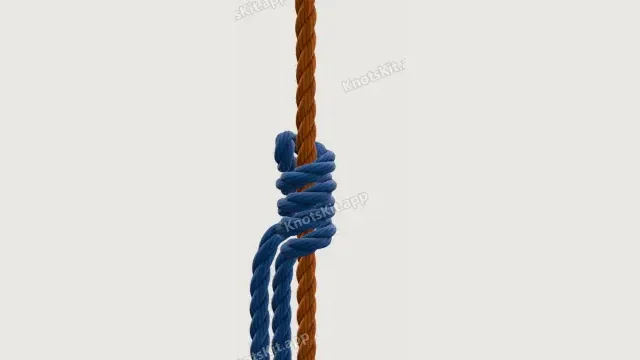
Step 2
Wrap the folded end around the rope twice, working upward.
Keep the two sides of the cord flat together, without crossing.
What is the folded end?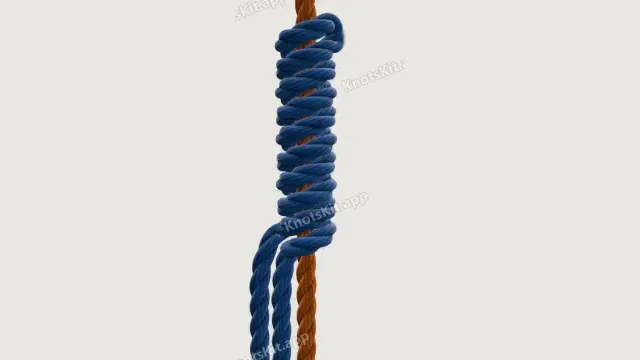
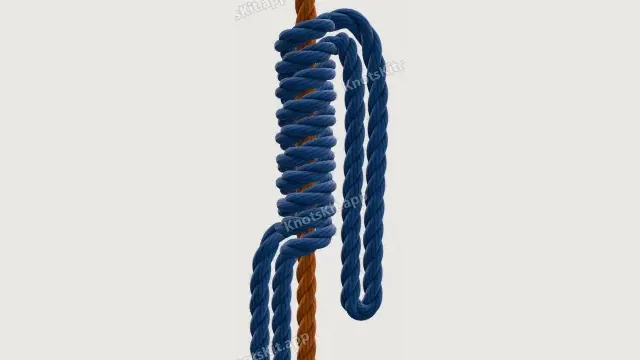
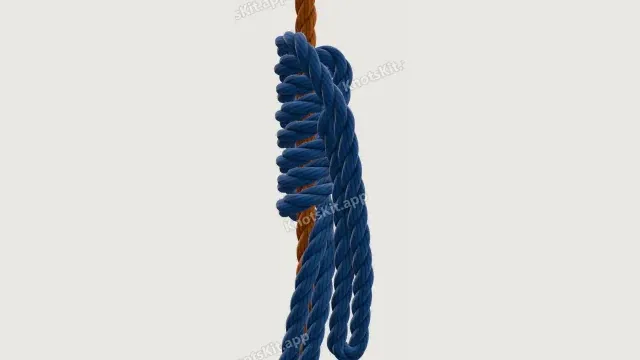
Step 5
Pull both ends of the loop down together until the turns grip the rope.
In real use, both ends go into the same carabiner. With only one clipped, the turns can come undone.
What's a loop?
What it’s for
Back up a rappel with a closed loop of cord around the rope. It slides while you guide it by hand and should grip when you let go.
When to avoid it
Avoid it as your only link to the rope, or if the cord is not clearly thinner than the rope: it can slip. For climbing or rescue, learn it with a qualified instructor.
Check your knot
The turns sit side by side on the rope, none crossing another. Both ends of the loop hang together below them.
Tips
- The animation shows the cord as thick as the rope, to keep it clear. A real cord must be thinner.
- Test it with a gentle pull before you rely on it. If it slips, add a turn and test it again.
- Check that it cannot reach the belay device: if it touches, it can stop gripping.
- A hand squeezing the turns can stop them gripping. Let go when you need it to hold.
Climbing and rescue: learn this knot with a qualified instructor and check it before every use. This page does not replace hands-on training.
What the autoblock does on a rappel
The autoblock backs up the hand that controls your speed. While you guide it, the turns stay loose enough to slide along the rope. When you let go, the cord should tighten and grip. That should matters: this is a backup that can slip, and it does not replace anything else in your system.
This page shows how the knot is formed, not how to rappel. Where the loop sits, how it connects to your harness and how far it stays from the belay device all belong to a set-up you learn in person, with a qualified instructor. Check that the knot cannot reach the device: if they touch, it can stop gripping. A hand squeezing the turns can stop them gripping too, and in a scare that is what hands do. Let go when it has to hold.
To climb a rope or haul a load, people usually reach for a Prusik or a Bachmann knot instead.
Common mistakes
- Cord as thick as the rope. The animation draws the loop from step 1 that thick to keep it clear. A real cord must be clearly thinner, or the knot can slip.
- Crossed sides. At step 2 the two sides of the cord lie flat together. If they cross, the turns sit unevenly and the grip is harder to predict. Unwrap them and lay them flat.
- Too few turns. Steps 2 and 3 make four turns in all. Stop early and the knot has less to grip with.
- Only one end clipped. At step 5 both ends come down together. In real use both go into the same carabiner: with only one clipped, the turns can come undone.
Test it before you rely on it
Test it every time, while you are still attached to the anchor. Put a gentle pull on the cord, let go of the turns and see that they tighten and hold. If the knot slips, add a turn and test it again. If it still slips, do not rely on it. Look over the loop as well: the knot that closes it, often a double fisherman’s knot, and any worn or shiny patches. If something looks wrong, replace the cord.
Related knots
Questions people ask
Is the autoblock safe for rappelling?
Many climbers use it to back up a rappel, but it can slip, and it is never your only link to the rope. How well it works depends on the cord, the rope, the set-up and how it was tied. Learn it in person with a qualified instructor, not from a web page, and test it before every rappel.
Autoblock or Prusik: which should I tie?
They suit different jobs. The autoblock is a common backup on a rappel, because it slides while you guide it by hand. The Prusik is made to grip when pulled either way and is used to climb a rope or haul a load, though a heavy load can jam it. Your instructor can tell you which belongs where.
Why does my autoblock slip?
Usually the cord is not clearly thinner than the rope, or there are too few turns for that rope. A hand squeezing the turns can stop them gripping, and so can the knot touching the belay device. Add a turn and test it again with a gentle pull. If it still slips, do not rely on it.
Why must both ends of the loop go in the same carabiner?
The two ends together keep the turns in place. With only one end clipped, the turns can come undone and the cord stops gripping. At step 5 you pull both ends down together, and in real use they stay together in one carabiner. Check that every time, before you put any weight on the rope.
What cord do I need for an autoblock?
A closed loop of cord clearly thinner than the rope. How much thinner depends on the rope and on the cord itself, so no single figure fits every pair. Stiff or slippery cord can grip less. Follow the makers’ guidance and your instructor, and test that cord on that rope before you rely on it.