


How to tie a boom hitch
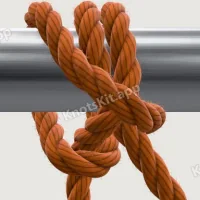
The boom hitch ties a rope to a boom, a spar or a rail when the pull comes from the side. The rope goes around the pole four times, crossing itself on the front, and the end tucks under the second turn. The crossed turns grip well and stay tidy. If the pull runs along the pole they can slide, so keep it for sideways loads.
Step 1 of 6
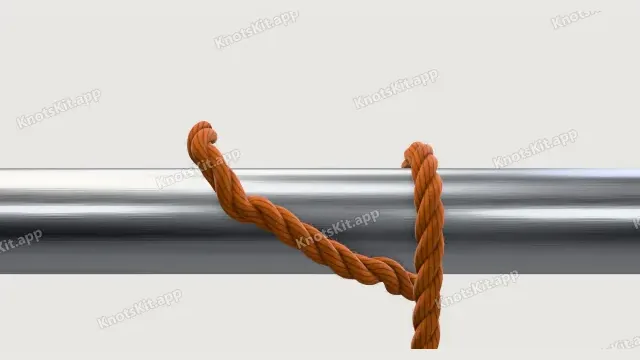
Take the free end over and behind the pole, then slant it across the front, away from the long section.
- Type
- Hitch
- Difficulty
- Medium
Step by step
Step 1
Take the free end over and behind the pole, then slant it across the front, away from the long section.
Which is the long section?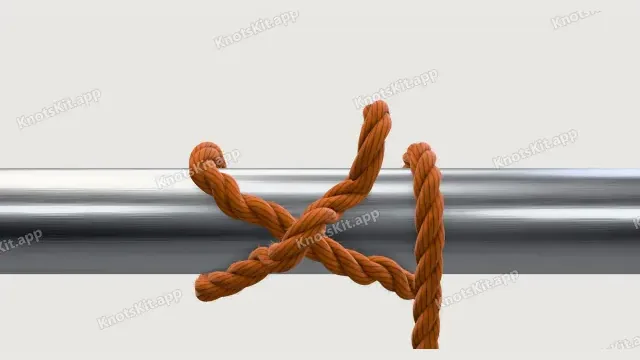
Step 2
Go behind the pole again and slant back over the first turn, towards the long section.
Which is the long section?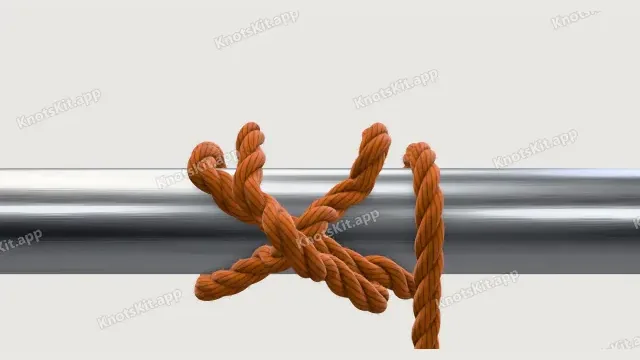
Step 4
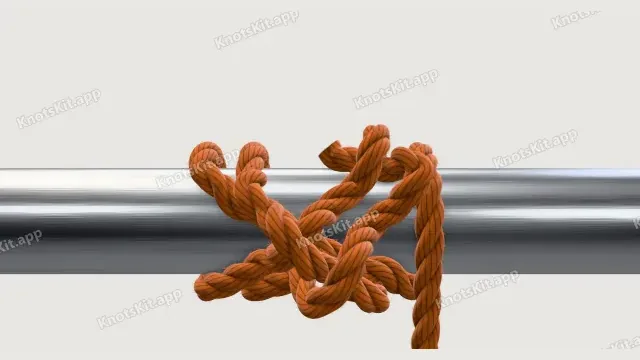
Go behind the pole a last time and slant across the front, over the long section.
Which is the long section?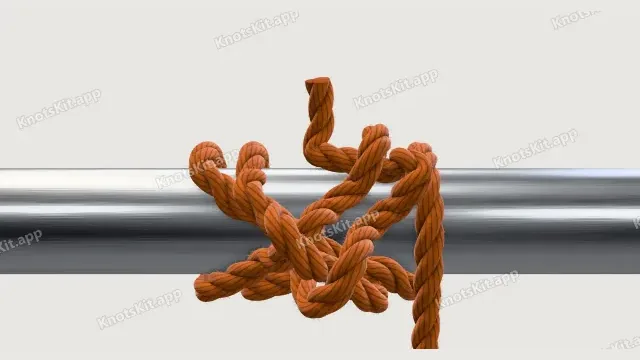
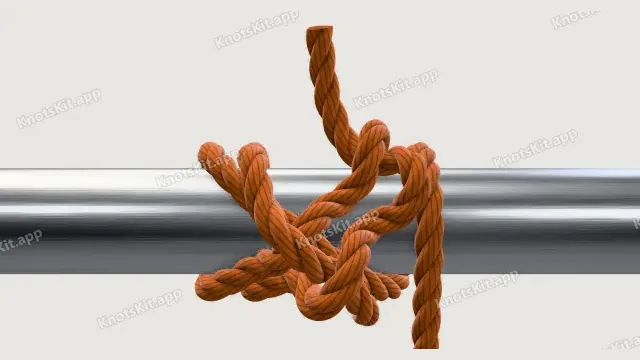
Step 6
Pull both ends to tighten.
What it’s for
Tie a rope to a boom, spar or rail when the pull comes from the side, not along it. The crossed turns grip the pole and stay tidy.
When to avoid it
Avoid it if the pull runs along the pole: the turns can slide. In that case use the rolling hitch. It also takes more rope and time than a clove hitch.
Check your knot
Four turns cross on the front of the pole and lie tight against it. The free end stands up from under the second turn.
Tips
- Leave enough rope beyond the knot. The length depends on the rope and how you use it.
- Keep the turns loose until the end is tucked, then tighten them evenly.
Where the boom hitch works best
- A line to the boom. A rope that holds the boom still while the boat is moored, pulling across the spar and not along it.
- Rails on board. A heavy fender or a tender’s line on a horizontal rail. The weight hangs straight down, across the pole, which is the pull this knot likes.
- Poles and bars on shore. Anything hung from a horizontal pole in a workshop or at camp. The turns stay tidy and do not bunch up.
Which way does the pull run?
Before you pick a pole hitch, hold the rope where it will sit and look at where the load goes. Across the pole, the crossed turns of this knot press down evenly and the hitch stays where you put it. A clove hitch does the same job faster, but it can work loose if the pole turns. Along the pole, turns like these can slide, so reach for the rolling hitch. If you also want something that unties easily after a heavy pull, compare the sailor’s hitch.
Common mistakes
- Turns that never change direction. The rope has to zigzag. Step 1 slants away from the long section and step 2 slants back over the first turn. Keep going the same way and you get a spiral, with no crossings to hold anything.
- Missing the long section. At step 4 the last slant goes over the long section. Pass under it and the long section stays free, so the turns lose their lock.
- Tucking under the wrong turn. At step 5 the end goes under the second turn, on top of the pole. It is tempting to use the last turn because it is the nearest, but there the end has little to hold it.
- Pulling one end only. Step 6 needs both ends. Draw them a little at a time and work the slack out of the turns evenly, until all four lie tight against the pole.
Related knots
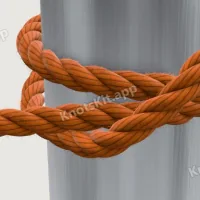
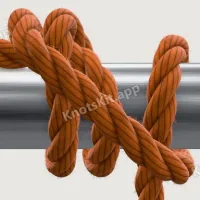
Questions people ask
Boom hitch or clove hitch: which should I tie?
For a quick job, the clove hitch: it takes less rope and less time, and you can adjust it by feeding rope through. The boom hitch takes longer, but it spreads its grip over a wider stretch of the pole and finishes with the end tucked away. Pick it when the rope stays on for a while.
Boom hitch or rolling hitch?
The direction of the pull decides. If the rope pulls across the pole, tie the boom hitch. If it pulls along the pole, the turns of a boom hitch can slide, and the rolling hitch is made for that job. If the pull swings between the two, test the knot with a slow pull before you rely on it.
Why does my boom hitch slide along the pole?
Usually the pull is running along the pole, even if only a little. A smooth or wet pole makes that worse, and so do turns that were tightened unevenly. Move the line so it pulls across the pole if you can. If you cannot, change to a rolling hitch and test it before you trust it.
How do you untie a boom hitch?
Take the load off, then pull the end back out from under the second turn. With the tuck gone nothing holds the turns, and they unwind from the pole as you pass the end back around. It usually comes off without a fight, since the turns press on the pole and the rope is not pinched tight on itself.