


How to tie a sailor’s hitch
The sailor’s hitch ties a rope to a pole or a rail. It grips firmly and, unlike many hitches that lock up after a hard pull, it is usually easy to untie. Three turns sit over the pole and a diagonal holds the end. On a smooth pole it can slide if the pull runs along it, and it can loosen when the rope goes slack.
- Type
- Hitch
- Difficulty
- Medium
Step by step
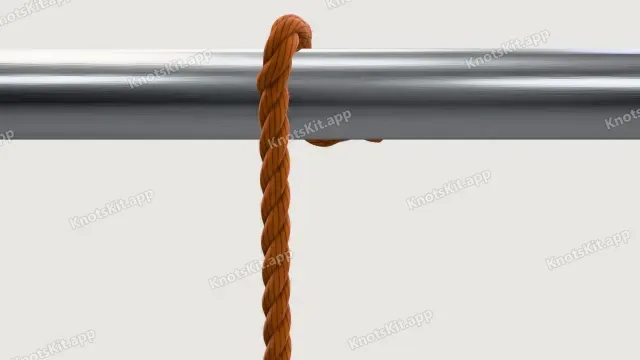
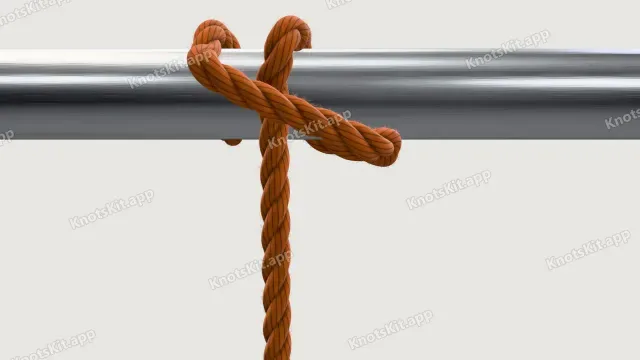
Step 2
Slant it across the front, over the long section, and go around the pole again.
Which is the long section?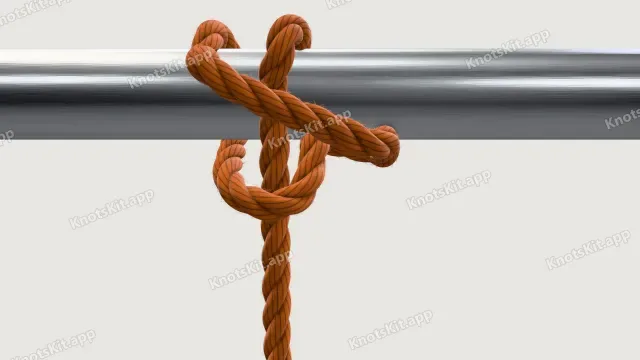
Step 3
Bring it out under the pole and across the front of the long section.
Which is the long section?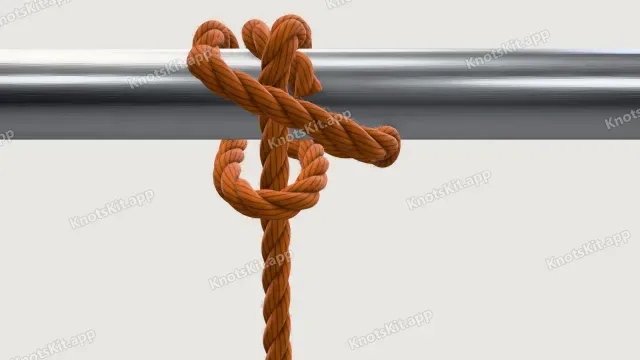
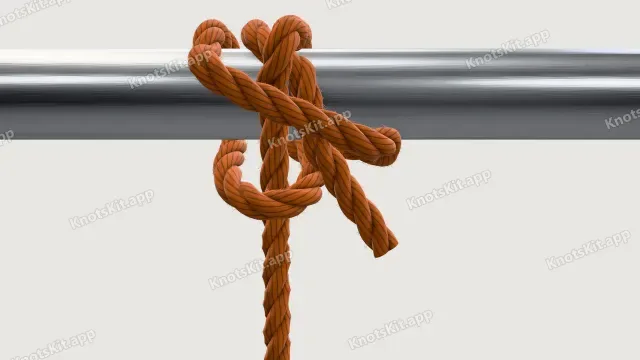
Step 5
Tuck the end down under the diagonal.
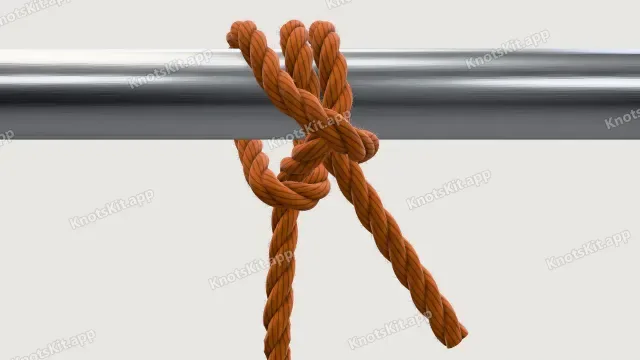
Step 6
Pull both ends to tighten.
What it’s for
Attach a rope to a pole or rail. It grips firmly and is usually easy to untie, even after a heavy pull.
When to avoid it
Avoid it on a smooth pole if the pull runs along it: the turns can slide. Check it again if the rope goes slack, because the knot can loosen.
Check your knot
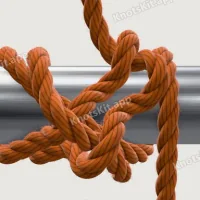
Three turns sit over the pole with a diagonal across them. The free end comes out from under the diagonal, beside the long section.
Tips
- Leave enough rope beyond the knot. The length depends on the rope and how you use it.
- Keep the turns flat and side by side as you tighten.
Where the sailor’s hitch works best
- A rope to a rail on board. A line taken to a round rail for a hard pull, when you want it off again without a fight.
- Hauling on a bar. A rope tied to a short bar or a pole to drag or lift a load, where a jammed knot would only cost you time afterwards.
- Poles you set up again and again. A line on a pole that takes a firm load and comes down at the end of each day.
Why it comes undone so easily
The pull lands on the turns, and they press on the pole. The diagonal only has to keep the end in place, so the end is not crushed the way it is in a hitch that tightens on itself. Take the load off and the diagonal usually lifts with a push of the thumb.
That is also its limit. A knot that does not lock on itself can open when nothing is pulling, so it suits a rope under steady work better than one that hangs slack. If the pull runs along a smooth pole, change to a rolling hitch. If the load comes from the side and the rope stays on for days, the boom hitch keeps its turns tidy. For a light job you want to adjust, a clove hitch is faster.
Common mistakes
- Missing the long section. At step 2 the end slants over the long section before it goes around again. Pass behind it and the turns no longer hold the long section down.
- Third turn outside the other two. At step 4 the end goes over the top between the two turns. Taken outside them, the turns do not lie together and the diagonal cannot run across all three.
- Tucking under a turn. At step 5 the end goes down under the diagonal, not under one of the turns. The finished knot should show it coming out beside the long section.
- Pulling one end hard. Step 6 uses both ends. Pull one alone and the turns pile up on each other, which grips less and makes the knot harder to undo.
Related knots
Questions people ask
Sailor’s hitch or clove hitch: which should I tie?
The clove hitch is quicker, and you can adjust it by feeding rope through the turns. The sailor’s hitch takes a few seconds longer, but it has more turns on the pole and usually unties easily after a heavy pull. For a hard pull on a pole, the sailor’s hitch is the better fit.
Is the sailor’s hitch the same as a rolling hitch?
No, though they can look alike at first glance. A rolling hitch has two turns and a diagonal, and it is made for a pull along the pole, in one direction. A sailor’s hitch has three turns and a diagonal, and on a smooth pole those turns can slide under that same kind of pull. Choose by where the load goes.
How do you untie a sailor’s hitch after a hard pull?
Take the load off, push the diagonal back and draw the end out from under it. With the end free the turns open and unwind from the pole. Most of the time that is all it takes, which is the main reason to choose it. Wet or thin cord may need a little more work.
Why did my sailor’s hitch loosen?
Usually because the rope went slack, or tightened and slackened many times. The knot depends on the pull pressing the turns to the pole, and without that pull they can open. Tighten it fully at step 6 and look at it again after the load has been on and off. If the rope will hang slack for long, tie something else.