


How to tie a rolling hitch
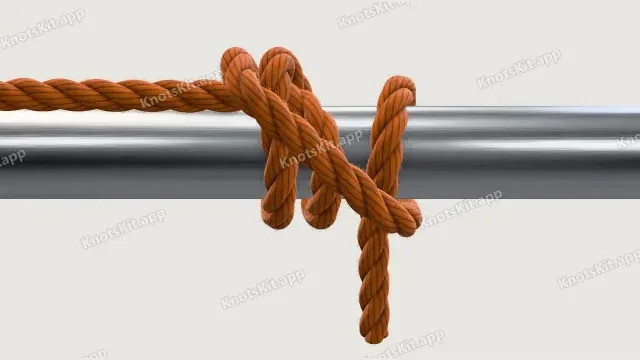
The rolling hitch ties a rope to a pole, or to another rope, when the pull runs along it, where many hitches would slide. Two turns lie side by side with a diagonal across them, and the pull tightens them onto the pole. Sailors use it to take the strain off a jammed rope. It grips in one direction only, and on a wet or slippery pole it can slip.
Step 1 of 5
Take the free end around the pole and up behind the long section.
- Type
- Hitch
- Difficulty
- Medium
Step by step
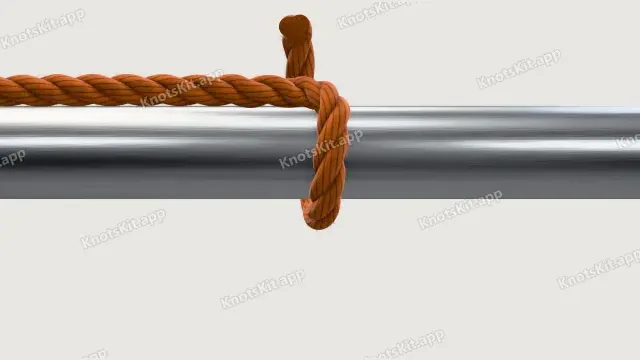
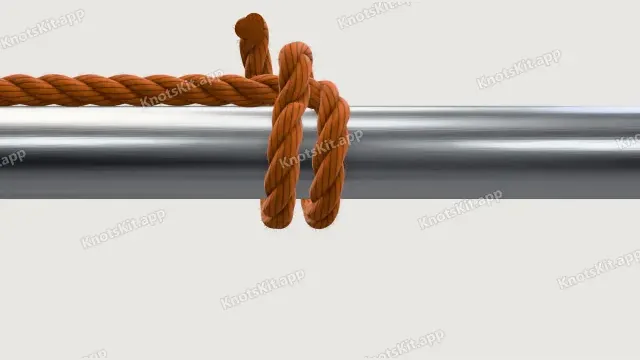
Step 2
Bring it over the long section and around the pole again, beside the first turn.
Make this turn on the side the pull will come from.
Which is the long section?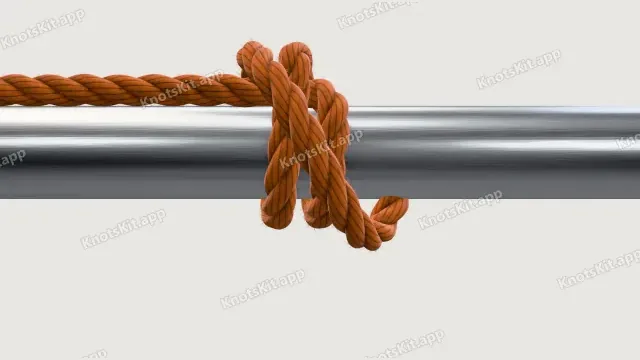
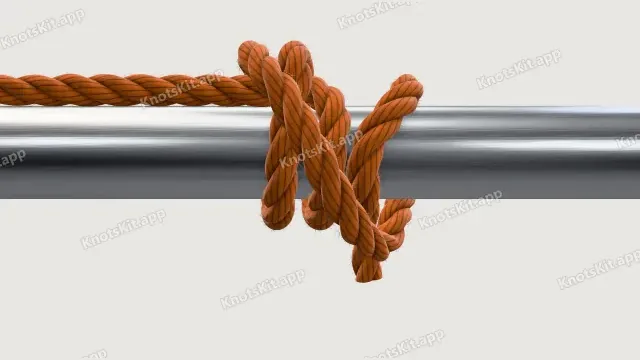
Step 4
Go around the pole once more and tuck the end under the diagonal.
What it’s for
Attach a rope to a pole or to another rope when the pull runs along it, for example to take the strain off a jammed rope.
When to avoid it
Avoid it if the pull can come from the opposite direction: it grips one way only. On a wet or slippery pole it can slip, so test it before you rely on it.
Check your knot
Two turns sit side by side with a diagonal across them. The end comes out under the diagonal, on the side away from the pull.
Tips
- Leave enough rope beyond the knot. The length depends on the rope and how you use it.
- On another rope it grips best if your rope is thinner than the one you tie it to.
Where the rolling hitch works best
- Taking the strain off a rope. A sheet jammed on a winch, or a loaded line that has to be moved to another cleat.
- On a tarp’s ridgeline. A thin cord tied to a taut ridgeline stays where you put it, as long as it keeps pulling the same way.
- On an upright post or a sloping rail. A fender line on a stanchion, where the weight would drag a simpler hitch down the post.
Decide the direction first
The one thing to settle before your first turn is where the pull will come from. The extra turn at step 2 goes on that side, and the end finishes on the side away from the pull. Tied the other way round, the same knot slides at the first load. If the pull can reverse, this is not the hitch for the job.
From there, the neighbours are easy to place. With a pull straight across the pole, a clove hitch is quicker. On a very smooth or tapered pole, compare the icicle hitch. To grip a rope and move the grip along it by hand, people use a Prusik. For climbing, rescue or anything else that holds a person, follow a qualified instructor.
Common mistakes
- Second turn on the far side. At step 2 it goes on the side the pull will come from. This is the mistake that matters most, and it does not show until the load comes on.
- Not crossing the long section. Step 2 also brings the end over the long section. Without that crossing you have a spiral and not a hitch.
- Diagonal over one turn. At step 3 it has to run over both turns. Slanted across one, the end has less to lock against at step 4.
- Loading it loose. At step 5 pull the end snug before you pull the long section along the pole. A loose hitch can slide some way before it bites, and on a smooth pole it may not bite at all.
Related knots
Questions people ask
How do you use a rolling hitch on a jammed rope?
Tie a second rope to the jammed one with this hitch, so the pull runs along the loaded rope. Take that second rope to another winch or a cleat and load it until the jammed section goes slack. Clear the jam, ease the load back and untie. Stay out of the line of any rope under heavy load.
Why does my rolling hitch slip?
Check the direction first: the turn from step 2 has to be on the side the pull comes from. On the other side, the knot slides. After that look at the surface, since a wet or slippery pole can let it creep. On another rope, tying a thicker line to a thinner one gives less grip.
Rolling hitch or clove hitch: which should I tie?
The pull decides. A clove hitch works best with the pull across the pole, and it can slide if the load runs along it. The rolling hitch has the extra turn that stops that creep, in one direction. If the pull comes straight across, the clove hitch is quicker. If it runs along the pole, tie the rolling hitch.
Rolling hitch or Prusik?
A rolling hitch is tied with the end of a rope and grips one way. A Prusik is tied with a closed loop of cord, grips both ways and slides by hand when the load is off. For anything that holds a person, learn the knot and the system from a qualified instructor, and check it before every use.