


How to tie an icicle hitch
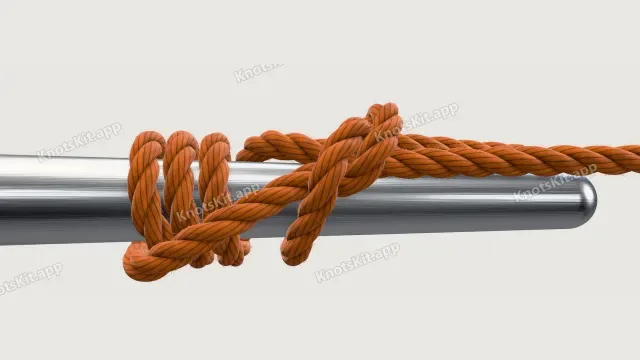
The icicle hitch fixes a rope to a smooth or tapered pole when the pull runs towards the thin end, where other knots can slide off. Three turns grip the pole and two more trap the long section against it, so the pull tightens the whole knot. It needs a pull that keeps one direction: if the rope goes slack, the turns can open and slide off.
Step 1 of 5
Wrap the free end around the pole three times, moving towards the thick end.
- Type
- Hitch
- Difficulty
- Hard
Step by step
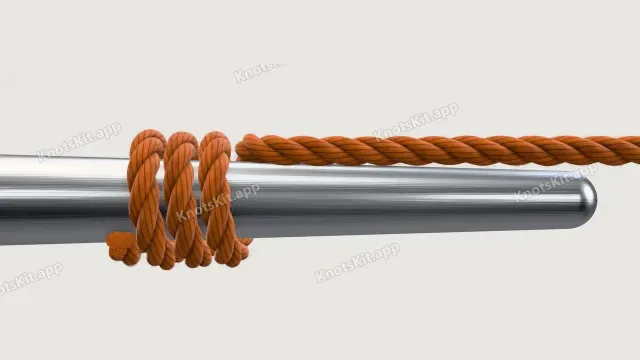
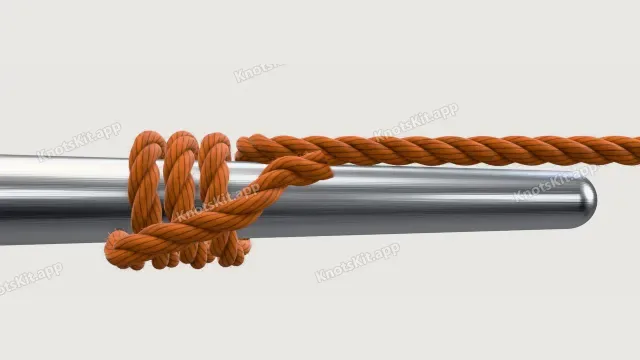
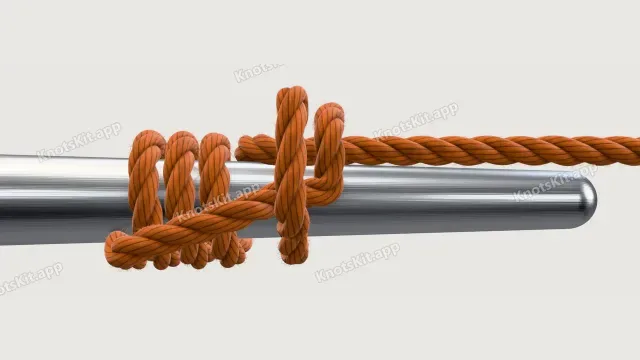
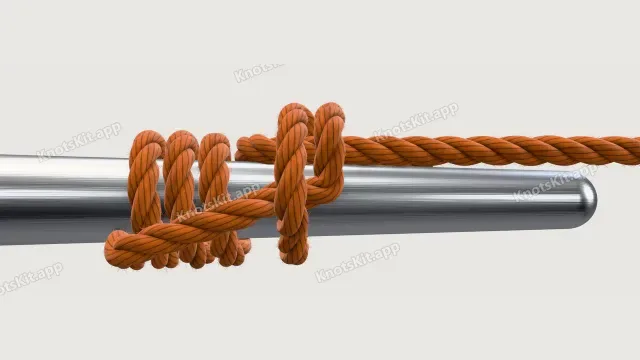
What it’s for
Attach a rope to a smooth or tapered pole when the pull runs towards the thin end. It can hold where other knots slide off.
When to avoid it
Avoid it if the pull can change direction or the rope can go slack: the turns can loosen and slide off. For climbing, follow your instructor’s guidance.
Check your knot
Three turns sit side by side towards the thick end. A diagonal runs from them to two more turns, and the free end lies beside the long section.
Tips
- Leave enough rope beyond the knot. The length depends on the rope and how you use it.
- On a very smooth pole, try adding a turn or two.
- Test it with a slow pull before you put the full load on it.
Climbing and rescue: learn this knot with a qualified instructor and check it before every use. This page does not replace hands-on training.
Where the icicle hitch works best
- Smooth poles and rails. Polished metal, plastic pipe or varnished wood, where a simpler hitch would creep.
- Tapered spars. A pole that narrows towards the pull, which gives most knots an easy way off.
- Hauling a pole lengthways. Dragging a spar or a log by its thin end, with no notch or ring to tie to.
- Climbing. The knot shows up there too, but not as something to pick up from a page. For anything that holds a person, follow a qualified instructor and check it before every use.
Read the pole before you start
Everything in this knot follows from the direction of the pull, so find that first. On a tapered pole it is the thin end. On a straight one, it is the end the rope will pull towards. The long section runs that way, the first three turns climb the other way, and the end then comes back across them.
The last two turns go around the pole and the long section together. That is the heart of the knot: the pull on the long section draws those turns tighter, and they squeeze the pole. Reverse the pull and the squeeze is gone, which is why a change of direction can undo it.
If the pole is rough enough and even in thickness, a rolling hitch is quicker to tie. If the load comes from the side, a clove hitch or a sailor’s hitch is all you need.
Common mistakes
- Wrapping towards the thin end. At step 1 the turns move towards the thick end. Wrap the other way and the pull has nothing to climb against.
- Leaving the long section out. At step 3 both turns go around the pole and the long section together. Wrap the pole alone and the long section is not trapped.
- Tucking under the second turn. At step 4 the end goes under the first of the two turns, towards the thin end. Under the second, it has less to pin it.
- Pulling in the wrong order. At step 5 snug the end first, then pull the long section towards the thin end. Load it with the turns still loose and they can slide before they grip.
Related knots
Questions people ask
Icicle hitch or rolling hitch: which should I tie?
Both take a pull that runs along the pole. The rolling hitch is quicker and also works on another rope, so it is the usual pick on a pole of even thickness. The icicle hitch is longer to tie, but it can hold where a rolling hitch would slide, as on a smooth pole or one narrowing towards the pull.
Can I use the icicle hitch for climbing?
Some climbers know it, but whether and how to use it is something to learn in person from a qualified instructor, and the knot must be checked before every use. It depends on a steady pull in one direction, which you cannot assume in a real system. This page shows how the knot is formed, not how to climb on it.
Why does my icicle hitch slide off?
Most often the turns went the wrong way at step 1, or the pull is not running towards the thin end. Check that the long section was trapped by the two turns at step 3. If all of that is in order and the pole is very smooth, a soft rope usually grips better than a stiff one.
How do you untie an icicle hitch?
Take the load off and the turns relax at once. Pull the end back out from under the first of the last two turns, then unwrap the rest. On a pole with a free thin end you can often slide the whole knot off instead and shake it out. It rarely jams, because the grip goes when the pull goes.