


How to tie a constrictor knot
The constrictor knot, also called the gunner’s knot, is a binding that clamps down hard: a clove hitch with one extra tuck, so the two ends cross under the diagonal and pinch each other. It closes a sack, binds a bundle or holds a frayed rope end together, and it rarely loosens on its own. The price: it can jam, and you may have to cut it off.
- Type
- Binding knot
- Difficulty
- Medium
- Also called
- Gunner's Knot, Whip Knot, Timber Knot
Step by step
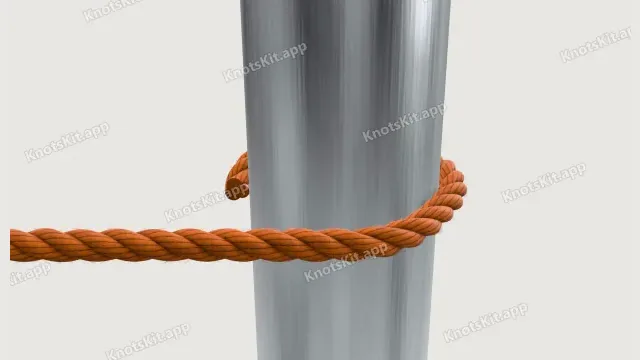
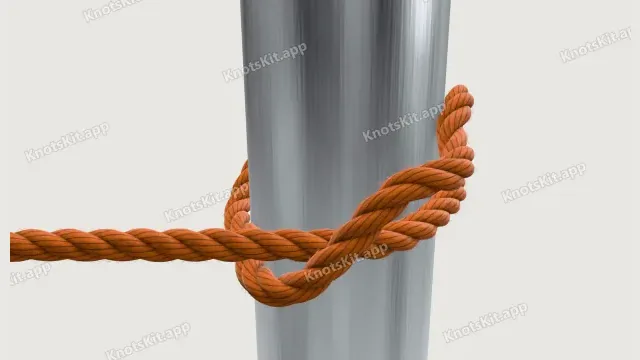
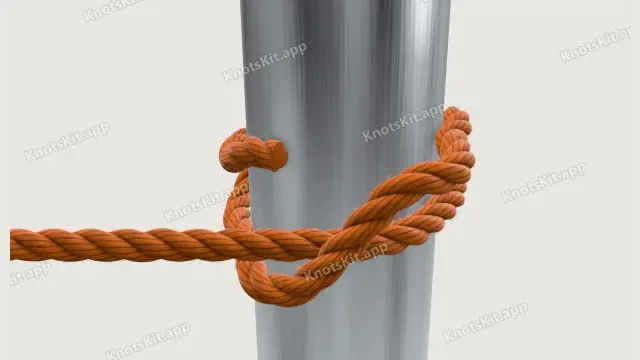
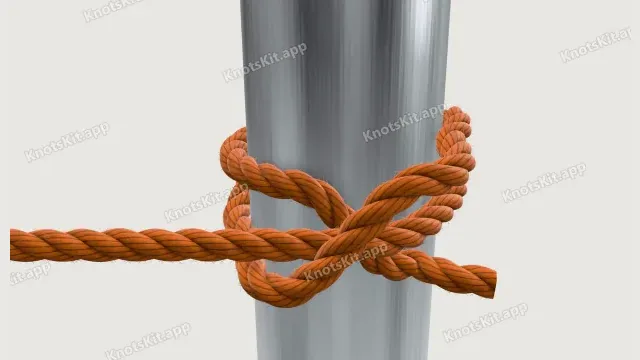
Step 4
Tuck the end under the diagonal and under the long section.
This last tuck is what separates it from a clove hitch.
Which is the long section?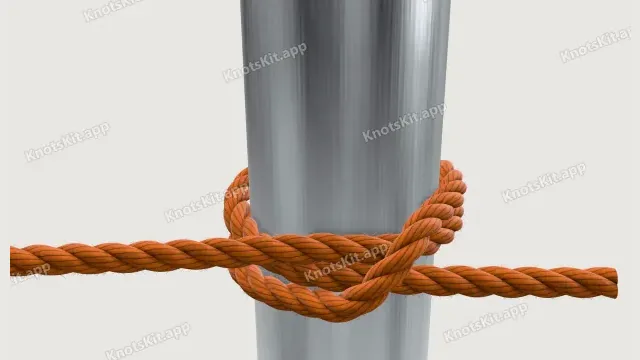
Step 5
Pull both ends hard to tighten.
What it’s for
Tie the neck of a sack, bind a bundle or hold a frayed rope end together. It grips hard and rarely loosens on its own.
When to avoid it
Avoid it if you will need to untie it: once tight it can jam, and you may have to cut it off. It also grips poorly on flat or square objects.
Check your knot
The diagonal lies over the long section and the end, which cross beneath it. The ends leave in opposite directions.
Tips
- Leave enough rope beyond the knot. The length depends on the rope and how you use it.
- Thin, soft cord grips better than thick rope.
- If it jams, cut the diagonal with care: the turns then come loose.
Where the constrictor knot is useful
- A sack that must stay shut. Thin cord around the gathered neck holds it closed through handling and shaking.
- A frayed or cut rope end. Tie it with thin cord just before the fray. If you are about to cut a rope, tie one on each side of the cut first, so neither end comes apart.
- Bundles of poles or canes. Round things packed together suit it, as long as the outside of the bundle stays round.
- Quick repairs. A split handle or a glued joint, held tight while you wait.
Common mistakes
- Stopping at a clove hitch. At step 4 the end goes under the diagonal and under the long section. Under the diagonal alone you have a clove hitch, which will not clamp.
- Second turn on top of the first. At step 3 it goes beside the first turn. Stacked turns ride over each other and close unevenly.
- Thick rope on a job for cord. Stiff rope cannot bend tight enough when you pull at step 5. Use thin, soft cord where you can.
- A timid pull. Step 5 says hard, and it means it. With thin cord, wrap each end around a stick or a tool handle so you can pull without hurting your hands.
Getting it off, and when to go double
A jammed constrictor comes off by cutting. Cut the diagonal, where it runs over the turns, keeping the blade away from what the knot binds, and the turns come loose. If you expect to remove it later, make a fold in the end before the tuck at step 4. You then have something to pull, and the knot usually lets go.
Two neighbours are worth knowing. When a thick bundle or a slippery object needs more grip, the double constrictor adds one more round. The strangle knot does much the same job with two turns side by side. Neither is any easier to undo, so if the binding has to come off by hand, start with something else.
Related knots
Questions people ask
What is the difference between a constrictor knot and a clove hitch?
One tuck. Both start with two turns and a diagonal. At step 4 the constrictor’s end goes under the diagonal and also under the long section, so the two ends cross beneath the diagonal and pinch each other. A clove hitch adjusts and unties easily. A constrictor grips much harder and usually stays where you put it.
How do you untie a constrictor knot?
Often you do not. Once tight it can jam, and the usual answer is to cut it. Cut the diagonal with care, with the blade pointing away from what the knot binds, and the turns come loose. If you know you will want it off, tuck a folded end at step 4, and a pull on it will usually release the knot.
Why does my constrictor knot not grip?
Check the shape first. It grips round things and holds poorly on flat or square objects, where the tension drops at the corners. Then check the cord: thin, soft cord closes much better than thick rope. Last, check step 4, because if the end went under the diagonal only, you have tied a clove hitch.
Constrictor knot or strangle knot: which should I tie?
For most bindings either will do. The constrictor takes one step fewer and pins the crossing under a single diagonal. The strangle knot shows two turns side by side, which close evenly if you work the slack around a bit at a time. Both want a round shape and both can jam, so neither suits something you plan to untie.