


How to tie a strangle knot
The strangle knot is a binding of two turns that clamp down on both ends as you pull. It closes a sack, holds a rolled mat together or stops a rope end from fraying. You may also see it called the double overhand hitch. It grips best on round shapes, and after a hard pull it can jam, so you may have to cut it off.
- Type
- Binding knot
- Difficulty
- Medium
- Also called
- Double Overhand Hitch, Modified Miller's Knot
Step by step
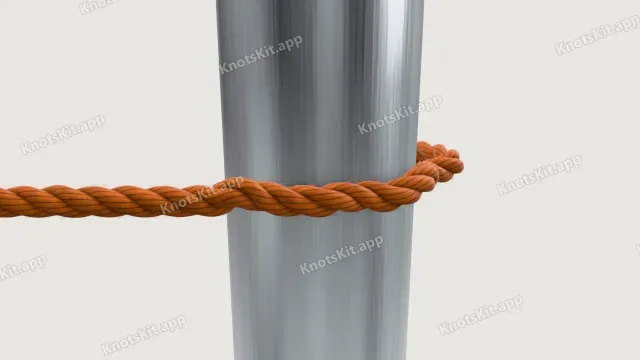
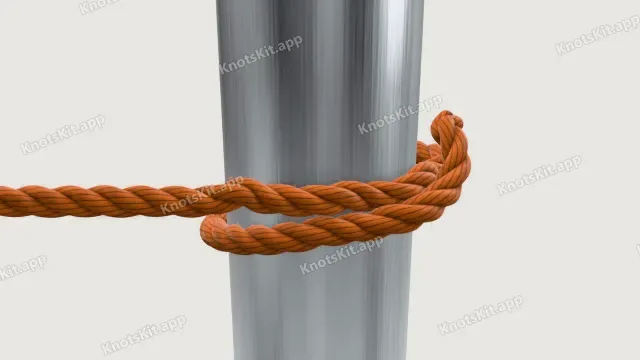
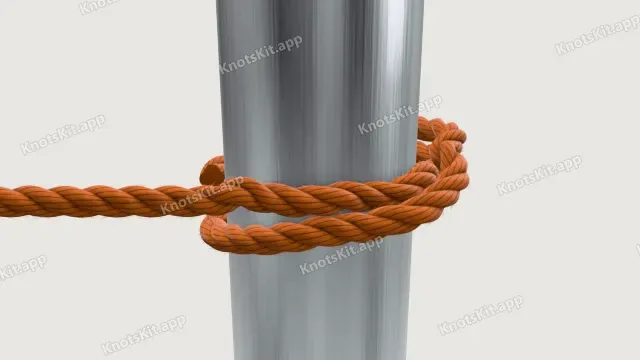
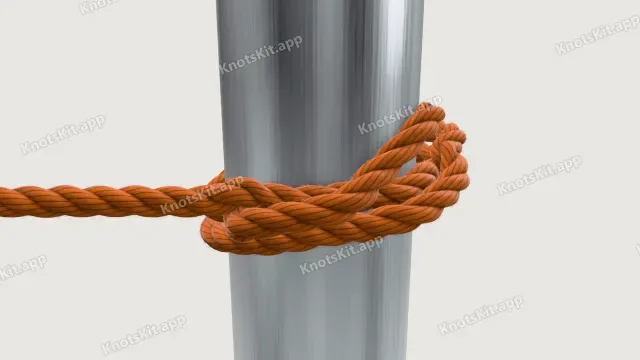
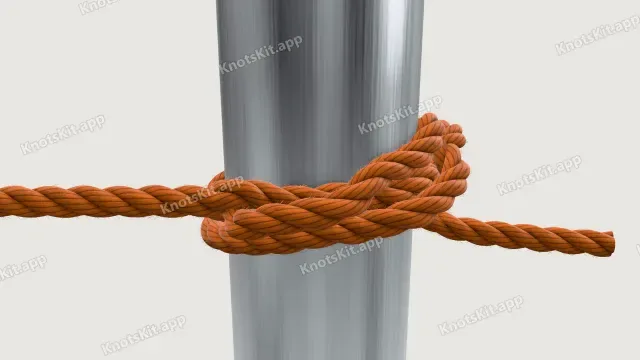
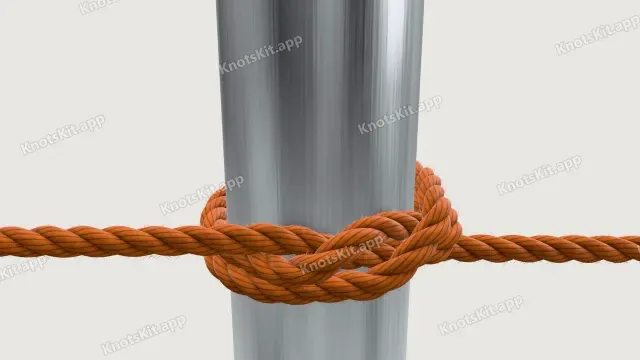
Step 6
Pull both ends hard to tighten.
What it’s for
Close a sack, hold a rolled mat together or stop a rope end from fraying. The two turns clamp down on both ends as you pull.
When to avoid it
Avoid it on flat or square objects: the turns grip best on a round shape. After a hard pull it can jam, and you may have to cut it off.
Check your knot
Two turns lie side by side around the post. The ends leave in opposite directions.
Tips
- Leave enough rope beyond the knot. The length depends on the rope and how you use it.
- Work the slack around the post a little at a time, so both turns close evenly.
Where the strangle knot works best
- The neck of a sack. Cord around the gathered neck, and the turns pinch it shut.
- A rolled mat or bedroll. The round shape suits it. Pull it firm rather than hard if you want to undo it by hand.
- A rope end about to fray. Thin cord just before the damage keeps the strands together until you can finish the end.
- Round bundles. Sticks or tent poles held in a tight bunch. Flat or square things suit it poorly, because the turns grip best on a round shape.
Common mistakes
- Stacking the turns. At step 3 the second turn goes beside the first, and at step 4 the second crossing goes beside the first diagonal. If they ride up on each other, the knot will not close evenly.
- Tucking under one turn only. At step 5 the end goes under both turns. Miss one and the end is held by half the knot.
- End coming out on the wrong side. Step 5 sends it out away from the long section, so the ends leave in opposite directions. If they leave together, undo the tuck and make it again.
- Yanking it closed. At step 6 work the slack around the post first. One big pull tightens one turn and leaves the other loose.
Strangle knot or constrictor?
They do the same kind of work, so pick the one your hands remember. The constrictor knot is a step shorter and pins the crossing under a diagonal. The strangle knot builds on a shape you may already know from the double overhand knot and finishes as two neat turns. For a thick or slippery load, the double constrictor adds grip.
All three work best on round shapes, and all three can jam after a hard pull. Tie them on things you plan to leave tied, and keep a knife in your kit for the day you change your mind.
Related knots
Questions people ask
What is the difference between a strangle knot and a constrictor knot?
Both clamp a rope around something, and both can jam. In the constrictor knot a single diagonal pins the two ends where they cross. In the strangle knot the end crosses the long section twice and then tucks under both turns, so two turns lie side by side. The constrictor is one step shorter, and the strangle knot closes in a neat, even band.
Is the strangle knot a double overhand knot?
It has the same shape, tied around something. That is why it is also called the double overhand hitch, and modified miller’s knot is another of its names. The double overhand knot is a stopper in the rope itself. The strangle knot puts that shape around a sack, a mat or a rope end, so the turns clamp on both ends.
How do you untie a strangle knot?
After a light pull you can often work it loose: push the turns apart, ease some slack back around the object and draw the end out. After a hard pull it can jam, and you may have to cut it off. Cut one of the turns with care, keeping the blade away from what the knot binds.
Will a strangle knot stop a rope end fraying for good?
Treat it as a stopgap. Thin cord tied just before the fray and pulled hard holds the strands together well for a while, which is handy in the field. Rope and cord can still work loose with use, so check it from time to time and finish the end properly when you can.