


How to tie a double overhand knot
The double overhand knot is an overhand knot with one extra turn. You make a loop, pass the end through it twice and pull, and the two turns close into a short barrel. It makes a bulkier stopper than the plain overhand, less likely to work loose, and it often locks the free end of another knot. Once loaded, it is hard to untie.
- Type
- Stopper knot
- Difficulty
- Easy
Step by step
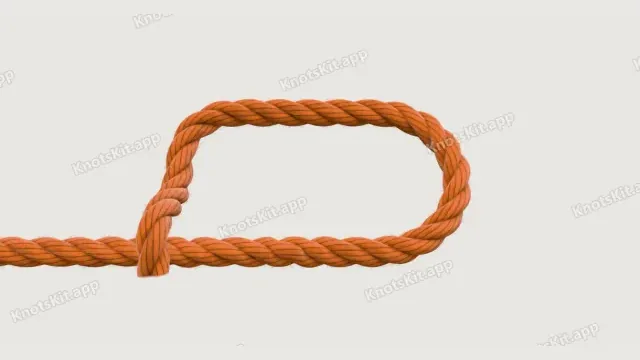
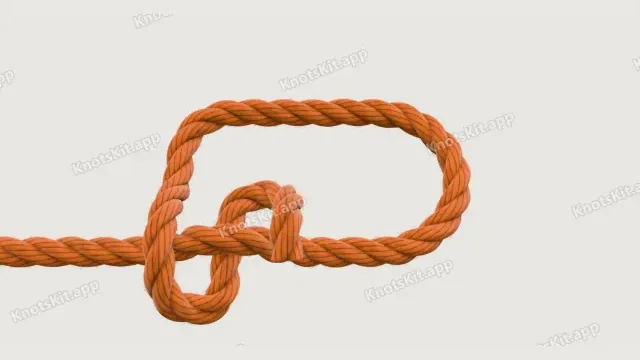
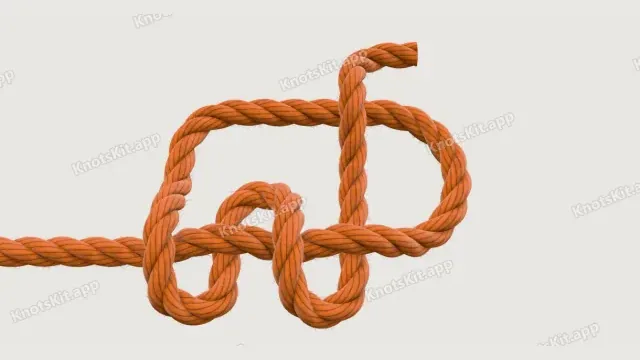
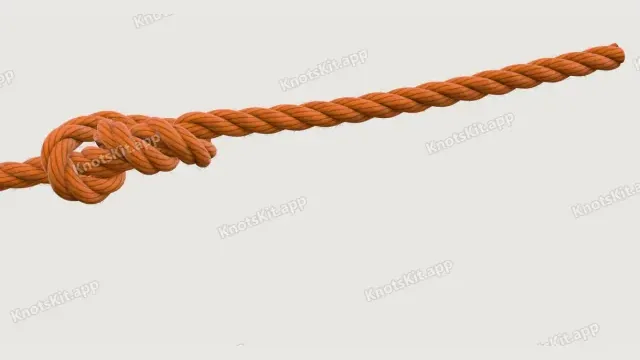
What it’s for
Make a bulkier stopper than the overhand knot, or secure the free end of another knot.
When to avoid it
Avoid it if you will need to untie it: it jams once loaded. On climbing gear, use it as a backup only as your instructor shows you.
Check your knot
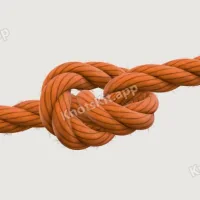
Two turns sit side by side and the knot looks like a short barrel.
Tips
- Leave enough rope beyond the knot. The length depends on the rope and how you use it.
- Keep the two turns side by side as you pull, so they do not cross.
Climbing and rescue: learn this knot with a qualified instructor and check it before every use. This page does not replace hands-on training.
Where the double overhand is useful
- Thin or slippery cord. On paracord, shock cord or smooth braided cord, a plain overhand can work loose or squeeze through a cord lock. The second turn grips better and makes the knot a little bigger.
- Bracelets, lanyards and zip pulls. It gives a neat, barrel-shaped end that will not slip back through a bead or an eyelet.
- Locking the end of another knot. Climbers, arborists and rescuers often finish a free end this way. On climbing gear, use it only as your instructor shows you, and never as a fix for a main knot you are unsure about.
- A warm-up for the double fisherman’s. Each half of the double fisherman’s knot is a double overhand tied around the other rope. Get the two turns neat here and that knot gets much easier.
Common mistakes
- Starting too close to the end. Two turns use more rope than one. If the loop at step 1 sits near the very tip, there is hardly any end left after step 3, and a short end can work back out.
- Changing direction at step 3. The second pass goes through the loop the same way as the first, so the turns stack like a coil. Take it the other way and you will not get the barrel of the finish check. Untie it and start again.
- Rushing step 4. Pulled hard and fast, the turns can twist over each other. Close the knot slowly, keep the turns side by side, and only then pull firm.
- Counting on untying it. It jams once loaded. For a stopper you will take off again, the stevedore’s knot or the figure eight is kinder.
How to check it
A good double overhand looks like a short barrel: two turns lying side by side around the rope, neither one riding over the other. The long section goes in at one end of the barrel and the free end comes out of the other. If you can count only one turn, the end went through the loop once. If the turns cross, the knot was closed too fast. Either way, untie it now, while it still unties easily, and tie it again. On anything that matters, such as climbing gear, check it every time before you load it.
Related knots
Questions people ask
What is the difference between an overhand and a double overhand knot?
One turn. In the overhand knot the end goes through the loop once. In the double overhand it goes through a second time, at step 3, so two turns end up side by side. That makes it a little bulkier and better at gripping itself, at the cost of being harder to untie.
Do climbers use the double overhand as a backup knot?
Many finish the free end of their tie-in knot with one, usually tied around the rope next to the main knot rather than on its own. Whether your knot needs it, where it goes and how to check it depend on the knot and on what you were taught. Use it the way your instructor teaches you, and check your whole tie-in before every climb.
Why do the turns cross when I pull it tight?
Because they moved before they were in place. At step 4, pull slowly at first and keep the two turns side by side with your thumb as they close, then pull firm. If one turn has ridden over the other, open the knot and dress it again: a crossed double overhand is lumpy and harder to check.
Can you untie a double overhand knot?
Before it has taken a load, yes: push the turns apart and work the end back out. After a hard pull, especially in thin cord, it can close so tight that you need a fid or a marlinspike, and sometimes cutting it is the only way. If you know you will need to untie it, the stevedore’s knot is a bulky stopper that usually comes undone far more easily.