


How to tie an overhand knot
The overhand knot is the simplest stopper there is: make a loop near the end of a rope, pass the end through it and pull. It keeps a cord from slipping out through a hole, a bead or a cord lock, and it is the first move of many other knots. Its weak point is untying: after a hard pull it can jam tight.
- Type
- Stopper knot
- Difficulty
- Easy
- Also called
- Thumb Knot, Stafford Knot
Step by step
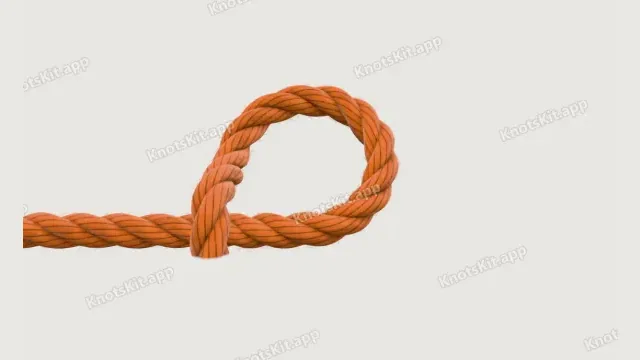
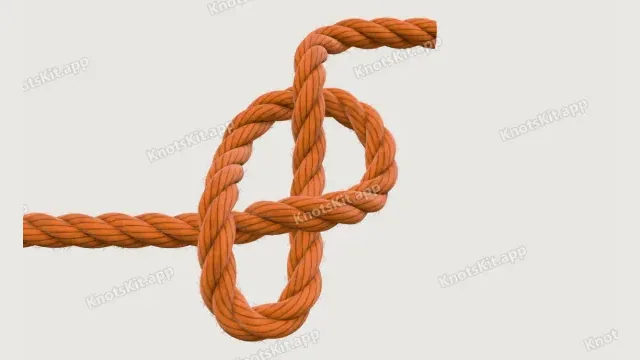
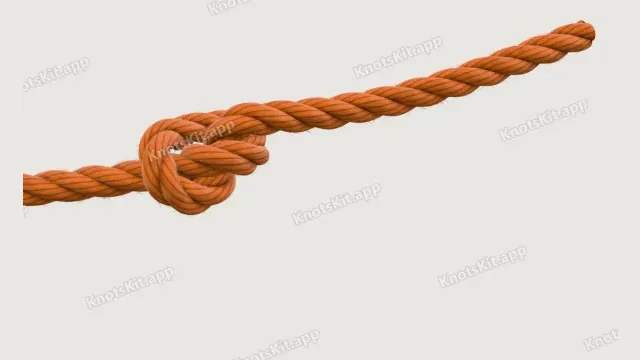
Step 3
Pull both ends apart to close the knot.
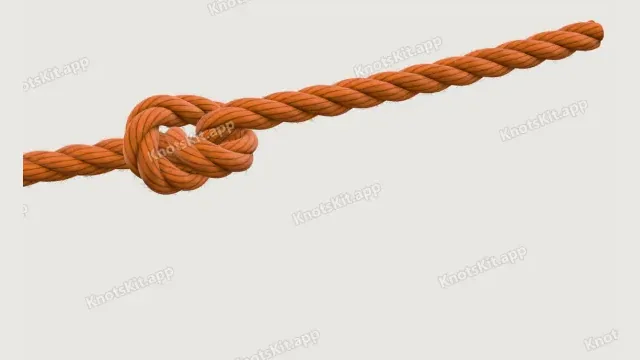
Step 4
Pull firmly once more to set it.
What it’s for
Put a quick stopper in the end of a rope or cord. It is also the first move of many other knots.
When to avoid it
Avoid it if you will need to untie it: once pulled hard, it jams. For a bigger stopper, tie a figure eight.
Check your knot
A small, round knot. The free end and the long section leave it on opposite sides.
Tips
- Leave enough rope beyond the knot. The length depends on the rope and how you use it.
- To keep a cut end from fraying, tie it close to the end.
Where the overhand knot is useful
- Drawstrings and cord locks. A knot at each end of the cord on a hood or a stuff sack stops it vanishing into the channel or sliding out of the cord lock.
- Beads, charms and tags. On thin cord, an overhand on each side holds a bead or a charm where you want it, and one at the end keeps a tag from sliding off.
- The start of other knots. You tie it twice in the fisherman’s knot and once, with doubled line, in the Palomar. Add a second turn and you have the double overhand.
Common mistakes
- Going in from the front at step 2. The end goes up through the loop from behind. Push it through from the front instead and there is no knot at all: pull the ends and the rope comes out straight.
- Skipping step 4. A knot closed gently at step 3 is still soft. On stiff or slippery cord it can loosen and slide off the end. The firm pull at step 4 is what sets it.
- Using it where you will need to untie it. After a heavy pull, an overhand in thin cord can turn into a hard lump you cannot pick open. For a stopper you can undo, tie a figure eight or a stevedore’s knot instead.
- A stopper smaller than the hole. The overhand is the smallest stopper there is. Check it against the real hole, and if it pulls through, move up to a bulkier knot.
Two useful variations
- Slipped overhand. At step 2, pass a small U of the end through the loop instead of the end itself. It still works as a stopper, and a tug on the free end pulls it apart. Handy on a bag or a cover you open often.
- Overhand on a bight. Fold the rope into a U and tie the knot with both strands together: you get a fixed loop at the end. It is quick, but very hard to untie after a load. For a loop you need to trust or undo, see the figure eight loop and the bowline.
Related knots
Questions people ask
What is an overhand knot used for?
Mostly as a quick stopper: a lump near the end of a cord so it cannot pull out of a hole, a grommet or a cord lock. It also sits inside plenty of other knots: the fisherman’s knot, for one, is just two overhand knots, each tied around the other rope.
Overhand knot or figure eight: which stopper should I tie?
If you might need to untie it, tie the figure eight. It is bulkier, so it blocks a wider hole, and it usually comes undone even after a hard pull. The overhand is smaller and quicker, which suits thin cord, beads and drawstrings you never plan to untie.
How do you untie an overhand knot that has jammed?
Bend it back and forth to loosen it, then push the long section into the knot so the loop opens and the end can slide out. A fid or a marlinspike helps on rope, a needle on thin cord. If the cord is cheap and the knot tiny, cutting it off is often quicker.
Does an overhand knot weaken a rope?
A rope is weaker wherever it is knotted, and the overhand bends it quite sharply. On a drawstring, a tag or a tent line that hardly matters. In fishing line it does: an overhand that forms by accident while casting, which anglers call a wind knot, leaves a weak spot that can give way with a fish on. Cut it out and retie.
Why does my overhand knot keep coming undone?
Usually because it was never set. That is what step 4 is for: on stiff or slippery cord, an overhand left soft can work open as the cord moves. Pull it firm, leave enough rope beyond it, and on slippery cord try the double overhand, which has a second turn to grip with.