


How to tie a simple overhand noose
The simple overhand noose, better known as the slip knot, ties a rope to a post, a stake or a bundle. It is an overhand knot tied around the long section, so the loop closes when you pull and opens again when you slide the knot back. It is quick and easy to undo, and it never goes around a person or an animal.
Step 1 of 4
Take the free end around the post and back towards the long section.
- Type
- Loop
- Difficulty
- Easy
- Also called
- Slipped Overhand Knot, Slip Knot, Running Knot, Simple Noose
Step by step
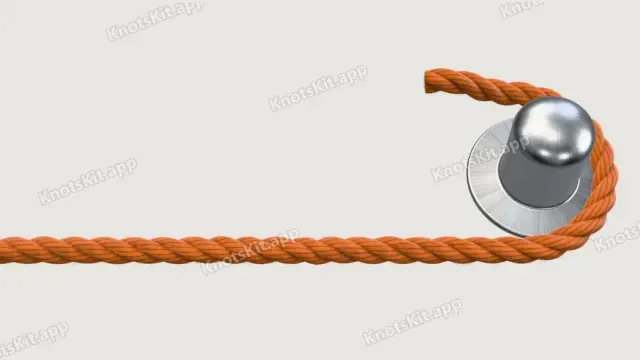
Step 1
Take the free end around the post and back towards the long section.
Which is the long section?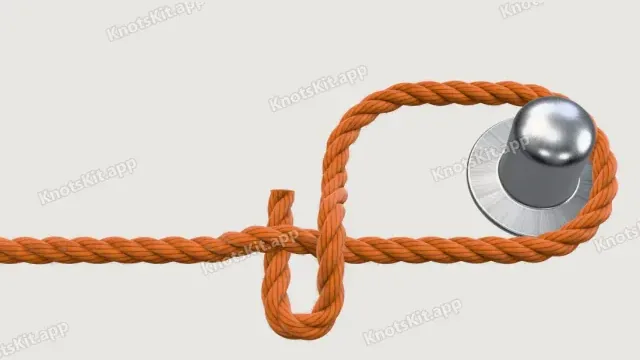
What it’s for
Make a loop that closes around a post, a stake or a bundle when you pull the rope.
When to avoid it
Never put it around a person or an animal: the loop tightens and does not open by itself. Avoid it if you need a loop that keeps its size.
Check your knot
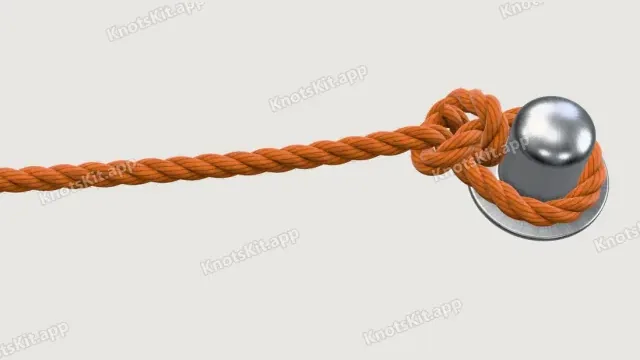
The loop hugs the post. The knot sits close beside it, around the long section.
Tips
- Leave enough rope beyond the knot. The length depends on the rope and how you use it.
- To open the loop again, slide the knot back along the long section.
Where the simple overhand noose is useful
- Starting a line at a post or stake. Tie it at one end of a washing line or a rope fence, pull it closed and carry the rope to the far end.
- Holding a bundle. Sticks, canes or tent poles. Pull the loop tight around them and it stays closed while the pull lasts. Finish with another knot if the bundle has to travel.
- A rope you will take down soon. It closes quickly, and sliding the knot back frees the rope.
It never goes around a person or an animal: the loop tightens and does not open by itself.
Common mistakes
- Wrapping the wrong rope at step 2. The end wraps around the long section, not around the rope coming back from the post. Around that one, nothing slides and the loop cannot close.
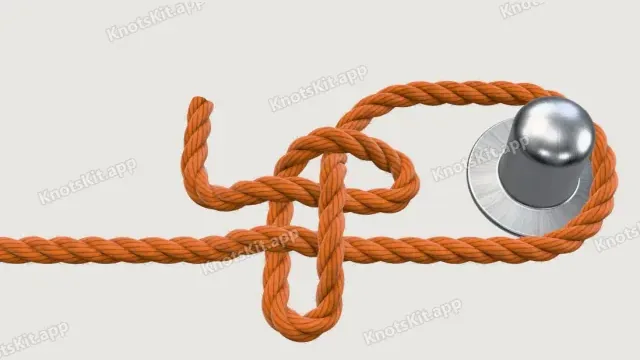
- Forgetting the tuck at step 3. The end crosses over the turn and tucks back through it. Without the tuck there is only a loose wrap, and it falls open at the first pull.
- Pulling the end at step 4. Hold the end and pull the long section. If you pull the end instead, the knot closes on the rope and the loop stays open.
- Expecting it to keep its size. Any pull on the long section closes the loop further. If you want a loop that stays as you made it, this is the wrong knot.
Noose or fixed loop?
Many people tie a slip knot out of habit, when what they need is a fixed loop. Ask one question: should the loop close? For a rope on a post or a bundle, yes, and this knot is fine. If the loop has to stay open, tie a bowline, which keeps its size. If you want a loop that closes on a post and keeps running freely, the running bowline takes longer to tie, because the long section slides through a small fixed loop, but it usually runs better on heavier rope.
The knot itself is nothing new. It is the overhand knot you already know, tied around the long section, which is why the loop can run.
Related knots
Questions people ask
Is a simple overhand noose the same as a slip knot?
Yes. Slip knot is the name most people use, and the same knot is also called the slipped overhand knot, the running knot or the simple noose. The full name tells you how it is built: an overhand knot tied around the long section of the rope, where it can slide along and close the loop.
Slip knot or bowline: which should I tie?
It depends on what the loop has to do. A slip knot closes on whatever it goes around, and a pull keeps it closed. A bowline keeps its size, so use that for a loop that must stay open or sit loosely over a post. If you need a loop of a fixed size, do not use a slip knot.
How do you open a slip knot?
Take the tension off, then slide the knot back along the long section. The loop grows until it lifts off the post. To undo it altogether, draw the free end back out of the knot and the rope falls straight. On rope that has not been pulled very hard, this takes a few seconds.
Why will my slip knot not slide?
The knot has to stay loose enough to run along the long section. If you pulled the free end hard at step 3, or pulled it instead of the long section at step 4, the knot has closed on the rope. Loosen it with your fingers, hold the end and pull the long section. Rough or thin cord also runs less freely.