


How to tie a running bowline
The running bowline ties a rope to a post, a rail or a bundle with a noose: pull the long section and the noose closes. You tie a small bowline around your own long section, so the long section slides through it. It holds under a pull and is usually easy to undo afterwards. It is for objects only and never goes around a person or an animal.
- Type
- Loop
- Difficulty
- Medium
- Also called
- Running Bowling Knot
Step by step
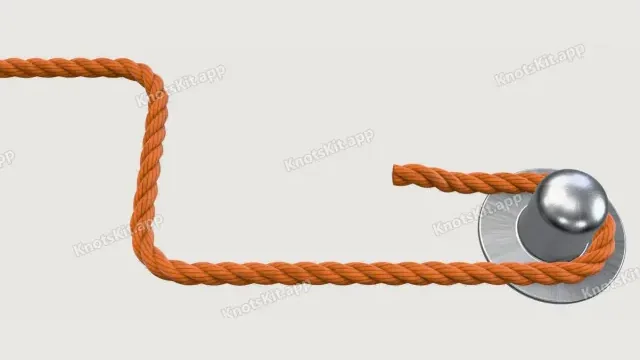
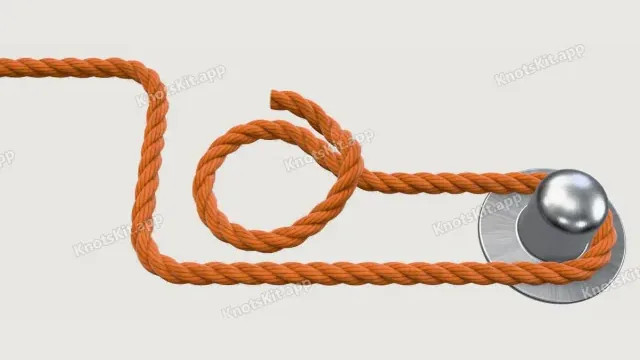
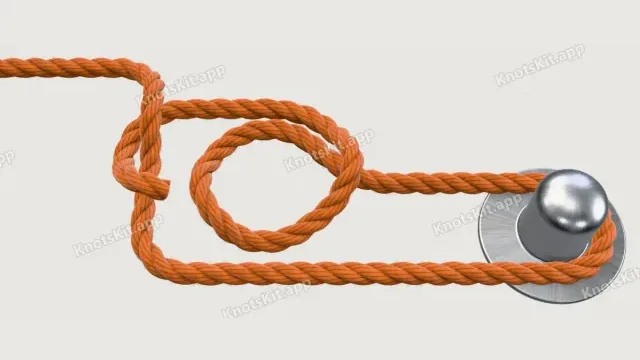
Step 3
Take the end under the long section and back over it.
Keep this turn loose: the long section must slide through it.
Which is the long section?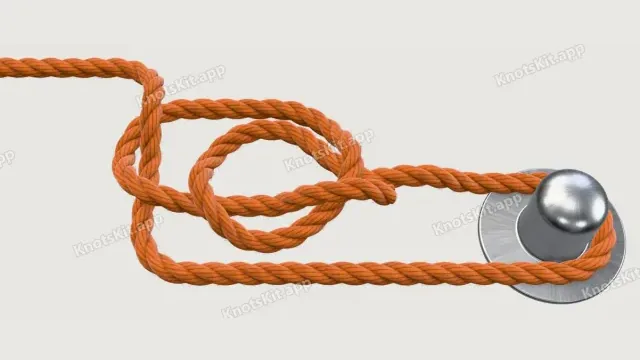
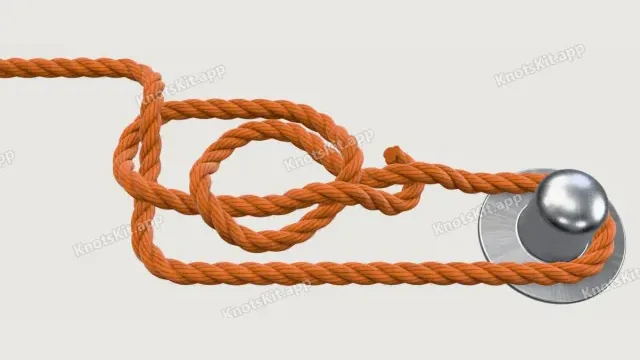
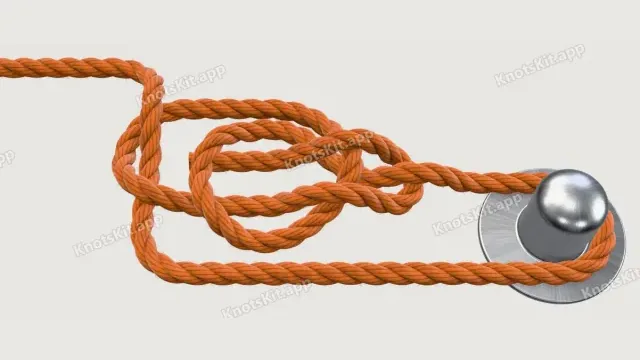
Step 5
Take it around the rope coming from the post.
What it’s for
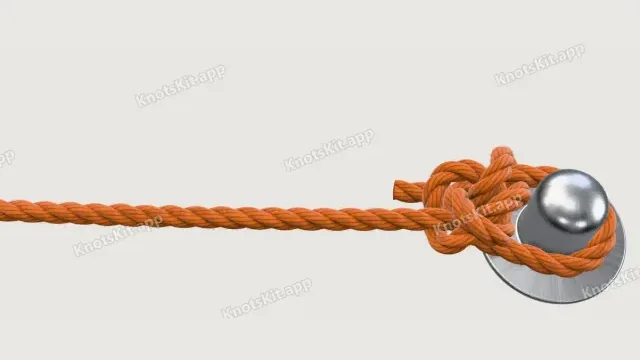
Make a noose that closes around a post, rail or bundle when you pull the long section. It is usually easy to undo afterwards.
When to avoid it
Never put it around a person or an animal: the noose closes when pulled. Avoid it if the loop must keep its size, and use the bowline instead.
Check your knot
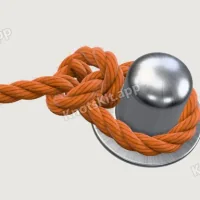
The noose is closed around the post, with the knot against it. The long section runs out through the knot.
Tips
- Leave enough rope beyond the knot. The length depends on the rope and how you use it.
- To open the noose, feed the long section back through the knot.
How it works
The running bowline is two parts at once: a small knot that keeps its size, and a long section sliding through it. At step 3 the end makes the turn around the long section. Steps 4 to 6 then finish a small bowline, with the rope coming from the post as its own main line. The noose around the post is just rope that leaves that knot and runs back through it, so pulling the long section shortens it.
Where the running bowline is useful
- A post or a rail. A line closed around a post on a dock, or a rail on board, with one pull.
- A stake. A camp line taken around a stake and pulled up close, so it cannot lift off.
- A bundle. Poles, canes or firewood gathered inside the noose, closed with a pull and ready to carry.
Common mistakes
- Turn too tight at step 3. Keep it loose. If it grips the long section, the noose will not slide at step 7.
- Mixing up the two ropes. Steps 2 and 5 use the rope coming from the post, step 3 uses the long section. They look alike, so follow each one back before you cross it.
- Wrong way through the small loop. The end goes up through the loop at step 4 and back down at step 6. Same direction twice and the small knot will not lock.
- Expecting a fixed size. Step 7 closes the noose around the post. If you need a loop that stays open, this is the wrong knot.
Opening and untying it
Take the pull off, then feed the long section back through the knot. The noose opens and lifts clear of the post or the bundle. To take the knot out completely, push the end back the way it came, as you would with any bowline, and the small loop falls apart. It usually takes a few seconds. For a quick tie around a stake, the simple overhand noose has fewer steps. Whichever you tie, it stays on posts, stakes and bundles, and never goes around a person or an animal.
Related knots
Questions people ask
Running bowline or bowline: which should I tie?
It depends on what the loop has to do. A bowline keeps its size, so it suits a loop that must stay open around a post or through a ring. The running bowline closes on what it holds, so it suits a post or a bundle you want gripped. If the loop must keep its size, tie the bowline.
Running bowline or simple overhand noose?
Both close around a post, a stake or a bundle when you pull. The simple overhand noose has fewer steps and does the job for a quick tie. The running bowline takes longer, but it is usually easy to undo afterwards. Choose it when you expect a firm pull and want the rope back without a struggle.
Why does my running bowline not slide?
Almost always the turn from step 3 is too tight. That turn is what the long section runs through, so it has to stay loose while you finish the knot. If you snugged it down, open it up and check that the long section moves freely. Stiff or rough rope can slow it down too.
Can a running bowline go around a person or an animal?
No, never. The noose closes when the long section is pulled, so it is only for objects: a post, a rail, a stake or a bundle. Everything on this page is about tying a rope to something of that kind, and that is the only way to use this knot.