


How to tie a double constrictor
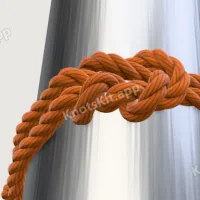
The double constrictor is a constrictor knot with one more round of rope, so two diagonals lie side by side instead of one. Tie it to bind a thick bundle or something slippery, when the single knot does not grip enough. That extra grip has a cost: it can jam even harder, and you may end up cutting it off.
- Type
- Binding knot
- Difficulty
- Medium
Step by step
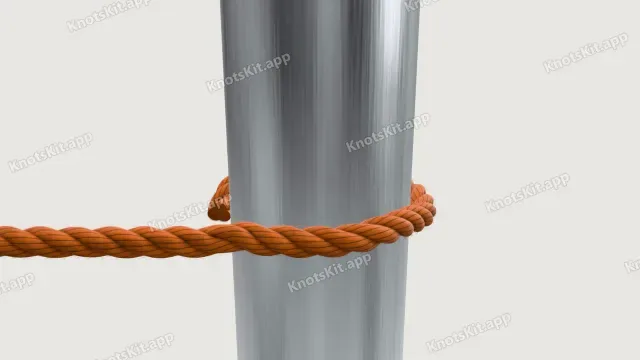
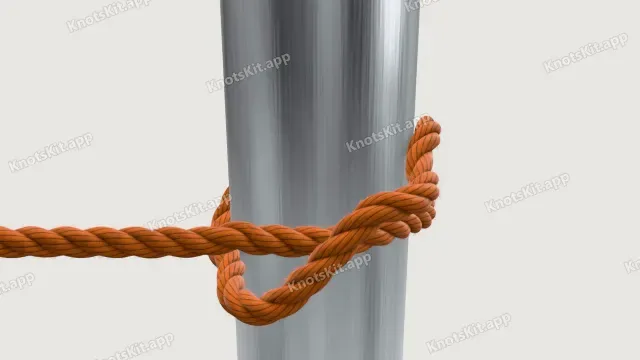
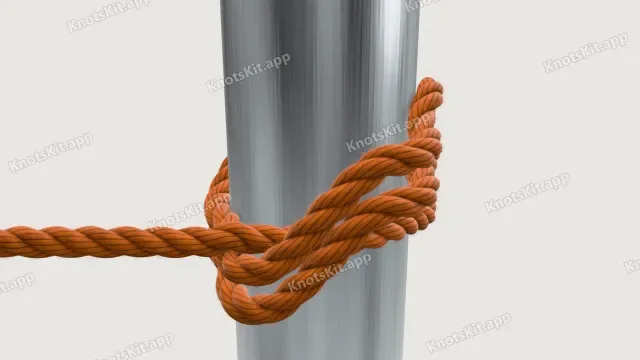
Step 3
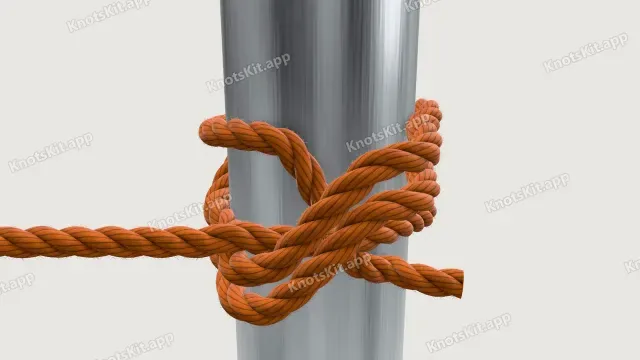
Take the end around the post again and make a second diagonal beside the first.
Keep the two diagonals side by side, without crossing.
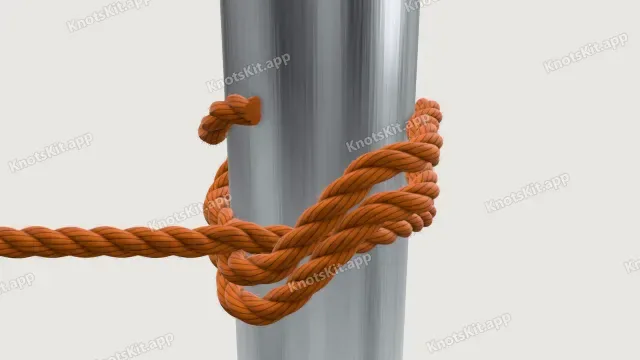
Step 6
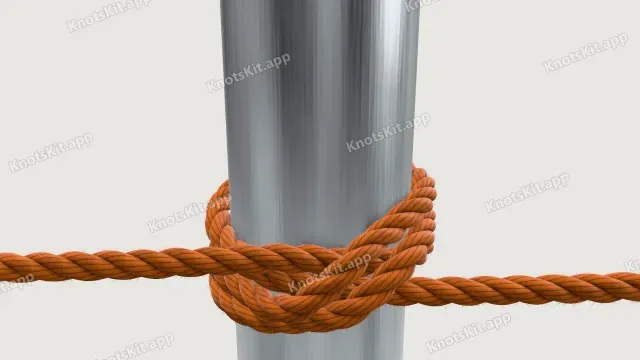
Pull both ends hard to tighten.
What it’s for
Bind a thick bundle or something slippery, when you want more grip than a constrictor knot gives.
When to avoid it
Avoid it if you will need to untie it: it can jam even harder than a constrictor knot, and you may have to cut it off. On soft or delicate objects it can also leave marks.
Check your knot
Two diagonals lie side by side over the long section and the end, which cross beneath them. The ends leave in opposite directions.
Tips
- Leave enough rope beyond the knot. The length depends on the rope and how you use it.
- If it jams, cut both diagonals with care.
Where the extra round is worth it
- Thick bundles. A big armful of canes or poles pushes back hard, and two diagonals keep the pressure on.
- Smooth, slippery things. Plastic pipe, varnished poles, wet bamboo. One diagonal may let the turns creep, and two have more to hold with.
- Bindings that stay. A repair you do not plan to undo, or a sack that stays shut until you cut it open.
Common mistakes
- Diagonals crossing. At step 3 lay the second diagonal beside the first. If they cross, the turns ride over each other and the grip is uneven.
- Last wrap on top. At step 4 the final turn goes beside the one before it, not over it.
- Half a tuck. At step 5 the end goes under both diagonals and under the long section. Miss one and the ends do not cross beneath them, so the knot cannot clamp as it should.
- Pulling before the slack is out. There is more rope to draw in than in the single knot. Before the hard pull at step 6, ease the slack around the turns, so they close together.
Single, double or something else?
Start from the job. The constrictor knot covers most bindings and is quicker, so move up to the double only when the single one does not hold. A strangle knot suits a sack or a rolled mat, where two turns side by side close neatly, and it can jam too.
If the binding has to come off later, skip this family altogether. A surgeon’s knot closes a bundle firmly and undoes by hand.
One limit stays the same however many rounds you add: these knots want a round shape. On a flat or square object the turns lose their pressure at the corners and the grip drops. Thin, soft cord also closes better than thick rope, so choose the cord before you add the extra round.
Related knots
Questions people ask
When do I need a double constrictor instead of a constrictor knot?
When the single knot does not hold. That usually means a thick bundle that keeps pushing back, or a smooth surface where one diagonal lets the turns creep. If the single knot does the job, stay with it: it is quicker to tie and uses less cord. The double is there for when you need more grip.
How do you get a double constrictor off?
Usually by cutting it. Once tight it can jam even harder than the single knot, so there is little point in picking at it. Cut both diagonals with care, keeping the blade away from what the knot binds, and the turns come loose. If you will need to take it off by hand, choose another knot from the start.
Can a double constrictor damage what it is tied around?
It can. Pulled hard, the turns bite in, and on soft or delicate objects they can leave marks: a painted pole, a rubber hose, a soft bag. If that matters, put a strip of cloth under the turns first, or use a gentler binding such as a surgeon’s knot, and pull only as hard as the job needs.
Why do my diagonals cross?
It happens at step 3, when the second diagonal lands on the first instead of beside it. The knot still closes, but the turns ride over each other and the grip is uneven. Stop before you tuck the end, lay the two diagonals side by side and check that they stay there as you make the last wrap at step 4.