


How to tie a surgeon’s knot
The surgeon’s knot ties a rope tightly around a bundle, a sack or a post. It is shaped like a reef knot with one extra twist in the first half, and that twist is what makes it useful: it grips enough to hold the first half tight while you tie the second. Campers and scouts use it for firewood, bedrolls and anything that must stay snug.
Step 1 of 6
With the rope around the post, lay one end across the front.
- Type
- Binding knot
- Difficulty
- Medium
- Also called
- Ligature Knot
Step by step
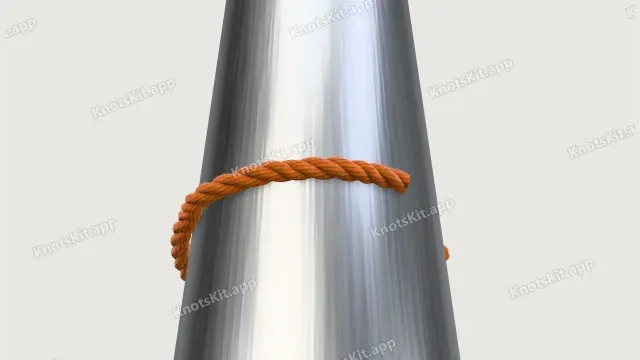
Step 1
With the rope around the post, lay one end across the front.
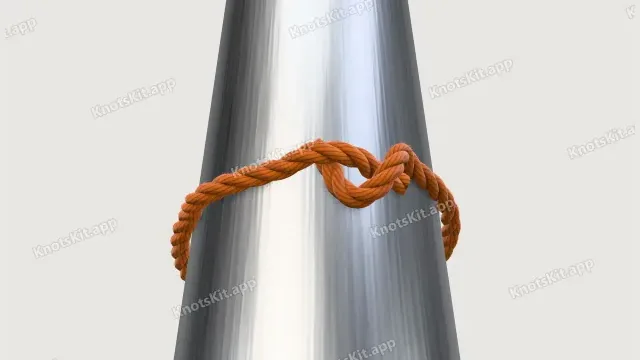
Step 2
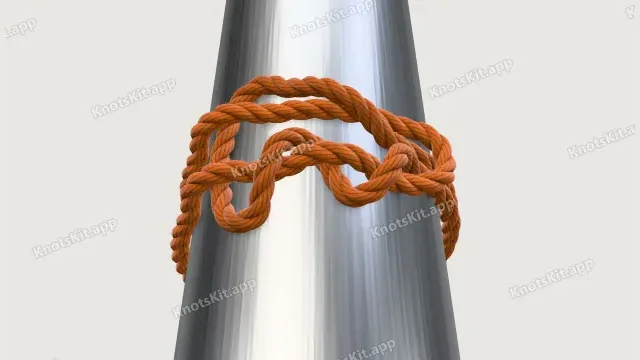
Pass the other end over it, then under it.
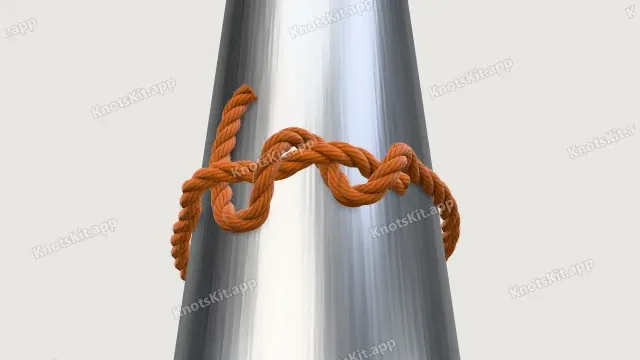
Step 3
Go over and under once more for the extra twist.
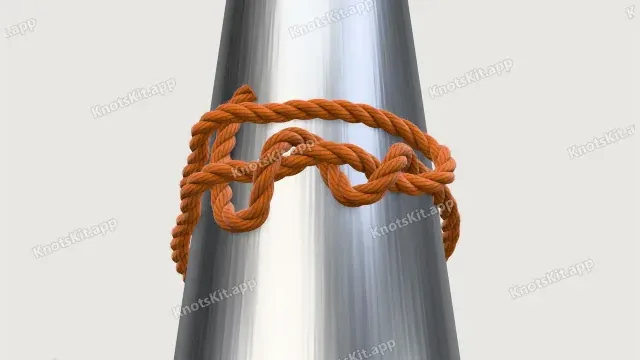
Step 4
Lay the first end back over the second, crossing the opposite way.
Step 6
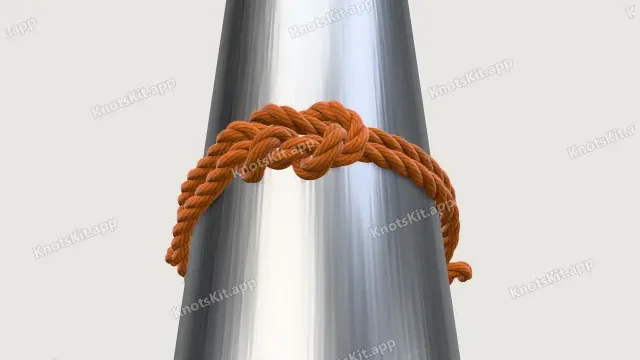
Pull both ends to tighten.
What it’s for
Tie a rope tightly around a bundle, a sack or a post. The extra twist holds the first half while you tie the second.
When to avoid it
Do not use it to join two ropes that will take a load. It is a binding knot.
Check your knot
The first half has two twists and the second half one. Each end leaves alongside its own side of the rope, and the knot lies flat.
Tips
- Pull the first half tight before you tie the second: the extra twist keeps it from slipping.
Where the surgeon’s knot is useful
- Bundles that need to stay tight. Firewood, tent poles, a rolled tarp or a bedroll: pull the first half tight and the extra twist holds it while you finish. The knot lies flat, so it does not dig in or snag.
- Closing a sack or a stuff bag. Wrap the neck, tie the knot and the opening stays shut.
- Around a post or a pole. The animation ties it around a post. Anything round works the same way, from a fence post to a broken tool handle you are splinting.
Why the extra twist helps
A bundle of sticks or a full sack pushes back on the rope. With a single twist, the first half starts to slip the moment you let go to tie the second, and you end up with a knot that is tied but loose. At step 3 the end goes over and under once more, so the two ends wrap around each other twice and grip with more friction. That friction holds the first half while you work through steps 4 and 5. The second half needs only one twist, because the first half is already doing the holding, and one twist lets the knot close flat.
Common mistakes
- First half left loose. Pull it tight before step 4. The extra twist keeps the tension you put in, but it cannot add any.
- Skipping step 3. With one twist the first half slackens while you work. In effect you have tied a reef knot.
- Second half tied the wrong way. If the finished knot twists out of line instead of lying flat, the second half went the wrong way and the knot can slip. Undo steps 4 and 5 and tie them again, following the animation.
- Using it as a join. It is a binding knot. To join two ropes that will take a load, use a sheet bend or a double fisherman’s knot. The anglers’ surgeon’s knot is a different knot: to join two fishing lines, see the uni-to-uni knot.
How to check it
From the front, the first half shows two twists and the second half one. The knot lies flat on what it binds, with the ends lying along the rope rather than sticking out crosswise. Press on the binding: it should not give. If there is slack, untie it and pull the first half harder before step 4. To tie a rope to a post rather than bind something with it, use a clove hitch.
Related knots
Questions people ask
Why is it called the surgeon’s knot?
The name comes from surgery, where the same extra twist keeps a stitch from loosening while the second half is tied. On rope it does the same job, keeping the binding tight while you finish the knot.
What is the difference between a surgeon’s knot and a reef knot?
One twist. Both have the same flat shape, but in the surgeon’s knot one end goes over and under the other twice in the first half, at steps 2 and 3. With a single twist the first half tends to slacken as soon as you let go, so you need a finger to hold it. The second twist holds it for you.
Can I use the surgeon’s knot to join two ropes?
No. It is a binding knot, made to hold a rope around something. When two ropes pull against each other through it, it can loosen or slip. To join two ropes, tie a sheet bend, or a double fisherman’s knot where the join has to stay put.
How do you untie a surgeon’s knot?
Take any strain off the binding, loosen the second half, then ease the two twists of the first half apart. After a very tight pull around something hard, it can take a little patience.