


How to tie a square knot
The square knot, also called the reef knot, ties the two ends of one cord around a bundle, a parcel or a bandage. It lies flat and takes seconds. It is a binding knot and nothing more: do not use it to join two ropes that will take a load, because it can slip, or tip over and come apart without warning.
Step 1 of 5
With the rope around the post, lay one end across the front.
- Type
- Binding knot
- Difficulty
- Easy
- Also called
- Reef Knot, Hercules Knot
Step by step
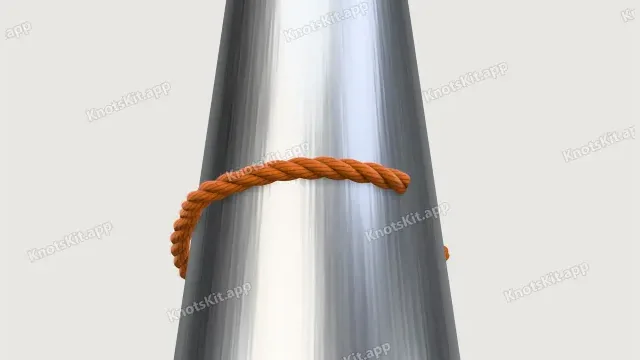
Step 1
With the rope around the post, lay one end across the front.
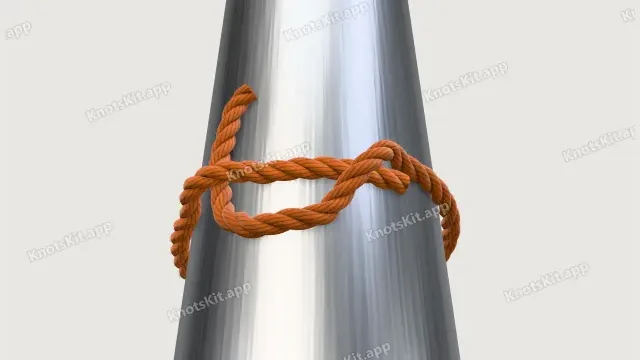
Step 2
Pass the other end over it, then under it.
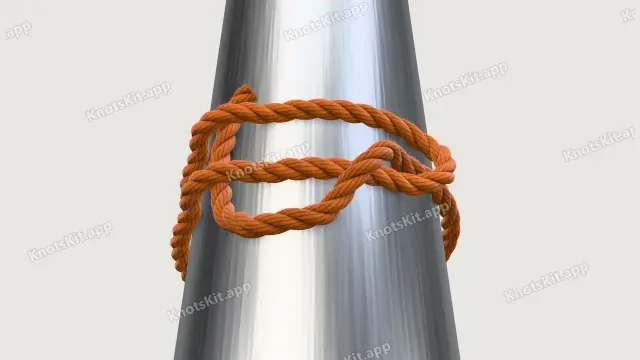
Step 3
Lay the first end back over the second, crossing the opposite way.
If you repeat the same crossing, the knot twists and can slip.
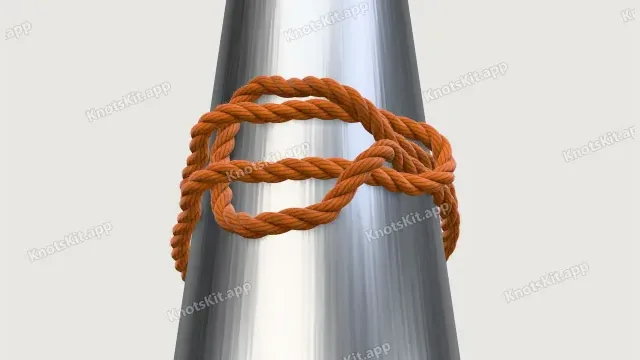
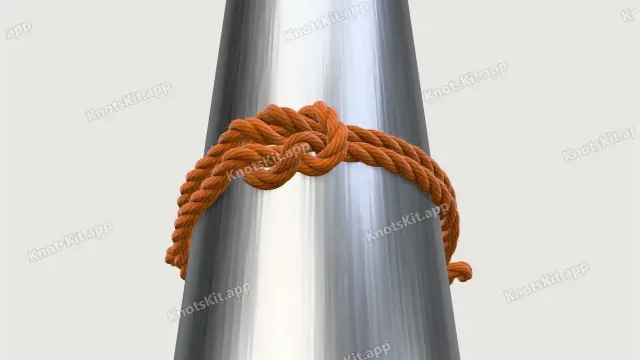
Step 5
Pull both ends to tighten.
What it’s for
Tie the two ends of one cord around a bundle, a parcel or a bandage. It lies flat and is quick to tie.
When to avoid it
Do not use it to join two ropes that will take a load: it can slip, or tip over and come apart without warning. To join two ropes, tie a sheet bend.
Check your knot
Two U shapes lock into each other and lie flat. Each end leaves beside the rope on its own side of the knot.
Tips
- Leave enough rope beyond the knot. The length depends on the rope and how you use it.
- To undo it, pull one end back across the knot: it tips over and slides apart.
Never use it to join two ropes
The square knot is not a join. It looks like one, which is why so many people tie it between two ropes. Under load it can slip, or tip over into a shape that slides straight off the other rope, and it gives no warning first. Ropes of different thickness, stiff rope and slippery rope make this more likely.
It works as a binding because the knot presses against what it ties and both ends pull evenly. Between two ropes nothing holds it in shape. To join two ropes, tie a sheet bend. For anything that holds a person, follow a qualified instructor.
Where the square knot is useful
- Parcels and bundles. String around a box, cord around firewood or tent poles. If the bundle pushes back, use a surgeon’s knot.
- Bandages. The knot lies flat and does not dig in. Tie it beside the injury, never on it.
- Sacks and bags. Two ends of one cord around the neck. If you open it often, the bow knot is the same knot with a quick release.
Common mistakes
- Repeating the same crossing. At step 3 the first end comes back over the second, crossing the opposite way. Copy the crossing from step 2 and you get a granny knot, which twists and can slip.
- Stopping at step 3. The crossing alone holds nothing. The tuck at step 4 is what locks the two U shapes together.
- Pulling one end only. At step 5 pull both ends together. A pull on one end can tip the knot over as it closes.
- Tying it around nothing. Step 1 starts with the rope around something. With nothing inside, the knot has nothing to press against.
Square knot or granny knot?
The two look alike until you put them to work. A square knot sits flat on what it binds, with its ends along the rope. A granny knot turns sideways, its ends stick out across the rope and a firm pull makes it creep. Hands tie it by habit, because repeating a move is easier than reversing it. So slow down for the second half: first one way, then the opposite. If the knot twists as you tighten it, undo the second half, cross the other way and pull both ends.
Related knots
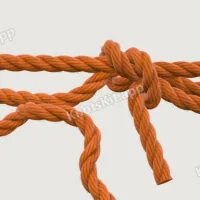
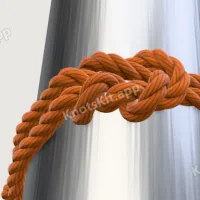
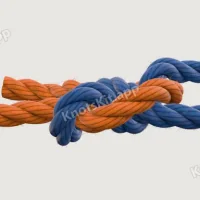
Questions people ask
Can I join two ropes with a square knot?
Not if the join will take a load. With a rope pulling on each side, the square knot can slip, or tip over and come apart without warning, and that is more likely when the ropes differ in thickness or are slippery. It looks fine until it goes. Tie a sheet bend instead, and for anything that holds a person follow a qualified instructor.
Is a square knot the same as a reef knot?
Yes, they are two names for one knot. Square knot is the usual name in the United States, reef knot in Britain and among sailors, who tie it around a rolled sail. You may also see it called the Hercules knot. The steps, the finish check and the warning about joining ropes stay the same whatever you call it.
What is the difference between a square knot and a granny knot?
One crossing. In a square knot the second half crosses the opposite way to the first, so two U shapes lock together and lie flat. Repeat the same crossing at step 3 and you get a granny knot, which twists out of line and can slip. If yours sits crooked, undo the second half and cross the other way.
How do you untie a square knot?
Pull one end back across the knot. It tips over and usually slides apart with little effort, which is handy on a parcel or a bundle. It is also the reason the knot makes a poor join: a snag or an uneven pull can do the same thing by accident, at a moment you did not choose.
Square knot or surgeon’s knot for a bundle?
Use the square knot when what you are tying stays put, like a parcel or a bandage. If it pushes back, like a stack of firewood or a full sack, the first half slackens before you finish, and the extra twist of a surgeon’s knot holds it for you. Neither of them is made to join two ropes.