


How to tie a cow hitch
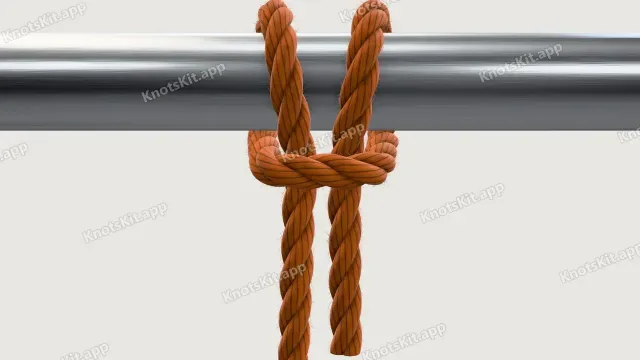
The cow hitch, also called the lark’s head or, on straps and slings, the girth hitch, fixes a rope, a strap or a cord to a ring or a pole. Two turns sit side by side with a bar across them, and both ends hang down together. It is one of the simplest ways to hang something, but it wants both ends pulling: with one end loaded it can slip.
- Type
- Hitch
- Difficulty
- Easy
- Also called
- Lark's Head, Lark's Foot, Reverse Double Half Hitch, Double Stitch, Girth Hitch, Deadeye Hitch
Step by step
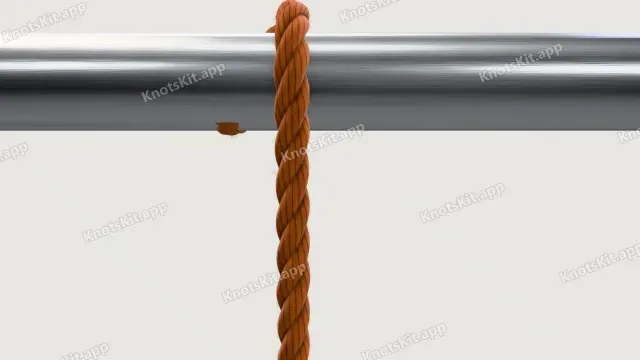
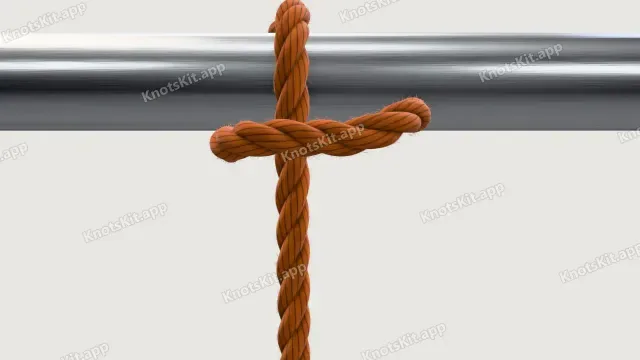
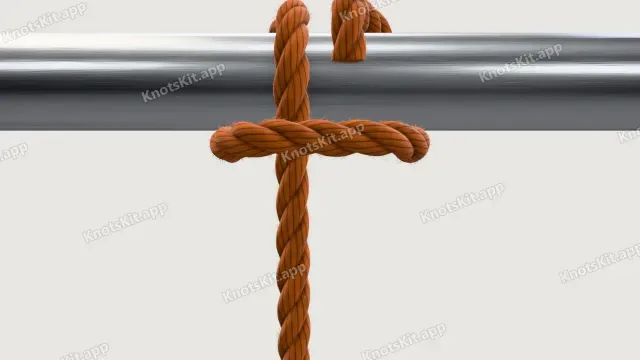
Step 3
Take it up behind the pole and over the top, on the other side of the long section.
Which is the long section?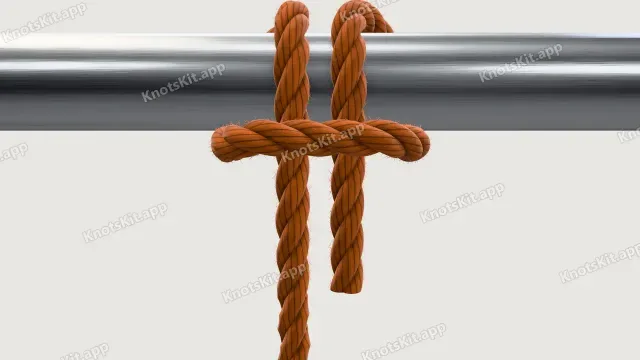
Step 4
Tuck the end down under the crossing.
Step 5
Pull both ends to tighten.
What it’s for
Attach a rope, strap or cord to a ring or pole when both ends pull together, for example to hang something up.
When to avoid it
Avoid it if only one end takes the pull: the knot can slide or slip. Do not use it where a slipping knot could put someone at risk.
Check your knot
Two turns go over the pole, side by side, with a bar of rope across them. Both ends hang down together.
Tips
- Leave enough rope beyond the knot. The length depends on the rope and how you use it.
- If the rope already has a closed loop, pass the loop through the ring and pull the rest of the rope through it.
Where the cow hitch is useful
- Hanging things at camp. A bag or a lantern under a pole: bring both ends down to the load so they share it.
- Straps on rings and bars. A webbing strap on a ring or a roof bar, when the two ends carry the weight together.
- Tags, key rings and lanyards. Anything with a closed loop goes on in a second, from a luggage tag to a zip pull.
- Cord craft. The usual way to fix cords to a ring or a dowel before a macramé project.
- Climbing slings. Not something to learn from a page. For anything that holds a person, follow a qualified instructor and check it before every use.
Why both ends have to pull
The bar holds the two turns together and the turns hold the pole. When both ends pull, each turn presses on the pole evenly. When only one end pulls, the rope can feed through the turns and around the pole, or the whole knot can slide along. If your job has one end under load, tie a clove hitch or two half hitches. For a post with an open top and no free end to hand, compare the pile hitch, which starts from a folded rope and goes over the top.
Common mistakes
- Second turn going the same way as the first. At step 3 the end comes up behind the pole and over the top, the opposite way round from step 1. Keep wrapping in the same direction and you tie a clove hitch, with the ends leaving in opposite directions.
- Skipping the tuck. At step 4 the end goes down under the crossing. Without it you only have two loose wraps.
- Twisted straps. With webbing, keep the strap flat from step 1 onwards. A twist lifts one edge, and the strap grips along a narrow line.
- Uneven ends. At step 5 pull both ends together. Pull one and the bar slides off centre, with the turns loose on the other side.
Related knots
Questions people ask
Are the cow hitch, lark’s head and girth hitch the same knot?
Yes, the shape is the same and only the habit changes. Cow hitch is the usual name for rope on a pole or a ring, lark’s head for cord work like macramé and tags, girth hitch for straps and slings. The same check applies to all three: two turns, a bar across them, both ends together.
Is the cow hitch secure?
With both ends pulling together it usually holds well for hanging things up. With only one end loaded, the rope can feed through the turns or the knot can slip along the pole. Do not use it where a slipping knot could put someone at risk, and pick a different hitch when the pull comes from one end.
Cow hitch or clove hitch: which should I tie?
Look at where the ends go. In a cow hitch both leave together on the same side, so it suits a load shared by the two ends. In a clove hitch the ends leave in opposite directions and the pull goes on one of them. A single line tied off to a post usually wants the clove hitch.
Can I use a girth hitch for climbing?
Climbers do use a girth hitch with slings, but where and how is something to learn in person from a qualified instructor, and every attachment must be checked before use. The way it behaves depends on the material and the setup. This page shows how the knot is formed, not how to build a climbing system.