


How to tie a double dragon
The double dragon, also called the double dragon loop, makes a fixed loop at the end of a rope. Two wraps around the doubled rope hold the free end, so the knot is less likely to work loose when the rope goes slack. It takes more rope and more time than a bowline, and a missed wrap can let it slip.
Step 1 of 7
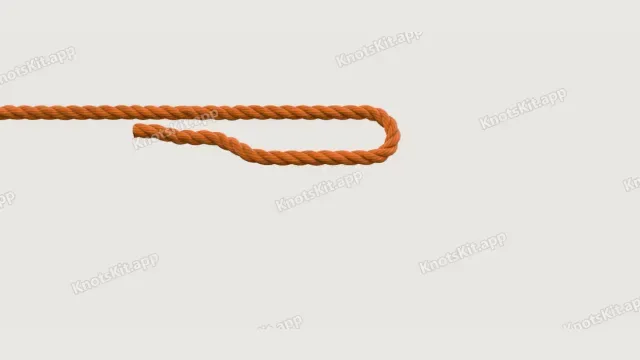
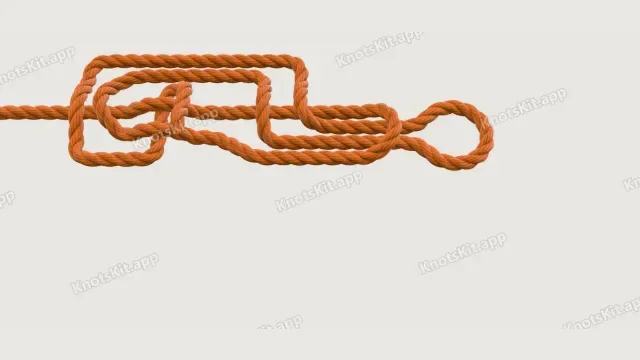
Fold the end back alongside the long section to make a long U.
- Type
- Loop
- Difficulty
- Hard
- Also called
- Double Dragon Loop
Step by step
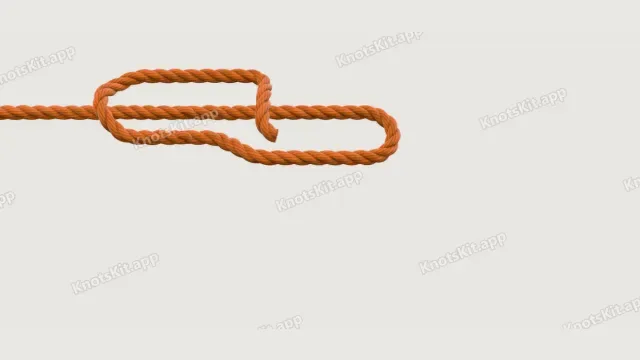
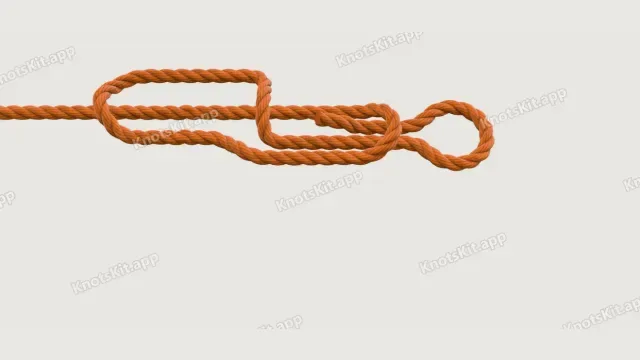
Step 3
Make the large loop, then bring the end back up through the U.
Choose the size of the large loop now.
What is the folded end?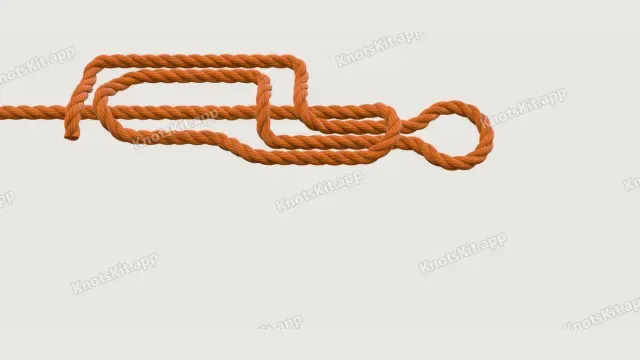
What it’s for
Make a fixed loop at the end of a rope. Two wraps hold the free end, so it is less likely to work loose when the rope goes slack.
When to avoid it
Avoid it if a quick loop is enough: it takes more rope and time than the bowline. A missed wrap can let the knot slip, so check it before use.
Check your knot
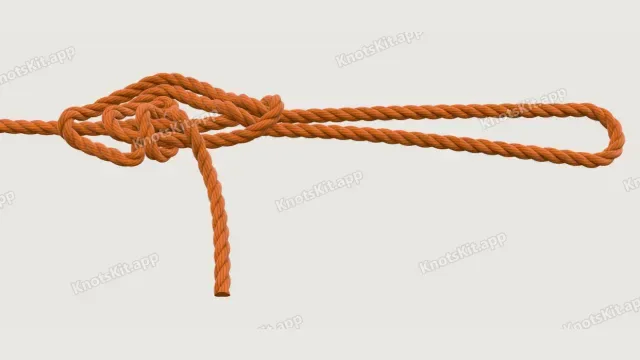
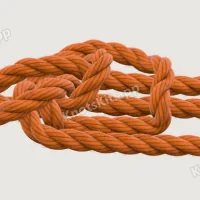
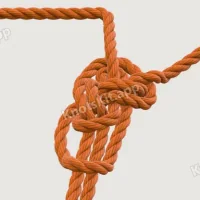
Two wraps sit side by side around the doubled rope, with the free end leaving beside them. A small arch of rope can stay over the wraps.
Tips
- Leave enough rope beyond the knot. The length depends on the rope and how you use it.
- Tighten a little at a time: this knot holds a lot of slack.
- Keep the two wraps side by side as you tighten.
Where the double dragon is useful
- Lines that spend time slack. A tarp line that flaps in the wind, or a boat line that goes tight and loose all day. Where a bowline can loosen, the two wraps keep the free end in place.
- Loops through a ring. You make the large loop with the end at step 3, so you can pass it through a ring or around a rail first. A figure eight loop tied in folded rope cannot do that.
Common mistakes
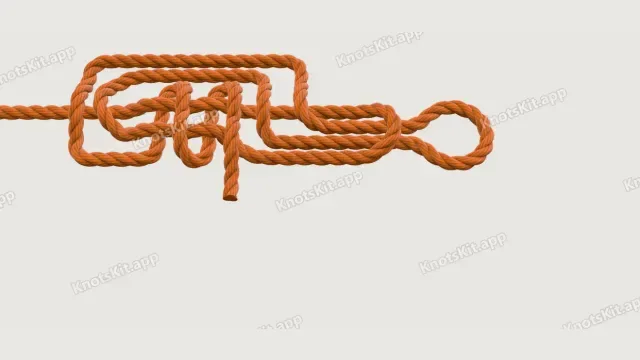
- Missing a pass through the U. At step 2 the end goes down through the U, at step 3 it comes back up. Skip one and the large loop is not held.
- Choosing the loop size too late. The large loop is set at step 3. Once the wraps are on, changing it means undoing them.
- Wrapping one side only. At step 5 the end goes around both sides of the U. Around one side it locks nothing.
- Forgetting the second wrap. Step 6 is not optional. A missed wrap can let the knot slip, so count two before you pull.
- Pulling it tight in one go. At step 7 hold the large loop and draw the long section and the end a little at a time.
Tightening it properly
This knot closes in stages, because it holds a lot of slack. Hold the large loop, draw the long section a little, then the end, then go back to the long section. Between pulls, slide the wraps together with your thumb so they stay side by side and do not cross. Stop when the wraps sit firm on the doubled rope and the free end no longer moves when you tug it. Then check it before use: two wraps, side by side, and the free end leaving beside them. If the rope is stiff or slippery and will stay under a steady pull, a double bowline may be enough and is quicker to tie. For anything that holds a person, follow a qualified instructor.
Related knots
Questions people ask
Double dragon or bowline: which should I tie?
Tie the bowline when a quick loop is enough: it is faster and uses less rope. Tie the double dragon when the rope will spend time slack, flapping or dragging and you want the free end held down. A bowline in a rope that hangs loose and moves around can loosen, and that is the problem this knot sets out to cover.
Why does my double dragon slip?
The usual reason is a missed wrap: with one turn instead of two, much less is holding the free end. Count the wraps before you load it. The knot also holds a lot of slack, so one that was pulled tight in a single go can stay loose inside. Tighten it a little at a time.
Is the small arch over the wraps a mistake?
No. A small arch of rope can stay over the wraps once the knot is tight, and that is how the finished knot often looks. What matters is underneath: two wraps side by side around the doubled rope, with the free end leaving beside them. If those are in place, the arch is fine.
How do you untie a double dragon?
Take the load off first. Push the wraps along the doubled rope to loosen them, unwind the end one turn at a time, then draw it back out through the U. There are more parts to undo than in a bowline, so expect it to take longer, above all after a heavy pull.