


How to tie a Kreh loop
The Kreh loop, also known as the non-slip mono knot, the non-slip loop or Lefty Kreh’s loop knot, ties a lure or fly to the line with a fixed open loop. The lure swings freely in the loop instead of being held stiffly at the knot, which gives it more movement in the water. It suits mono and fluorocarbon, but on braid it can slip.
Step 1 of 6
Tie a loose overhand knot in the line.
The knot’s distance from the eye sets the size of the large loop.
- Type
- Loop
- Difficulty
- Hard
- Also called
- Non-Slip Mono Knot, Lefty Kreh's Loop Knot, Non-Slip Loop
- Line types
- Monofilament, Fluorocarbon
Step by step
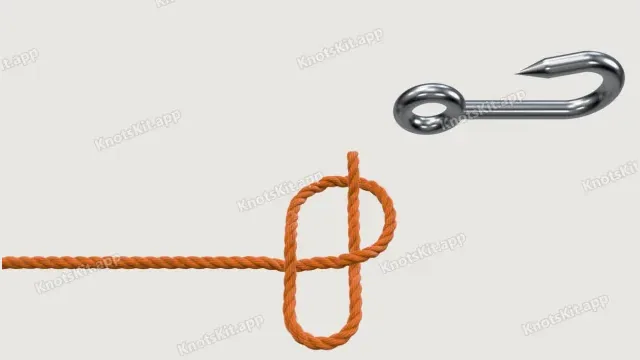
Step 1
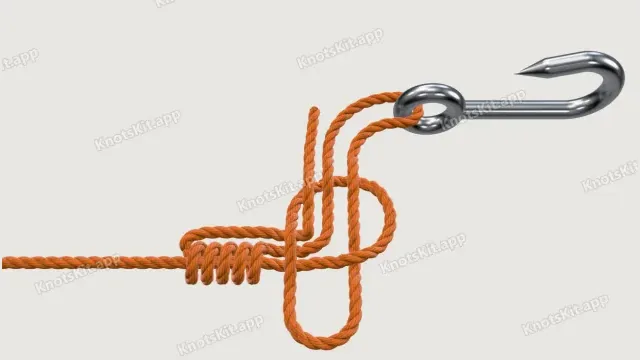
Tie a loose overhand knot in the line.
The knot’s distance from the eye sets the size of the large loop.
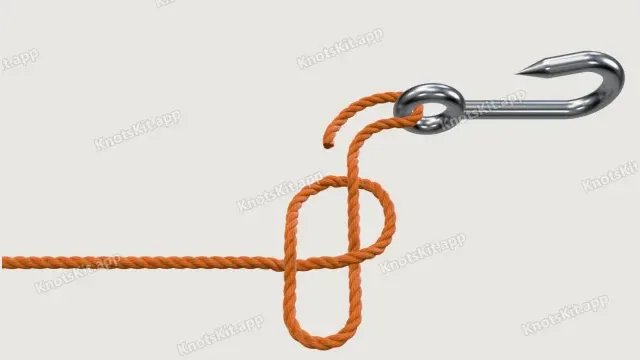
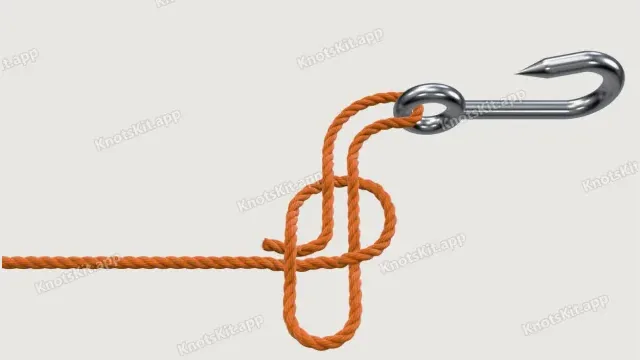
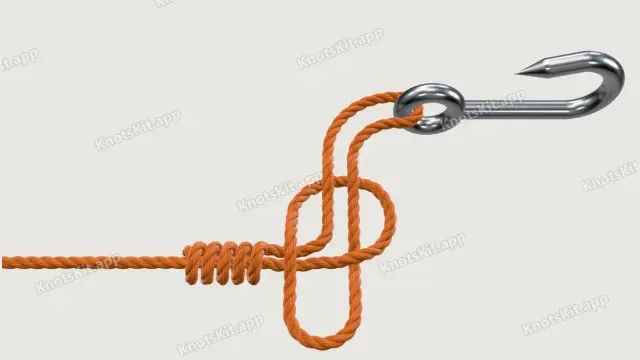
Step 5
Pass it back through the overhand knot, on the side it came out.
What it’s for
Tie a lure or fly to the line with a fixed open loop, so it can move freely.
When to avoid it
Avoid it with braid: the knot can slip. It also does not suit a lure that needs a stiff connection, because the loop adds play.
Check your knot
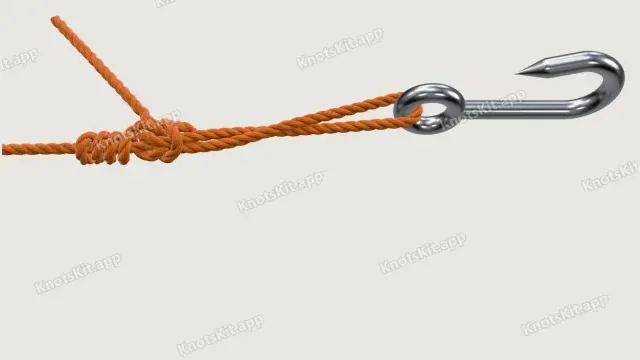
The turns sit close together beside the knot, and the large loop stays open through the hook’s eye.
Tips
- Wet the knot before tightening to reduce friction.
- Use fewer turns with thick line and more with thin line.
- Trim the free end only after tightening and checking the knot. Follow the line maker’s guidance.
Where a loop knot earns its place
- Lures that work on their own. Hard baits, jigs and spoons that rely on their own movement. Tied tight to the eye they can swim stiffly. In a loop they swing.
- Streamers and other flies. A fly on a heavy leader can move like a stick. The loop gives it back its life.
When you want a stiff connection, tie the knot tight to the eye instead, with a Palomar for example. The Rapala knot is the other open loop for lures.
Common mistakes
- Overhand knot too tight. Step 1 says loose, because the end has to pass through it twice, at steps 3 and 5.
- Entering from the wrong side. At step 3 the end comes back into the overhand knot from the eye side. From the other side the loop twists and the knot will not close cleanly.
- Turns in the wrong place. At step 4 the turns run along the main line, moving away from the knot. Keep them close to each other, so they can settle together at step 6.
- Wrong side at step 5. The end goes back into the overhand knot on the side it came out. Through anywhere else, the turns cannot sit beside the knot.
- Pulling in the wrong order. Step 6 holds the hook and pulls the main line first, then the free end. Start with the free end and the turns can close before the overhand knot has moved up to them.
Tightening it
Wet the knot, then hold the hook firmly, by the bend or with pliers. Pull the main line slowly, so the turns and the overhand knot come together. Then draw the free end to close the last gaps, and finish with a firm pull on the main line against the hook. The large loop should stay open through the eye, with the turns close together beside the knot. If a turn stands loose, or the loop has come out far too big, cut it and tie it again. Give it a firm test pull, then trim the free end, following the line maker’s guidance.
Related knots
Questions people ask
Why use a loop knot on a lure?
A knot tied tight to the eye holds the lure on a stiff hinge, especially with thick line. An open loop lets it swing and wobble on its own, which helps streamers, jigs and lures that rely on movement. The price is some play in the connection, so skip it when you want a stiff, direct link to the lure.
How big should the loop be?
Big enough for the lure to swing, small enough to stay neat. You set the size at step 1: the distance between the overhand knot and the eye decides it, so tie the overhand closer for a smaller loop. It can take a try or two to judge. Once tightened the size is fixed, so retie it if it is wrong.
Kreh loop or Rapala knot: which should I tie?
Both make an open loop, and both start with a loose overhand knot. The Kreh loop uses five turns and finishes by going back into the overhand knot. The Rapala knot uses three turns, then adds a tuck under itself, so it has one more step. Learn whichever you can tie cleanly every time, and stay with it.
Does the Kreh loop work with braid?
It is a poor choice, because the knot can slip on braid. If you fish braid and want the movement of a loop, add a leader of mono or fluorocarbon and tie the Kreh loop in that. The leader suits the knot, and the loop still lets the lure swing. Follow the line maker’s guidance for the join.