


How to tie a loop in the middle of a rope
Tie an alpine butterfly. You make it from a U pulled out of the middle of the rope, so you need neither end, and the finished loop can be pulled in any direction while the two sides of the rope leave the knot in a straight line. If you want two fixed loops at once, for example to share a load, tie a bowline on a bight instead.
The best knot for this job
How to tie the Alpine Butterfly
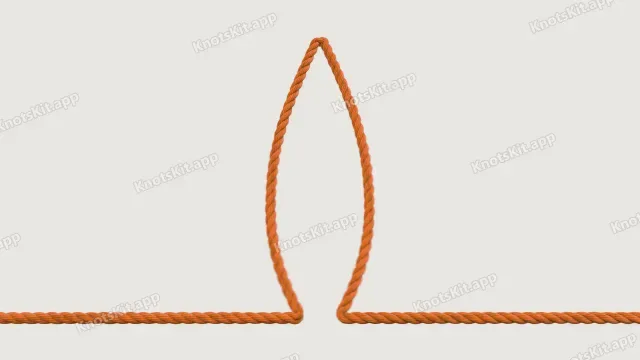
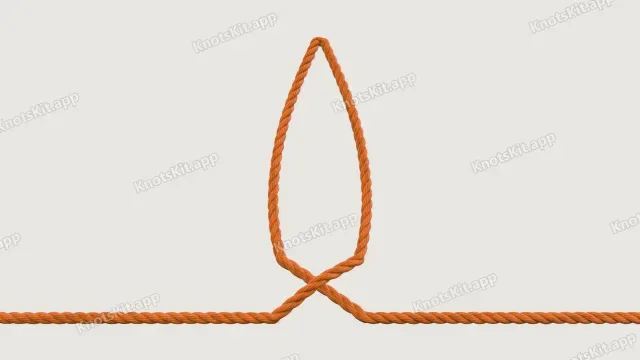
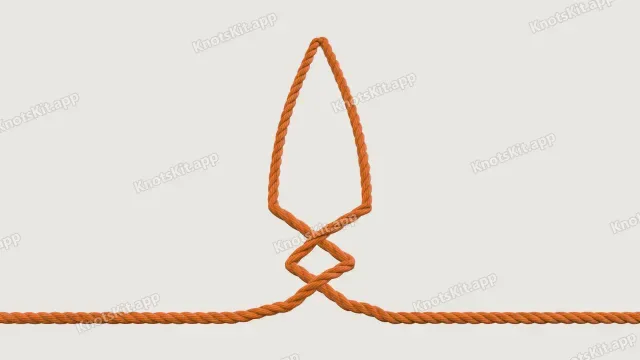
Step 3
Twist it once more in the same direction.
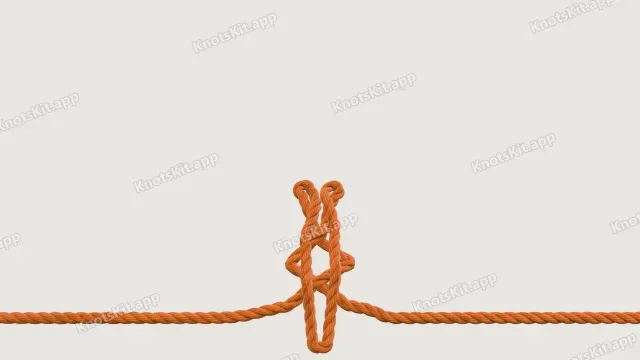
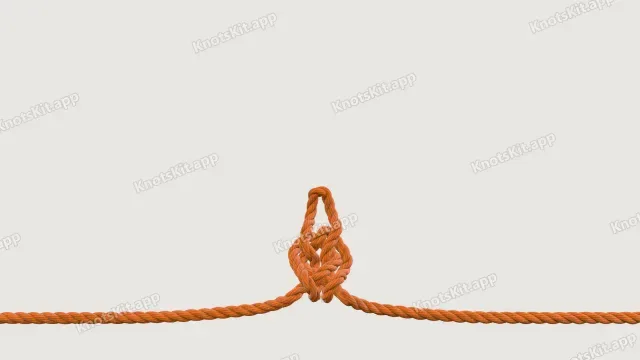
Step 5
Tuck it under the nearest twist and up through the middle.
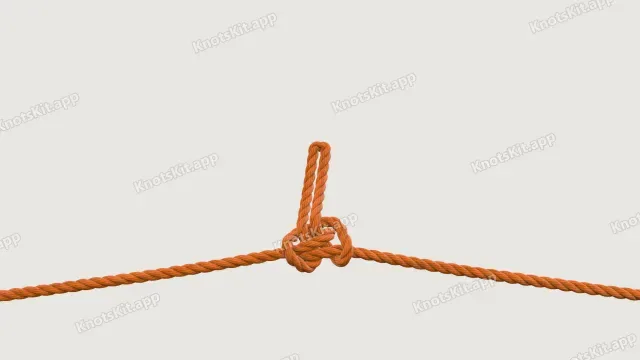
Your options
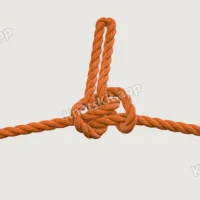 Alpine ButterflyA fixed loop in the middle of a ropeThe first choice for a single fixed loop anywhere along a rope, to clip something to or hook onto. It can be pulled in any direction. Check its shape before you load it: a wrong tuck gives a loop that slips.
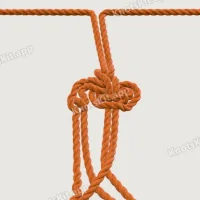 Bowline on a BightTwo fixed loops at oncePick it when you want two fixed loops at once, in the middle or at the end of a rope; the two loops share the load. Set both to size before the final pull. If one loop is enough, the alpine butterfly is simpler.
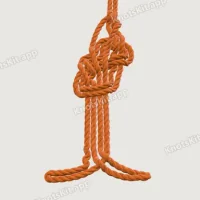 Double Bight Figure EightTwo adjustable loops in one knotAlso called bunny ears: pick it for two adjustable loops, to share a load between two anchor points. You set their sizes by feeding rope from one loop to the other, so rope can also run through the knot if only one is loaded or an anchor point fails. For climbing or rescue, train with a qualified instructor.
Before you tie
Decide where along the rope the loop has to sit, and how big it should be. With the alpine butterfly, the U you pull out at step 1 becomes the loop, so leave it big enough for whatever you will clip or hook into it. With the bowline on a bight, fold a long U: both large loops come out of it, and you set their size before you tighten.
Make the second twist of the butterfly in the same direction as the first, as in step 3, and keep the twists loose enough to see where the loop tucks through. For a loop at the end of the rope instead, see how to tie a loop in a rope.
Check it before you load it
Pull the loop and both sides of the rope to tighten, then look at the shape: the loop leaves between the two sides, and they leave the knot in a straight line. If it looks different, untie it and start again from the U. Check it again after the rope has been slack or dragged around. If someone will hang on it, learn it hands-on with an instructor first.
Questions people ask
How do I know my alpine butterfly is tied correctly?
Look at where the loop leaves the knot: it should come out between the two sides of the rope, and those should leave on opposite sides in a straight line. If a twist or the tuck has gone wrong, the loop can slip, so untie it and start again from the U. Then pull the loop and both sides firmly before you load it.
Why tie a bowline on a bight instead of a single loop?
It gives you two fixed loops from one knot, and the two loops share the load. You can tie it in the middle of a rope or at the end, with the rope folded in two. Set both loops to the size you need before the final pull. If you only need one loop, an alpine butterfly in the middle or a bowline at the end is quicker to tie.
Can I use a figure eight loop in the middle of a rope?
Yes. The figure eight loop is tied with a folded section, so it works away from the ends too, but it can be hard to untie after a heavy pull. The alpine butterfly is the one made to be pulled in any direction, which is what a loop in the middle of a rope often has to take.
Is the alpine butterfly safe for climbing or rescue?
Loops that hold a person call for hands-on training. The alpine butterfly turns up in climbing and rescue, but which loop goes where, and how it fits the rest of the setup, is something to learn with a qualified instructor. Check its shape before every use: a wrong tuck gives a loop that slips.