


How to tie a heaving line knot
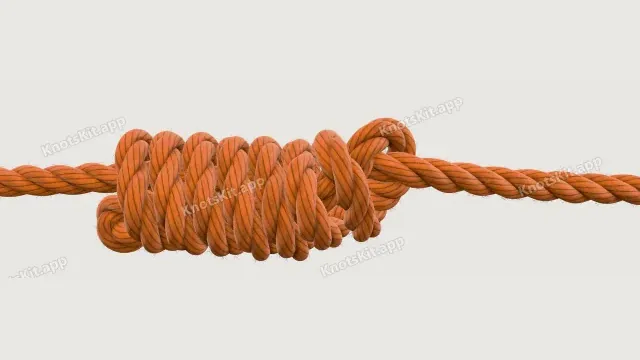
The heaving line knot gives weight to the end of a throwing line. You fold the end into a long U, wrap it tightly around both sides, pass it through the small loop that is left and pull the long section. The compact bundle of turns carries the line further when you throw it, and gives whoever catches it something to grab.
- Type
- Stopper knot
- Difficulty
- Medium
Step by step
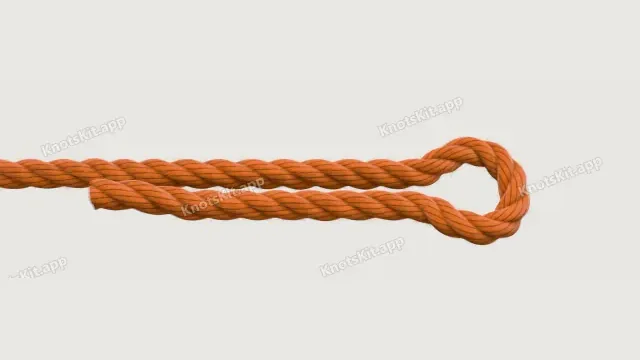
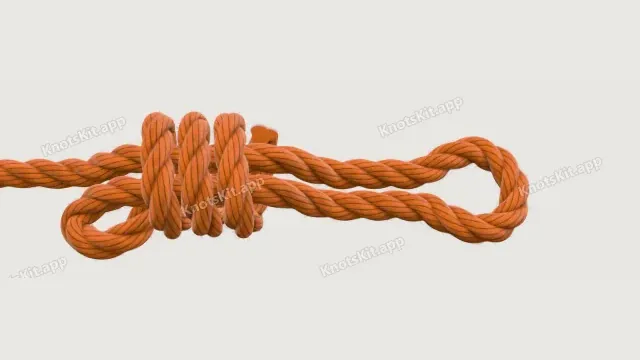
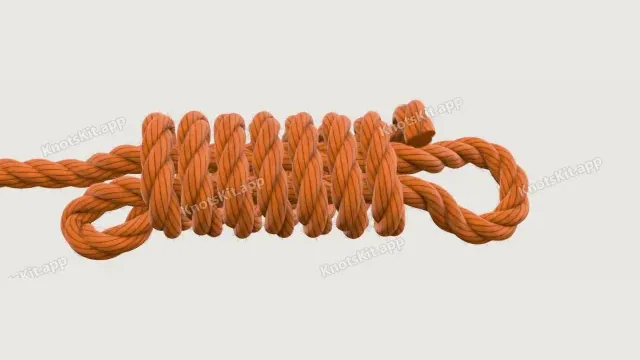
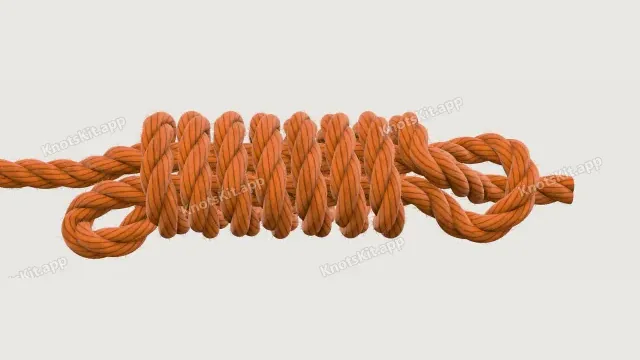
What it’s for
Add weight to the end of a throwing line, so it carries further and is easier to catch.
When to avoid it
Do not use it to attach the line to anything. Never throw it towards someone’s head.
Check your knot
Even, tight turns lie side by side, with the end trapped at one end of them.
Tips
- Keep the turns tight and side by side as you go: loose turns make a floppy knot.
Climbing and rescue: learn this knot with a qualified instructor and check it before every use. This page does not replace hands-on training.
Where the heaving line knot is useful
- Coming alongside. Someone on board throws a light line ashore or to another boat, and once it is caught the heavier mooring line is hauled across behind it. The light line’s other end is tied to the mooring line, for example with a bowline through its eye.
- Getting a line across a gap. Between two boats, over a stream or up to someone on a high quay, where a bare rope end would flutter and fall short.
- Throwing practice. Coiling a line and landing it on a target is a skill worth practising on a calm day, before you need it on a moving boat.
Throwing it safely
- Clear the line first. Make sure it is not caught round your feet, a cleat or a rail, and that nobody is standing in the coils.
- Keep the other end. Hold it, or make it fast on board, so you do not throw the whole line away. Hold it in an open hand and never wrap it round your hand or wrist.
- Call out before you throw, so the person on the other end is looking at you and ready.
- Aim beside them, never at them. Let the line fall across an arm or within reach, and never throw towards anyone’s head. The knot is soft, but it is still a lump of rope arriving fast.
- Mind the wind. In a crosswind, aim a little upwind and let the wind carry the line onto the target.
Common mistakes
- A short U at step 1. All the turns go on the U, so a short one gives a small, light knot. Make it long: you can always stop wrapping early.
- Wrapping over the curve at step 3. Keep going until only a small loop is left, and no further. Cover that loop and there is nothing to pass the end through at step 4.
- Pulling the end at step 5. It is the long section that closes the loop and traps the end. Pull the end instead and it only slides further through the loop.
- Using it to tie the line to something. It is a weight, not an attachment. To make the line fast, use a knot made for the job, such as two half hitches or a bowline.
Related knots
Questions people ask
What is a heaving line used for?
It is a light line thrown from a boat to the shore or to another boat, usually so that a heavier line can follow. The person who catches it hauls it in, and with it the mooring line tied to the other end. The knot at the end gives the throw enough weight to get there.
Heaving line knot or monkey’s fist?
Both weight the end of a throwing line. The monkey’s fist is a round ball of rope that takes a while to tie; the heaving line knot is much quicker. Do not put a stone, a nut or any other hard weight inside either one: the rope alone is enough, and a hard end can hurt whoever catches it.
How many turns should a heaving line knot have?
There is no fixed number. It depends on how long you make the U at step 1 and how much weight you want: more turns make a longer, heavier knot. Keep wrapping, as step 3 says, until only a small loop is left at the curve, and keep every turn tight.
Can I use it for a water rescue?
Only within the training you have. Rescuers throwing a line to someone in the water usually use a throw bag, and the method matters as much as the knot. Learn water rescue with a qualified instructor. If you are not trained, help from the bank or the deck rather than going in after someone.