


How to tie a loop knot
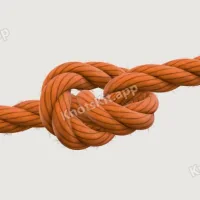
The loop knot, also called the overhand loop, is the quickest fixed loop you can tie: fold the rope into a long U and tie an overhand knot with the doubled rope. It takes seconds and is simple to check. The drawback is that it can jam after a heavy pull, so tie it where you will not need to untie it.
- Type
- Loop
- Difficulty
- Easy
- Also called
- Overhand Loop
Step by step
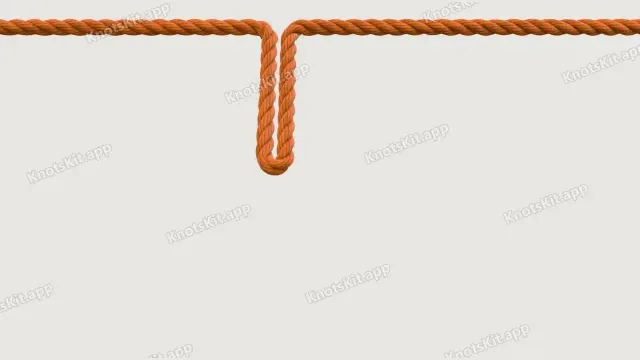
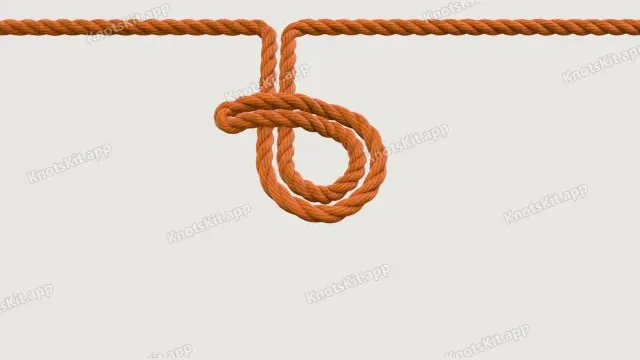
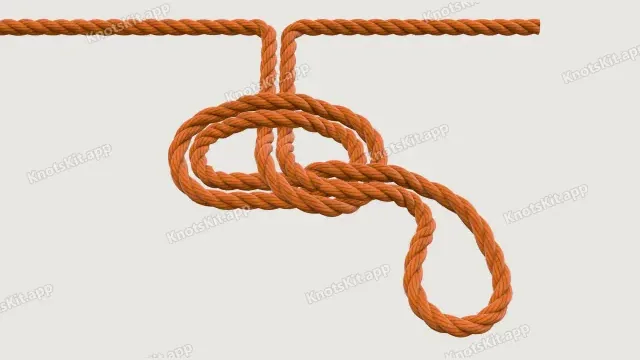
Step 3
Tuck the folded end up through the loop from behind, leaving a large loop.
What is the folded end?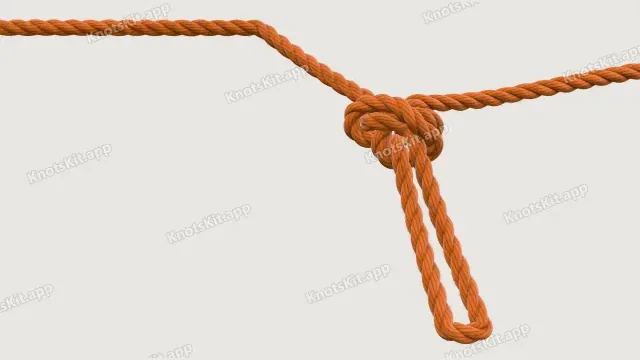
What it’s for
Make a quick fixed loop near the end of a rope, when you will not need to untie it.
When to avoid it
Avoid it if you will need to untie the loop: it can jam after a heavy pull. For climbing, use only the knots your instructor teaches.
Check your knot
The doubled rope makes one overhand knot at the base of the large loop. The two sections lie side by side through it.
Tips
- Leave enough rope beyond the knot. The length depends on the rope and how you use it.
- Work any slack out of the knot before you load it.
Climbing and rescue: learn this knot with a qualified instructor and check it before every use. This page does not replace hands-on training.
Where the loop knot is useful
- Quick camp jobs. A loop in a cord to hang a lantern or a bag, or to hook a tarp line over a peg.
- Loops that stay. The end of a washing line or a tent cord, tied once and not touched again.
- Thin cord. In string and light cord a jammed knot costs little, because you can cut it and tie another.
- Climbing. Use only the knots your instructor teaches. This page shows how the knot is formed and does not replace instruction.
Common mistakes
- U too short. At step 1 the fold has to be long, because part of it goes into the knot and only the rest becomes your loop.
- Sections twisting. At step 2 keep the two sections of the doubled rope flat. If they cross, the knot closes crooked and is harder to check.
- Folded end going the wrong way. At step 3 it comes up through the loop from behind. Tucked in from the front, it pulls straight out when you tighten.
- Pulling only one section. At step 4 hold the large loop and pull both sections of rope. Pull just one and the other stays slack in the knot.
When to tie something else
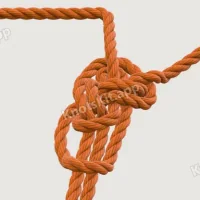
The loop knot’s charm is also its limit: it is just an overhand knot in doubled rope, and a heavy pull can bite that small turn down hard. So ask one question before you tie it: will this loop need to come out? If it will, a bowline is usually easy to untie afterwards, though it can loosen in a rope that hangs slack and moves around. If you want a shape that is easier to read, the figure eight loop adds one turn behind the doubled rope and gives a bigger knot. Before you use any of them, pull firmly on the large loop and check that the two sections still lie side by side. For climbing, use only the knots your instructor teaches.
Related knots
Questions people ask
Is the loop knot the same as an overhand loop?
Yes. It is an overhand knot tied in doubled rope, so overhand loop describes exactly what it is. Be careful with the name, though: anglers also say loop knot for the knots that keep a small loop at a lure. The knot on this page is a fixed loop near the end of a rope.
Loop knot or figure eight loop: which should I tie?
Tie the loop knot for a quick loop you do not plan to take out: it is smaller and has one turn less. The figure eight loop takes a few seconds longer, and its shape is easier to read. Both can be stubborn after a heavy pull. For climbing, use only the knot your instructor teaches.
Can you untie a loop knot?
After a light pull, usually. Take the load off, find the turn that wraps around the doubled rope and work it loose by bending the knot back and forth. After a heavy pull it can jam and refuse to move. If the loop has to come out later, a bowline is usually easier.
Is the loop knot safe for climbing?
This is not a knot to pick for yourself. For climbing, use only the knots your instructor teaches, and check them before every use. How any loop behaves depends on how it is tied, on the rope and on the system around it, so a web page cannot decide that for you. Learn it from a qualified instructor.