


How to tie a triple surgeon’s knot
The triple surgeon’s knot, which some anglers call the Seaguar knot, joins a leader to the main line in seconds, even when they differ in thickness or material, such as braid and fluorocarbon. You lay the two lines together, make a loop and pass both ends through it three times. The limit: the whole leader has to pass through the loop, so it must be short.
Step 1 of 5
Lay the main line and the leader side by side.
Cut the leader to length first: all of it has to pass through the loop.
- Type
- Bend
- Difficulty
- Medium
- Also called
- Seaguar Knot
- Line types
- Monofilament, Fluorocarbon, Braid
Step by step
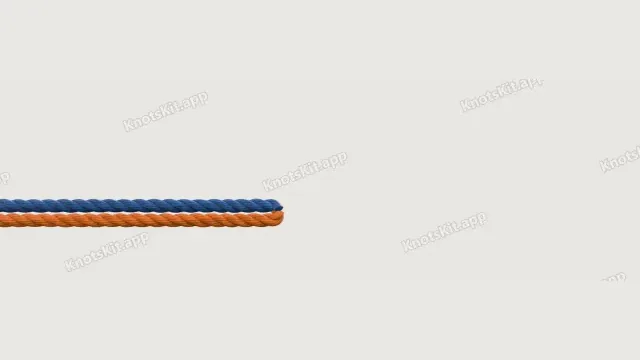
Step 1
Lay the main line and the leader side by side.
Cut the leader to length first: all of it has to pass through the loop.
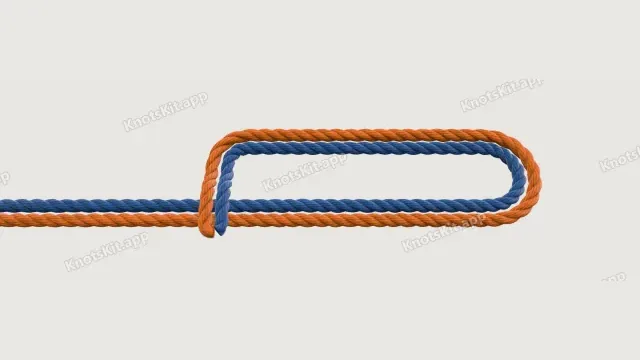
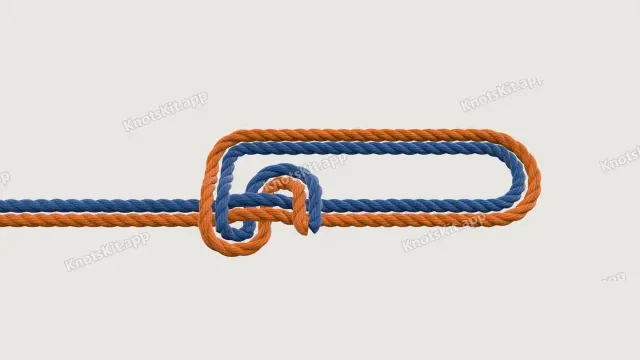
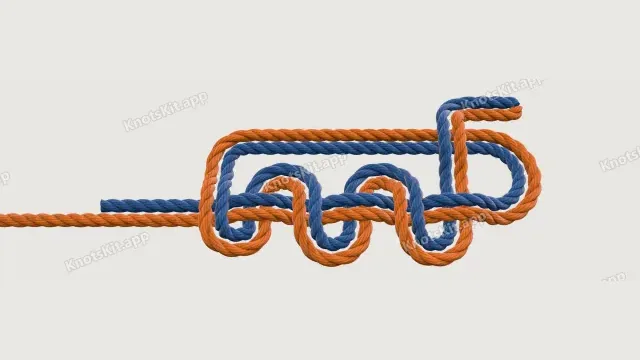
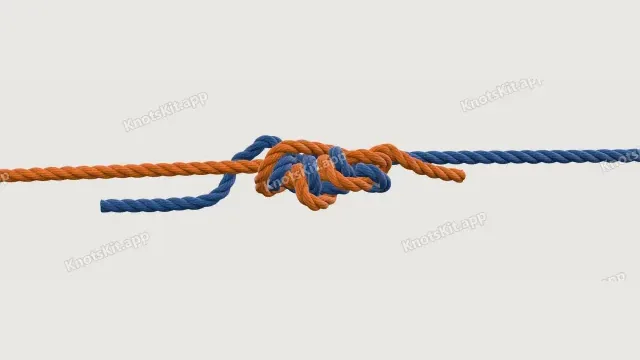
What it’s for
Join a leader to the main line quickly, even if they differ in thickness or material, such as braid to fluorocarbon.
When to avoid it
Avoid it if the leader is too long to pass through the loop, or the join must run smoothly through the rod rings: the knot is a little bulky.
Check your knot
The main line leaves the knot one way and the leader the other, each with a free end beside it.
Tips
- Wet the knot before tightening to reduce friction.
- Keep the two lines flat together, so they do not twist around each other.
- Trim the free end only after tightening and checking the knot. Follow the line maker’s guidance.
Where it works best
- A short leader added on the bank. The leader is already cut, the knot takes seconds and you are fishing again.
- Lines that do not match. Braid to fluorocarbon, or thin mono to a thicker leader. Both lines go through the loop together, so a difference in thickness does not change how you tie it.
- Bad conditions. No turns to count and no tool to hold, which helps with cold hands or in fading light.
Where the leader is long, or the join has to slide through the rings, use the uni-to-uni knot or the Albright Special. For a loop instead of a join, the surgeon’s loop uses the same idea in a single folded line.
Common mistakes
- Leader still too long. Cut it at step 1, before anything else. All of it goes through the loop three times, and a long leader tangles on the way.
- Lines twisting at step 2. Keep them flat together. If they wrap around each other, the knot closes lumpy and the strands pinch.
- Losing one of the ends. At step 3 both ends go through the loop. If only one does, you have no knot, just a tangle.
- Stopping short at step 4. It takes two more passes after step 3, three in all. Count them: with two you have a different knot, with less grip.
- Pulling only two strands. Step 5 pulls both lines and both free ends. Heave on the long lines alone and the slack free ends let the knot close unevenly.
Seating it
Wet the knot, more so with fluorocarbon, which can heat up as it closes. Then draw all four strands gently, the two lines and the two free ends, so the three passes close at the same pace. Keep the lines flat as the knot takes shape. When it has come together, pull the two lines firmly, then the two free ends once more. Check it: the main line leaves one way and the leader the other, each with a free end beside it. Give it a firm test pull before you trim. If the strands look twisted, or the knot moves under the pull, cut it and tie it again.
Related knots
Questions people ask
Can I join braid to fluorocarbon with it?
Yes, that is one of its most common uses, and it also works with mono. Braid is slippery and the two lines behave differently, so tighten it slowly, keeping the lines flat together, and pull all four strands before you trust it. Test it with a firm pull, and follow the line maker’s guidance for the braid you use.
Triple surgeon’s knot or uni-to-uni: which should I tie?
The triple surgeon’s is quicker and has no turns to count, which helps in the wind or with cold hands. Its limits are a short leader and a bulkier knot. The uni-to-uni takes longer but works with a leader of any length, because each line only ties around the other. For a long leader, choose the uni-to-uni.
Is it the same as the surgeon’s knot?
No, despite the name. The plain surgeon’s knot on this guide is a binding that ties a rope around a bundle or a sack. The triple surgeon’s knot joins two fishing lines held together through the same loop. Anglers also tie a version with two passes, and the third pass gives more grip in slippery line.
Will it go through the rod rings?
It will pass, but the knot is a little bulky, so you may feel it on the cast and it can catch in small rings. With a short leader the knot often stays outside the tip ring when you cast, so it matters less. If the join has to run smoothly through the rings, tie a slimmer one such as the Albright Special.