


How to tie a bundle
Tie a surgeon’s knot. Its extra twist holds the first half tight while you tie the second, so the rope stays snug around a bundle, a sack or a post. For a light parcel, the square knot (reef knot) is quicker. For a bundle that stays tied, a constrictor knot grips hard, but you may have to cut it off. None of these joins two ropes under load.
The best knot for this job
How to tie the Surgeon's Knot
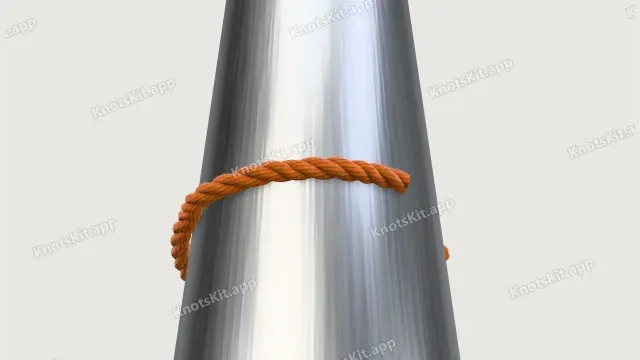
Step 1
With the rope around the post, lay one end across the front.
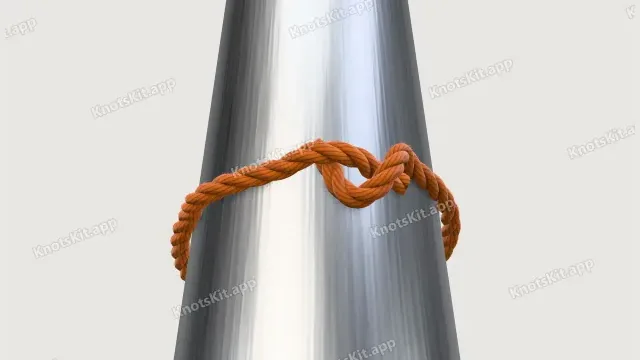
Step 2
Pass the other end over it, then under it.
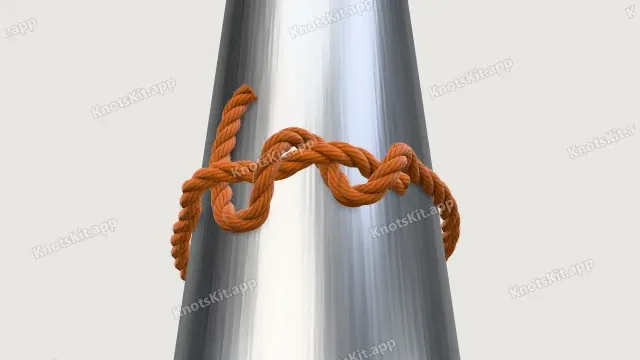
Step 3
Go over and under once more for the extra twist.
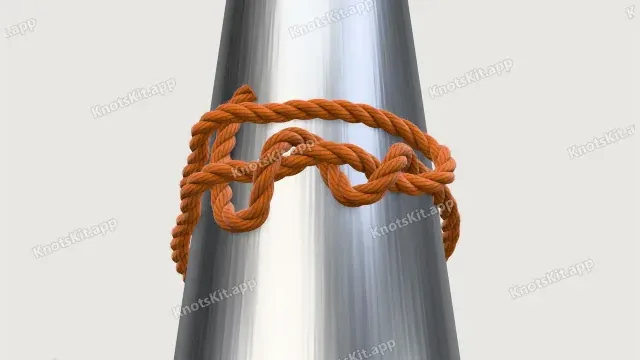
Step 4
Lay the first end back over the second, crossing the opposite way.
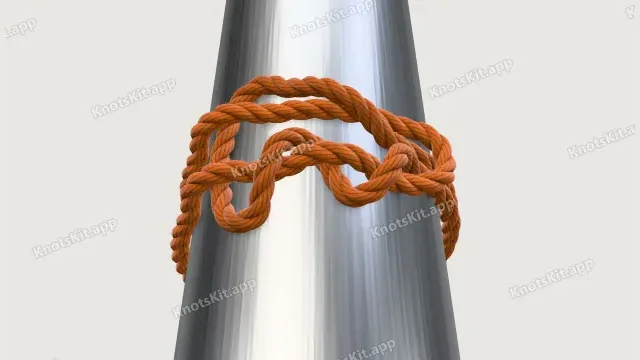
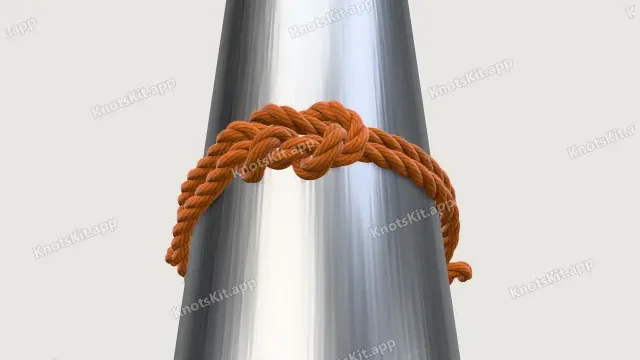
Step 6
Pull both ends to tighten.
Your options
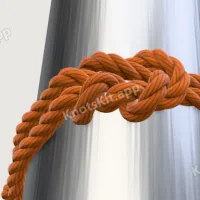 Surgeon's KnotA binding that holds while you tie itThe first choice to tie a rope tightly around a bundle, a sack or a post: the extra twist holds the first half while you tie the second. It is a binding knot, so don’t use it to join two ropes that will take a load.
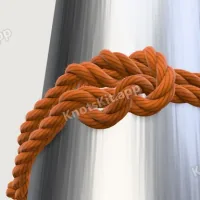 Square KnotTie two ends of a cord around a bundleThe quick, flat knot for the two ends of one cord around a bundle, a parcel or a bandage. Also called the reef knot. Don’t use it to join two ropes that will take a load: it can slip, or tip over and come apart without warning.
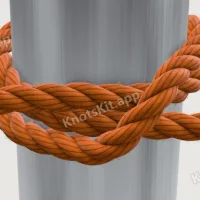 Constrictor KnotA binding that clamps down hardPick it to close the neck of a sack or bind a bundle you won’t need to open: it grips hard and rarely loosens on its own. Once tight it can jam, so you may have to cut it off, and it grips poorly on flat or square objects.
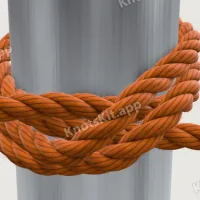 Double ConstrictorA tighter binding for slippery bundlesFor a thick bundle or something slippery, when a constrictor knot doesn’t grip enough. It can jam even harder, so you may have to cut it off, and on soft or delicate objects it can leave marks.
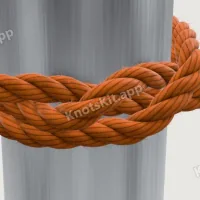 Strangle KnotHold a bag or bundle tightly closedPick it to close a sack or hold a rolled mat together: the two turns clamp down on both ends as you pull. Skip it on flat or square objects, because the turns grip best on a round shape, and expect it to jam after a hard pull.
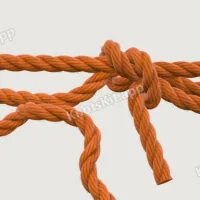 Bow KnotA bow that opens with one pullFor a parcel or a sack you will open again: one pull on a free end undoes it, just like a shoelace. It is made to come undone quickly, so don’t use it to hold a load or join two ropes, and a free end that catches can open it.
Choose by how you will open it
Start by asking whether you will untie it. For a parcel you will open soon, tie a bow knot, which comes undone with one pull on a free end, or a square knot, which tips over and slides apart when you pull one end back across the knot.
When the bundle should stay closed, look at its shape. The constrictor knot and the strangle knot grip best on something round, such as the neck of a sack or a rolled mat. On a flat or square object they grip poorly, so go back to the surgeon’s knot. All three can jam, and you may have to cut them off.
These are binding knots. They work because the rope presses on whatever sits inside it. Take that away and ask them to join two ropes that take a load, and the square knot can slip, or tip over and come apart without warning. For that job, see how to tie two ropes together.
Getting it tight
Bring the rope snug around the bundle before the first crossing, and press the bundle together with your other hand if it is loose. With the surgeon’s knot, step 3 is the extra twist that does the holding, so pull that first half tight before you go on. At step 4, lay the first end back the opposite way. If you repeat the same crossing, the knot twists and can slip, and the same goes for the square knot.
Cord matters for the binding knots. Thin, soft cord grips better than thick rope in a constrictor knot. Pull both ends hard, and with the strangle knot work the slack around a little at a time, so both turns close evenly.
Leave enough rope beyond the knot; how much depends on the rope and how you use it. Look at the finished knot before you walk away: a surgeon’s knot or a square knot should lie flat, with each end beside its own side of the rope.
Questions people ask
Can I join two ropes with a square knot?
Not if they will take a load. The square knot, or reef knot, is a binding knot: it closes the two ends of one cord around a bundle. Used to join two ropes under load, it can slip, or tip over and come apart without warning. The surgeon’s knot is not made for that job either. To join two ropes, tie a sheet bend.
Surgeon’s knot or square knot: which should I tie?
Tie the surgeon’s knot when the bundle pushes back and the first half would loosen while you tie the second: the extra twist holds it. Tie the square knot when nothing pushes back, as on a light parcel or a bandage, because it is quicker and lies flat. With either one, pull the first half tight before you go on.
Which knot stays tight on a sack or a rolled mat?
The constrictor knot and the strangle knot both clamp down hard on a round shape, such as the neck of a sack or a rolled mat. Both can jam, so you may have to cut them off. On a flat or square parcel they don’t grip as well: tie a surgeon’s knot or a square knot there. For a thick or slippery bundle, tie the double constrictor.
How do I get a jammed constrictor knot off?
Often you cut it. Cut the diagonal with care, the section that lies across the others: the turns then come loose and the rest falls away. On a double constrictor, cut both diagonals. If you know you will open the bundle again, tie a surgeon’s knot instead, or a bow knot, which opens with one pull on a free end.